Professional Manufacturer of Biomagnetic Beads


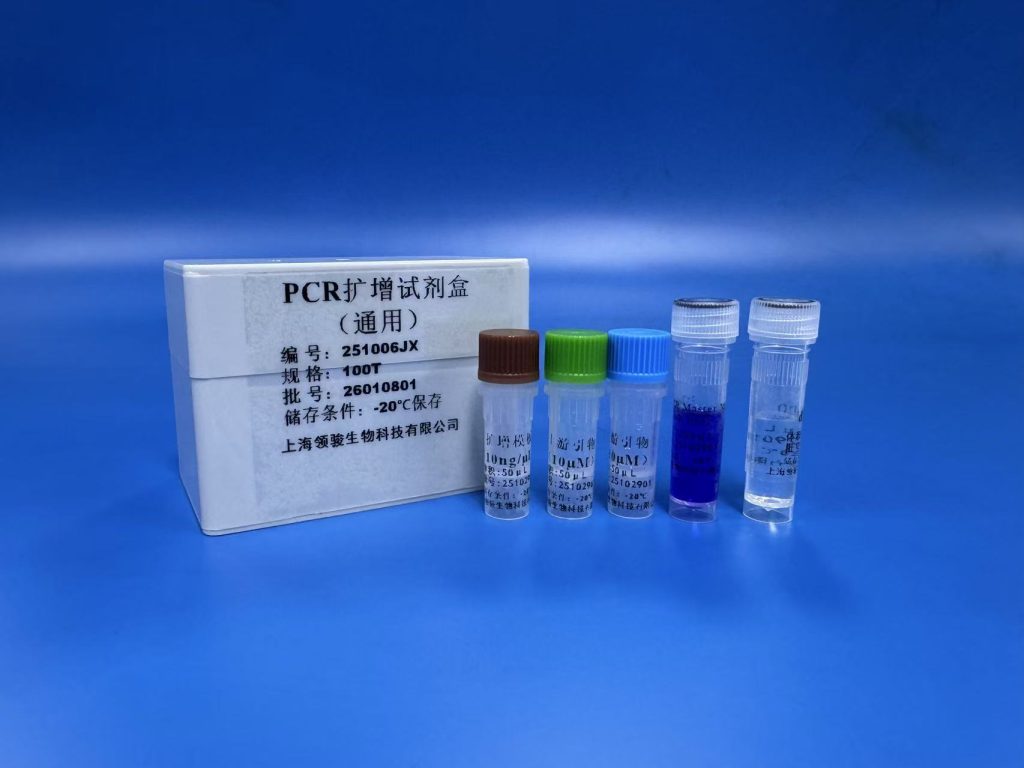
Market Feasibility Analysis Report of PCR Amplification Kits
1.Project Overview and Background Analysis
Polymerase Chain Reaction (PCR) technology, as a cornerstone of molecular biology research, has become an indispensable tool in university scientific research. In experimental teaching across multiple disciplines such as life sciences, medicine, agriculture, and bioengineering, PCR technology holds a central position. According to market research data, the global PCR market reached approximately $7 billion in 2019 and is expected to grow to about $12 billion by 2025, with a compound annual growth rate of around 10%. China, as one of the countries with the fastest growth in global R&D investment, accounts for over 30% of the total market demand for PCR kits in universities, and this proportion continues to rise.
University research demands PCR kits with distinct characteristics: teaching labs require cost-effective, stable kits for large-scale experiments, while research labs need reliable, reproducible products to support cutting-edge studies. However, universities currently face a dilemma: imported brands are prohibitively expensive under tight budgets, while domestic alternatives vary widely in quality, compromising experimental results. This imbalance is particularly acute in institutions with limited research funding, severely hampering both the efficiency and depth of scientific work.
The domestic PCR kit market is currently dominated by leading international players such as Thermo Fisher Scientific, Bio-Rad, and Agilent. While their products are reliable, they are often priced too high, and their after-sales services may not always meet the urgent needs of university research. Therefore, developing a cost-effective, stable, and user-friendly PCR amplification kit specifically designed for academic research holds significant market potential and social value.
The core objective of this project is to develop a cost-effective, stable, and user-friendly PCR amplification kit by optimizing its formulation and production process, thereby addressing the diverse needs of academic research and teaching in higher education institutions. It also aims to establish a comprehensive after-sales technical support system, providing timely technical guidance and problem-solving solutions for university users. Furthermore, the project seeks to enhance the quality of domestically produced research reagents, reduce research costs for academic institutions, and contribute to the advancement of China’s scientific research and education sectors.
2.Market Demand Analysis Market Drivers
The university PCR kit market is characterized by its massive scale and sustained growth. Statistics show that China has over 3,000 higher education institutions, with more than 500 offering life sciences and related disciplines. Each institution maintains multiple research and teaching laboratories of varying sizes, creating a strong demand for PCR kits. For instance, a comprehensive university’s School of Life Sciences typically spends between 100,000 to 500,000 yuan annually on PCR reagents for molecular biology experiments, with the total annual market size estimated at tens of billions of yuan.
Meanwhile, with the continuous increase in national investment in scientific research, university research funding has maintained steady growth, providing strong growth momentum for the PCR kit market. Especially under the background of the “Double First-Class” discipline construction, universities have increasingly emphasized the quality of experimental teaching and research levels, further increasing the demand for high-quality PCR kits. According to industry reports, the China multiplex PCR amplification kit industry is expected to maintain a stable growth trend from 2023 to 2028, which provides a favorable market environment for general PCR kit projects targeting universities.
3.Technical Feasibility Analysis
The development of standard PCR amplification kits is grounded in mature molecular biology techniques, with relatively manageable technical barriers. Since its invention in 1985, PCR technology has evolved into a well-established system, supported by a well-developed raw material supply chain, providing a solid technical foundation for the project.
In terms of core raw materials, breakthroughs have been achieved in domestic production of key technologies such as DNA polymerase expression and purification, dNTP synthesis and purification, and buffer system optimization. This has eliminated complete reliance on imported materials, paving the way for cost reduction. Several domestic biotech companies have mastered the production technology of high-quality Taq DNA polymerase, with product quality matching imported counterparts while achieving significantly lower costs.
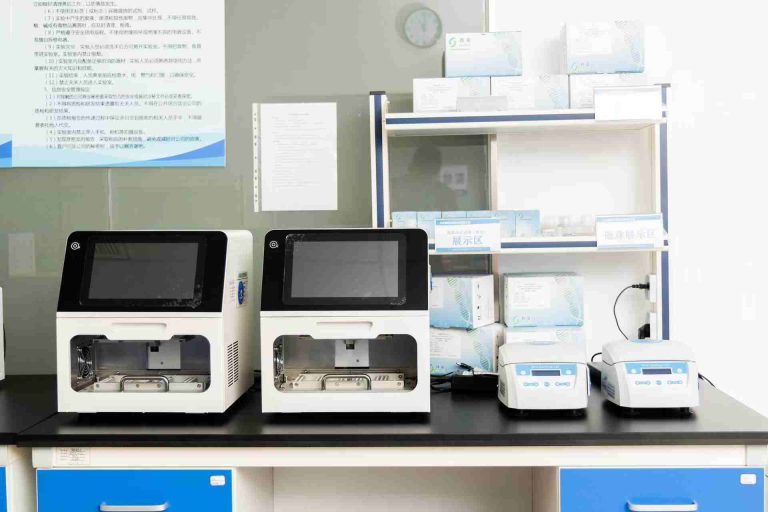
In terms of equipment, the laboratory facilities and production equipment required for PCR kit development are now widely available in China, including fermenters, protein purification systems, and freeze-dryers. This allows the establishment of standardized production lines without requiring substantial investment. University research teams typically possess standard molecular biology laboratory conditions, which can meet the basic needs for kit development and testing.
4.Technical Innovation
Intelligent Buffer System. This system addresses the common complex templates in universities by developing an adaptive buffer system that automatically optimizes reaction conditions based on template characteristics, thereby improving the success rate of single-round amplification. The system integrates multiple stabilizers and enhancers to handle templates of varying complexity, significantly reducing optimization time.
The rapid amplification procedure: the enzyme composition and buffer composition were optimized, which shortened the PCR amplification time by 30%-50%, supported the rapid cycle condition, improved the efficiency of scientific research in universities, and was especially suitable for the limited teaching experiment time.
Multi-functional formulation design: We developed a multi-purpose premixed solution that enables a single kit to meet diverse application scenarios including standard PCR, high-fidelity PCR, and long-fragment PCR. This innovation enhances user convenience for academic institutions while reducing the variety of reagent stocks required.
The addition of direct loading dye in the reagent allows for direct electrophoresis without loading buffer after amplification, simplifying the procedure and reducing the operational difficulty for beginners, making it particularly suitable for teaching experiments.
5.The production and operation
PCR reagent kits will follow the principles of standardization and normalization, and establish a sound quality management system. The production process mainly includes raw material procurement and inspection, core enzyme preparation, buffer preparation, packaging and finished product inspection.
The production model employs a hybrid strategy of “in-house core manufacturing + outsourced collaboration”: core materials such as Taq DNA polymerase are produced in-house to maintain control over key technologies; generic materials like dNTPs and standard chemical reagents are procured through outsourcing, with a stringent supplier audit system in place; packaging materials are fully outsourced but require customized production and enhanced quality control upon delivery.
The quality control system will follow the Good Manufacturing Practice (GMP) for medical devices and ISO13485 standards, establishing a comprehensive quality control system from raw material storage to finished product release. Each batch must undergo performance testing (including amplification efficiency, specificity, and stability), sterility testing, and packaging integrity checks to ensure consistent and reliable product quality.
6.Risk Analysis and Response Strategies
Market risks are mainly reflected in intensified market competition, changes in market demand, and market acceptance.
6.1 Market Competition Risks:
International brands leverage their technological edge and brand influence, while domestic manufacturers compete through price wars, intensifying market competition. Strategies to address this include: 1) Defining clear target market positioning by focusing on university research sectors, and building competitive advantages through cost-effective products and premium technical services; 2) Establishing strategic partnerships with key universities to conduct technical seminars and training programs, thereby enhancing brand awareness.
6.2 Market demand volatility risk:
As university research focuses and hotspots evolve continuously, demand may shift. To address this, implement a flexible production system to enhance responsiveness to market changes; develop modular product lines to meet specialized needs across different sectors; and conduct regular market research to promptly identify research trends and adjust product strategies.
6.3Market Acceptance Risk:
University users may harbor biases or concerns regarding domestically produced diagnostic kits. To address this, the following strategies should be implemented: 1) Provide free trial kits and comparative efficacy data to enable users to evaluate product performance through hands-on experience; 2) Publish methodological papers in authoritative journals with detailed application data and comparative results to scientifically validate product performance; 3) Invite influential experts in the field to conduct third-party evaluations to enhance product credibility.
Summary
The project demonstrates strong market viability. The academic research sector has a rigid demand for PCR kits, with a large and steadily growing market. By delivering cost-effective, reliable products supported by professional technical services, the project is well-positioned to achieve significant market share within 3-5 years.
Secondly, from a technical feasibility standpoint, PCR technology is mature and reliable, with an increasingly robust supply chain. Domestic teams are fully capable of developing high-quality products that meet the research needs of universities. Through strategic technological innovation and process optimization, we can produce products that rival international brands in performance while offering more competitive pricing.
Thirdly, from the economic feasibility analysis, the total investment of the project is moderate, the investment recovery period is reasonable, the expected economic benefit is remarkable, and the financial feasibility is good. After the project is implemented, it can not only achieve considerable economic benefit, but also produce social benefit of reducing the cost of scientific research in colleges and universities and promoting the development of scientific research and education.
In conclusion, the general PCR amplification kit project for university research demonstrates high feasibility and significant investment value, warranting prompt implementation. Key implementation priorities include: 1) Enhancing technological innovation and product quality to build core competitiveness; 2) Establishing a flexible marketing system to rapidly penetrate the academic market; 3) Strengthening talent development to ensure sustainable project growth.
Through the implementation of this project, it will provide high-quality domestic PCR reagent kits for university research work, reduce the cost of scientific research, improve the overall level of scientific research and education in China, and create good economic returns for investors, achieving a win-win situation of social and economic benefits.
Supplier
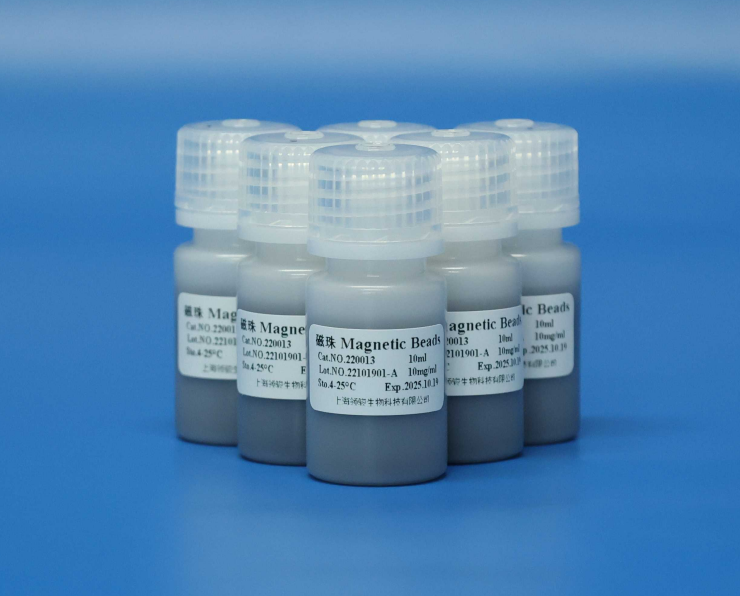
Shanghai Lingjun Biotechnology Co., Ltd. was established in 2016 which is a professional manufacturer of biomagnetic materials and nucleic acid extraction reagents.
We have rich experience in nucleic acid extraction and purification, protein purification, cell separation, chemiluminescence, and other technical fields.
Our products are widely used in many fields, such as medical testing, genetic testing, university research, genetic breeding, and so on. We not only provide products but also can undertake OEM, ODM, and other needs. If you have a related need, please feel free to contact us .