Professionel producent af biomagnetiske perler


Hvad er forskellene mellem monodisperse polystyren magnetiske perler og polydisperse silica magnetiske perler?
Monodisperger polystyren (PS) magnetiske perler og polydispers silica (SiO2) magnetiske perler udviser betydelige forskelle i materialeegenskaber, størrelsesfordeling, overflademodifikation, og applikationer. Nedenfor er en detaljeret sammenligning:
1. Material Properties and Structure
| Property | Monodisperse Polystyrene Beads | Polydisperse Silica Beads |
| Kernemateriale | Polystyren (organic polymer) | Silica (inorganic) |
| Magnetic Component | Embedded Fe₃O₄ nanoparticles | Surface-coated/doped Fe₃O₄ |
| Structural Stability | Høj fleksibilitet, low shear resistance | High rigidity, heat/pressure resistant |
| Density (g/cm³) | 1.05–1.2 (near-aqueous) | 1.8–2.2 (prone to sedimentation) |
2. Size Distribution
| Parameter | Monodisperse Polystyrene Beads |
| Size Range | Monodisperse (CV <5%), f.eks., 1 μm ±0.05 μm |
| Uniformity Impact | High batch consistency, ideal for automation |
| Surface Area Ratio | Lav (uniform size) |
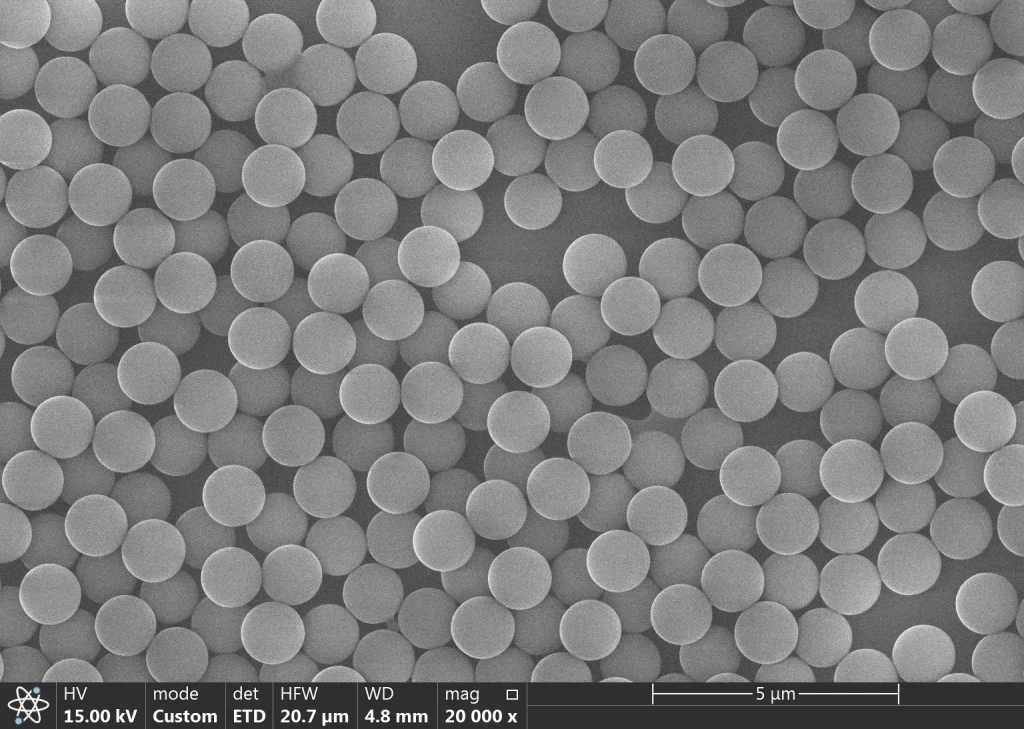
Figur 1:Monodisperse polystyrene magnetic beads in SEM
3. Surface Modification and Functionalization
| Property | Polystyrene Beads | Silica Beads |
| Active Groups | Carboxyl (-COOH), amino (-NH2), streptavidin | Silanol (-samme), modifiable to amino/epoxy groups |
| Modification Complexity | Easy organic functionalization (antibodies/probes) | Requires silanization, komplekse trin |
| Non-specific Adsorption | Higher (hydrophobic surface) | Lower (hydrophilic surface) |
4. Applikationsscenarier
| Anvendelse | Polystyrene Bead Advantages | Silica Bead Advantages |
| Nukleinsyreekstraktion | Ideal for automated high-throughput systems (uniform magnetic response) | Low-cost, suitable for manual operations |
| Immunoassays | Easy antibody conjugation (ELISA/chemiluminescence) | Low background noise, unstable conjugation |
| Cell Sorting | Biokompatibel, minimal cell damage | Rigid surface may trigger cell stress |
| Drug Carriers | Controlled release (flexible structure) | High loading capacity (porous structure) |
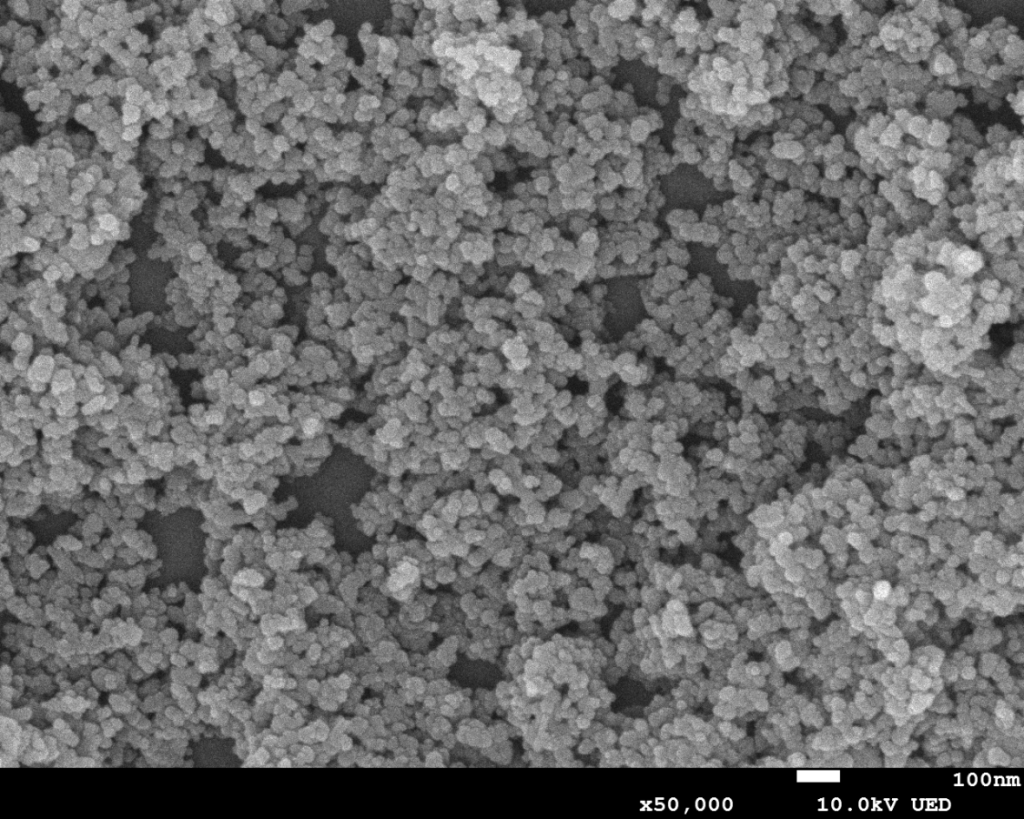
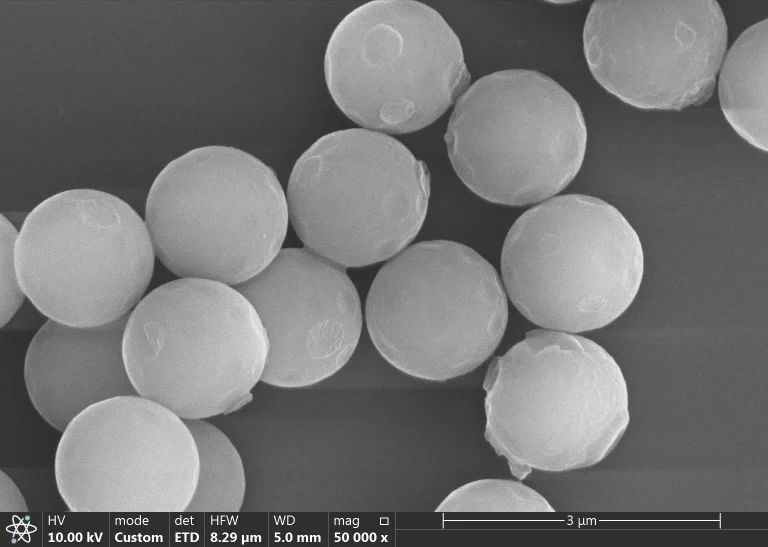
Figur 2:polydisperse silica magnetic beads in SEM
5. Limitations
Polystyrene Beads:
Low density → slow magnetic response (longer separation time);Deformation at high temperatures (<80°C limit);Swelling in organic solvents (f.eks., DMSO, acetonitrile).
Silica Beads:
Polydispersity → poor batch reproducibility;
Dissolution in strong alkali (pH >9);
Silanol groups induce aggregation via hydrogen bonding.
Typical Use Cases
Polystyrene Beads:
Automated nucleic acid extraction systems (f.eks., KingFisher) with precise 1 μm bead handling;
Fluorescently encoded beads for flow cytometry (CV <3% ensures signal uniformity).
Silica Beads:
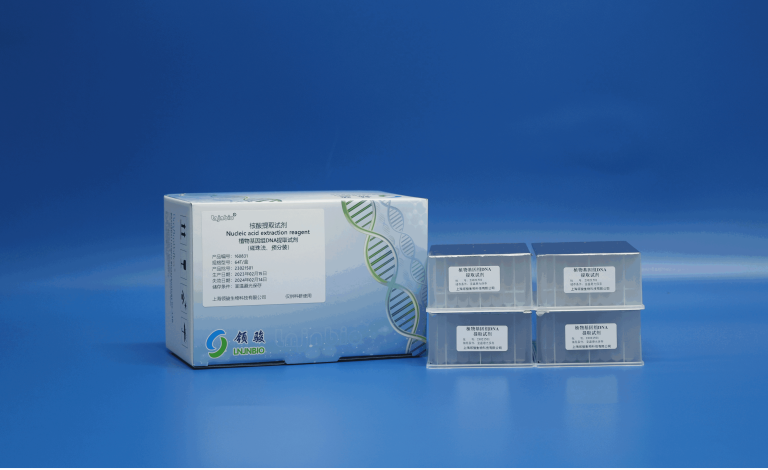
Low-cost nucleic acid kits (f.eks., LNJNBio Magnetic Method Nucleic Acid Extraction Kit);
Industrial enzyme immobilization (high surface area for protein loading).
Selection Guidelines
High-throughput/Automation: Choose polystyrene beads (size uniformity ensures process stability);
Cost-sensitive/Manual Operations: Opt for silica beads (pre-screen to minimize size variability);
Harsh Conditions (heat/organic solvents): Prefer silica beads (superior chemical resistance).
Emerging Trend: Composite beads (f.eks., SiO₂@PS core-shell) combine advantages, featuring a rigid core and modifiable organic surface, gaining traction in high-precision diagnostics.
Leverandør
Shanghai Lingjun Biotechnology Co., Ltd.blev etableret i 2016 som er en professionel producent af biomagnetiske materialer og nukleinsyreekstraktionsreagenser.
Vi har stor erfaring med udvinding og oprensning af nukleinsyre, proteinoprensning, celleadskillelse, kemiluminescens, og andre tekniske områder.
Vores produkter er meget udbredt inden for mange områder, såsom medicinsk test, genetisk testning, universitetsforskning, genetisk avl, og så videre. Vi leverer ikke kun produkter, men kan også påtage os OEM, ODM, og andre behov. Hvis du har et relateret behov, er du velkommen til at kontakte os .