Professionele fabrikant van biomagnetische kralen


Wat de verschillen tussen monodisperse magnetische kralen van polystyreen en magnetische kralen van polydispers silica?
Monodispers polystyreen (PS) magnetische kralen en polydisperse silica (SiO₂) magnetische kralen vertonen aanzienlijke verschillen in materiaaleigenschappen, grootteverdeling, oppervlakte modificatie, en toepassingen. Hieronder vindt u een gedetailleerde vergelijking:
1. Material Properties and Structure
| Property | Monodisperse Polystyrene Beads | Polydisperse Silica Beads |
| Kernmateriaal | Polystyreen (organic polymer) | Silica (inorganic) |
| Magnetic Component | Embedded Fe₃O₄ nanoparticles | Surface-coated/doped Fe₃O₄ |
| Structural Stability | Hoge flexibiliteit, low shear resistance | High rigidity, heat/pressure resistant |
| Density (g/cm³) | 1.05–1.2 (near-aqueous) | 1.8–2.2 (prone to sedimentation) |
2. Size Distribution
| Parameter | Monodisperse Polystyrene Beads |
| Size Range | Monodispers (CV <5%), bijv., 1 μm ±0.05 μm |
| Uniformity Impact | High batch consistency, ideal for automation |
| Surface Area Ratio | Laag (uniform size) |
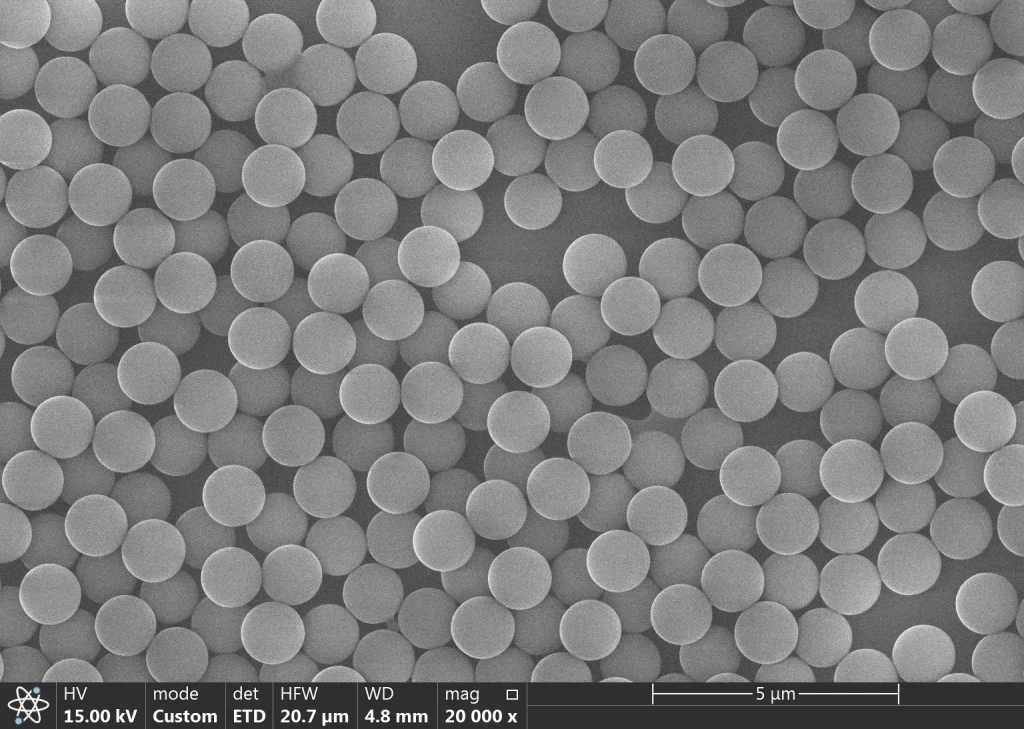
Figuur 1:Monodisperse polystyrene magnetic beads in SEM
3. Surface Modification and Functionalization
| Property | Polystyrene Beads | Silica Beads |
| Active Groups | Carboxyl (-COOH), amino (-NH₂), streptavidin | Silanol (-gelijk), modifiable to amino/epoxy groups |
| Modification Complexity | Easy organic functionalization (antibodies/probes) | Requires silanization, complex steps |
| Non-specific Adsorption | Higher (hydrophobic surface) | Lower (hydrophilic surface) |
4. Toepassingsscenario's
| Sollicitatie | Polystyrene Bead Advantages | Silica Bead Advantages |
| Nucleïnezuurextractie | Ideal for automated high-throughput systems (uniform magnetic response) | Low-cost, suitable for manual operations |
| Immunoassays | Easy antibody conjugation (ELISA/chemiluminescence) | Low background noise, unstable conjugation |
| Cell Sorting | Biocompatibel, minimal cell damage | Rigid surface may trigger cell stress |
| Drug Carriers | Controlled release (flexible structure) | High loading capacity (porous structure) |
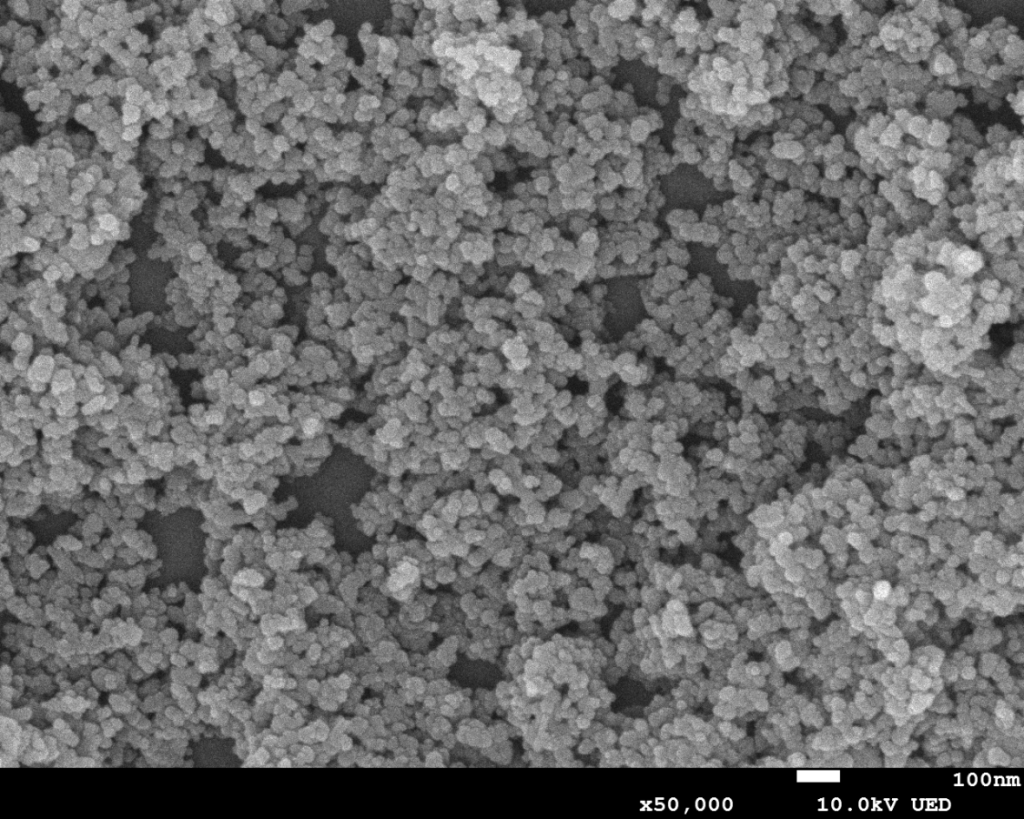
Figuur 2:polydisperse silica magnetic beads in SEM
5. Limitations
Polystyrene Beads:
Low density → slow magnetic response (longer separation time);Deformation at high temperatures (<80°C limit);Swelling in organic solvents (bijv., DMSO, acetonitrile).
Silica Beads:
Polydispersity → poor batch reproducibility;
Dissolution in strong alkali (pH >9);
Silanol groups induce aggregation via hydrogen bonding.
Typical Use Cases
Polystyrene Beads:
Automated nucleic acid extraction systems (bijv., KingFisher) with precise 1 μm bead handling;
Fluorescently encoded beads for flow cytometry (CV <3% ensures signal uniformity).
Silica Beads:
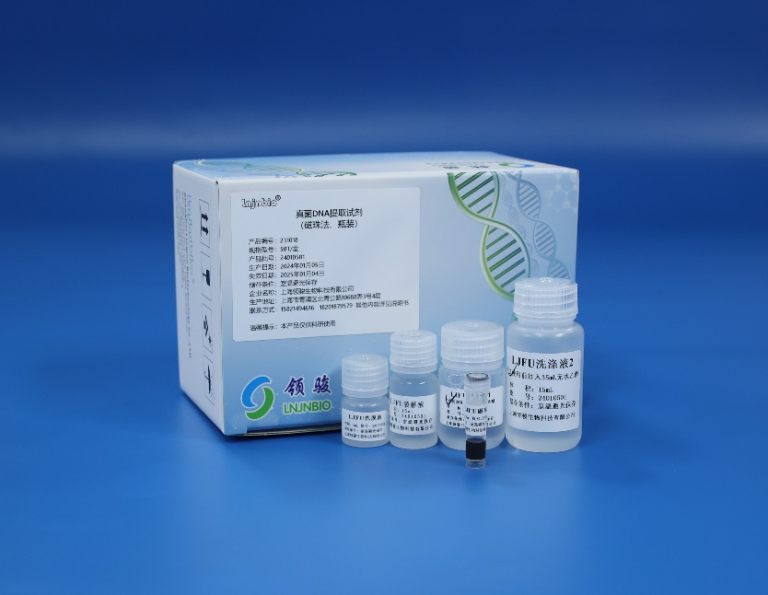
Low-cost nucleic acid kits (bijv., LNJNBio Magnetic Method Nucleic Acid Extraction Kit);
Industrial enzyme immobilization (high surface area for protein loading).
Selection Guidelines
High-throughput/Automation: Choose polystyrene beads (size uniformity ensures process stability);
Cost-sensitive/Manual Operations: Opt for silica beads (pre-screen to minimize size variability);
Harsh Conditions (heat/organic solvents): Prefer silica beads (superior chemical resistance).
Emerging Trend: Composite beads (bijv., SiO₂@PS core-shell) combine advantages, featuring a rigid core and modifiable organic surface, gaining traction in high-precision diagnostics.
Leverancier
Shanghai Lingjun Biotechnologie Co., Ltd.werd opgericht in 2016 dat een professionele fabrikant is van biomagnetische materialen en reagentia voor nucleïnezuurextractie.
We hebben een rijke ervaring in de extractie en zuivering van nucleïnezuren, eiwit zuivering, cel scheiding, chemiluminescentie, en andere technische gebieden.
Onze producten worden op veel gebieden veel gebruikt, zoals medische testen, genetische testen, universitair onderzoek, genetische veredeling, enzovoort. Wij leveren niet alleen producten, maar kunnen ook OEM ondernemen, ODM, en andere behoeften. Als u een gerelateerde behoefte heeft, Neem gerust contact met ons op .
-1-e1781509020992-768x474.webp)