Professionele fabrikant van biomagnetische kralen
Efficiënte afvalwaterbehandeling met behulp van magnetische kralen op silicabasis
Groeten, individuen met een passie voor het milieu en experts in de waterbehandelingssector! In de discussie van vandaag, we zullen fantastische elementen opzij zetten en ons verdiepen in het rijk van wetenschappelijke vooruitgang. Eén van deze innovaties die toonaangevend is op het gebied van de afvalwaterzuivering is het gebruik van Op silica gebaseerde magnetische kralen, die effectief afvalwater ertoe aanzetten om aan de regelgeving te voldoen. Ondanks hun futuristische titel, deze kralen dienen als uitzonderlijke troeven bij het verbeteren van afvalwaterzuiveringsprocessen.
1. Wat zijn op silica gebaseerde magnetische kralen?
In eenvoudige bewoordingen, zij zijnbollen op nanoschaal met eenmagnetische kern (samengesteld uit Fe₃O₄) en eensilica schaal (SiO₂). Hun diameter is ongeveer een honderdste van een mensenhaar, toch is hun vermogen om verontreinigende stoffen te adsorberen vergelijkbaar met dat van een spons die water opzuigt!
2. Hoe werken ze? Drie stappen om afvalwater te behandelen!
Uitgave: Introduceer de op silica gebaseerde magnetische deeltjes in het afvalwater, waar ze snel zullen convergeren en zich zullen binden aan verontreinigende stoffen zoals zware metalen (zoals lood en chroom), organische verontreinigende stoffen (inclusief kleurstoffen en pesticiden), en olie, net zoals roofdieren hun prooi opsporen.
Vastlegging: Functionele groepen (bijv., -NH₂, -COOH) op het silica-oppervlak binden verontreinigende stoffen veilig door middel van elektrostatische adsorptie of chemische binding.
Extractie: Gebruik een magneet om de magnetische kralen binnenin aan te trekken 10 seconden, de magnetische kralen, samen met de geadsorbeerde verontreinigende stoffen, zijn volledig verwijderd, waardoor het water onmiddellijk helder blijft!
Datagedreven feiten:
Adsorptiecapaciteit tot300 mg/g (tweemaal zoveel als actieve kool!).
Scheidingstijd<5 notulen, vergeleken met voorbij 2 uur voor traditionele sedimentatie.
Herbruikbaar voor≥10 cycli, het verlagen van de kosten door60%.
3. Waarom ze kiezen? Voordelen die beter presteren dan conventionele methoden!
| Aspect | Op silica gebaseerde magnetische kralen | Actieve kool/harsen |
| Efficiëntie | Snelle adsorptie & scheiding; pakt uitdagend afvalwater aan | Langzaam en selectief |
| Kosten | Herbruikbaar ≥10 keer | Typisch voor eenmalig gebruik, voortdurend geld wegvloeien |
| Milieuvriendelijkheid | Vermindert slib door 70%; maakt de terugwinning van zware metalen mogelijk & recycling | Hoog risico op secundaire vervuiling |
| Operatie | Volledig automatiseerbaar | Vertrouwt op handarbeid, vermoeiende ingenieurs |
4. Echte casus: De ommekeer in de galvaniseerfabriek!
Een bepaalde galvaniseerfabriek had te maken met ernstige nikkelionen (In²⁺) problemen. Na behandeling met magnetische kralen op silicabasis:
Verwijderingspercentage > 95%
Teruggewonnen nikkelmetaal voor wederverkoop (besparing $ 702,000 jaarlijks!)
Het percentage afvalwaterrecycling steeg met 40%.
5. Conclusie: Op silica gebaseerde magnetische kralen: de toekomst van waterbehandeling!
Deze innovatieve technologie dient als een goed voorbeeld van de circulaire economie door vervuiling aan te pakken, het terugwinnen van hulpbronnen, en het verminderen van de uitgaven.
Relatief, op het gebied van afvalwaterzuivering, Op silica gebaseerde magnetische kralen fungeren als een gericht precisiewapen gericht op verontreinigingen, vergelijkbaar met een magnetisch laserpistool.
Als je geïntrigeerd bent, aarzel dan niet om contact op te nemen! Laten we samenwerken om de zuiverheid van water te verbeteren en de duurzaamheid van het milieu te bevorderen.
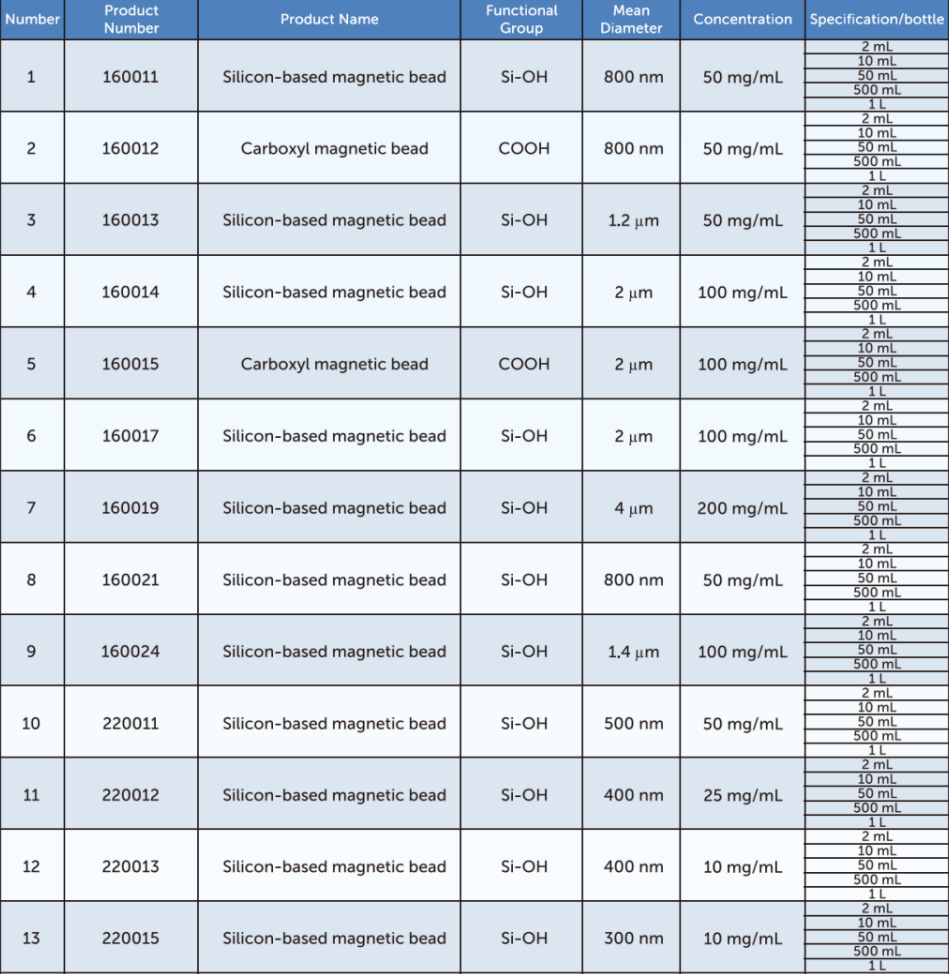
Plaats nu uw bestelling, aarzel niet!
Leverancier
Shanghai Lingjun Biotechnologie Co., Ltd.werd opgericht in 2016 dat een professionele fabrikant is van biomagnetische materialen en reagentia voor nucleïnezuurextractie.
We hebben een rijke ervaring in de extractie en zuivering van nucleïnezuren, eiwit zuivering, cel scheiding, chemiluminescentie, en andere technische gebieden.
Onze producten worden op veel gebieden veel gebruikt, zoals medische testen, genetische testen, universitair onderzoek, genetische veredeling, enzovoort. Wij leveren niet alleen producten, maar kunnen ook OEM ondernemen, ODM, en andere behoeften. Als u een gerelateerde behoefte heeft, Neem gerust contact met ons op .