المهنية في صناعة الخرز المغناطيسي الحيوي


كيفية تعزيز الكشف عن مسببات الأمراض باستخدام الخرز المغناطيسي الحيوي?
مقدمة
اليوم, نحن نتعمق في الدور الأساسي لـ الخرز الحيوي المغناطيسي في الكشف عن مسببات الأمراض التنفسية - فهي لا تعزز أداء الكشف بشكل كبير فقط, ولكنها تتضمن أيضًا تفاصيل مهمة تتطلب اهتمامًا خاصًا في التطبيقات العملية. التشخيص الدقيق لالتهابات الجهاز التنفسي (مثل الانفلونزا, كوفيد-19, إلخ.) أمر حيوي للصحة العامة, والخرز الحيوي المغناطيسي أداة أساسية لتحقيق هذا الهدف.
1. كيف تعمل الخرزات المغناطيسية على تحسين أداء الكشف?
الخرزات الحيوية المغناطيسية عبارة عن كريات مجهرية مغناطيسية تعمل على السطح وتحقق إثراء وتنقية فعالة لمسببات الأمراض عن طريق الارتباط بشكل خاص بالجزيئات المستهدفة (على سبيل المثال, الأحماض النووية الفيروسية أو البروتينات).
فيما يلي ثلاث مزايا أداء رئيسية يقدمونها في الكشف عن الجهاز التنفسي:
1.1 حساسية معززة: مكافحة الأحمال الفيروسية المنخفضة
عينات الجهاز التنفسي (على سبيل المثال, مسحات البلعوم الأنفي) قد تحتوي على مستويات منخفضة جدًا من مسببات الأمراض, وخاصة في حالات العدوى المبكرة أو الناقلين بدون أعراض. الاستفادة من نسبة السطح إلى الحجم العالية وقدرات الالتقاط المحددة, الخرز المغناطيسي يركز على مسببات الأمراض, تعزيز حساسية الكشف عن طريق 10- إلى 100 ضعف. على سبيل المثال, في اختبار RT-PCR, انتهت كفاءة استخراج الحمض النووي الريبي الفيروسي بعد تنقية الخرزة المغناطيسية 30% أعلى من الطرق التقليدية, الحد بشكل كبير من خطر السلبيات الكاذبة.
1.2 تحسين الخصوصية: تقليل التداخل المتبادل
يمكن تعديل سطح الخرز المغناطيسي باستخدام جزيئات الالتقاط المختلفة (على سبيل المثال, الأجسام المضادة, مجسات الحمض النووي) لتحقيق تحديد دقيق. على سبيل المثال:
1.2.1 الخرز المناعي:
مغلفة بأجسام مضادة خاصة بالفيروسات لالتقاط المستضدات مباشرة, مناسبة للكشف السريع.
1.2.2 استخراج الحمض النووي الخرز المغناطيسي:
تمتز الأحماض النووية عن طريق مجموعات السيلانول أو التبادل الأيوني, إزالة مثبطات (على سبيل المثال, موسين, الهيموجلوبين) من العينات لمنع نتائج إيجابية كاذبة PCR.
ويضمن هذا الربط المحدد نتائج كشف موثوقة للغاية.
1.3 السرعة والأتمتة: التوافق مع المنصات عالية الإنتاجية
الفصل المغناطيسي للخرز يلغي الحاجة إلى الطرد المركزي, مما يسمح بفصل الهدف بسرعة مباشرة عبر المجال المغناطيسي. هذا: يقلل من وقت معالجة العينة إلى 15-30 دقائق (مقارنة ب 1-2 ساعات للطرق التقليدية);
يسهل التكامل مع المعدات الآلية (على سبيل المثال, مستخلصات حبة مغناطيسية) للاختبار على نطاق واسع, تعزيز كفاءة الفحص بشكل كبير أثناء تفشي المرض.
2. الاعتبارات الرئيسية في الكشف: علم استخدام الخرز المغناطيسي
على الرغم من مزاياها الكبيرة, يعتمد أداء الخرزات المغناطيسية الحيوية على عمليات موحدة. فيما يلي الاعتبارات الأساسية للتطبيقات العملية:
2.1 نوع العينة والمعالجة المسبقة
- توافق العينة: الخرز المغناطيسي مناسب لعينات الجهاز التنفسي المختلفة (مسحات البلعوم الأنفي, البلغم, سائل غسل القصبات الهوائية), ولكن يجب تعديل بروتوكولات المعالجة لعينات مختلفة. على سبيل المثال, يتطلب البلغم معالجة مسبقة للتسييل لتجنب انسداد خطوط الأنابيب.
- منع التدهور: ينبغي جمع العينات طازجة أو تخزينها بشكل صحيح (على سبيل المثال, عند -80 درجة مئوية) لمنع تدهور الأحماض النووية / المستضدات المسببة للأمراض.
2.2 اختيار الخرزة المغناطيسية وتحسينها
- مطابقة تعديل السطح: حدد الخرز المغناطيسي مصممة خصيصا لهدف الكشف (على سبيل المثال, حبات استخراج الحمض النووي مقابل. حبات الالتقاط المناعي). للكشف عن تعدد الإرسال, تأكد من أن مجموعات الخرز المغناطيسي تتجنب التفاعل المتبادل.
- حجم الجسيمات والتركيز: الخرز المغناطيسي النانوي (400-800 نانومتر) مناسبة لاستخراج الحمض النووي, بينما الخرز المغناطيسي على نطاق ميكرون (1.2-4 ميكرومتر) أفضل بالنسبة للمقايسة المناعية; التركيزات العالية بشكل مفرط قد تسبب ارتباطًا غير محدد, تتطلب الاستخدام الأمثل.
2.3 توحيد العمليات
- خلط شامل: يجب خلط الخرز والعينات المغناطيسية بالكامل لضمان كفاءة الربط, ولكن ينبغي تجنب الاهتزاز القوي لمنع تلف مسببات الأمراض.
- شطف صارم: يجب أن تقوم خطوات الغسيل بإزالة الشوائب تمامًا, لكن الإفراط في الغسيل قد يقلل من المحصول. يوصى باستخدام أنظمة عازلة موحدة.
- متطلبات المجال المغناطيسي: يمكن للمجالات المغناطيسية القوية تسريع عملية الانفصال ولكن لا ينبغي تعريضها لفترات طويلة لمنع تراكم الخرزات وفشلها.
2.4 مراقبة الجودة والتحقق من صحتها
- الضوابط الموازية: يجب أن يتضمن كل اكتشاف عناصر تحكم إيجابية/سلبية لمراقبة أداء الخرزة المغناطيسية.
- التوافق مع المصب: ويجب التحقق من صحة مسببات الأمراض المستخرجة للتأكد من توافقها مع تقنيات الكشف النهائية (على سبيل المثال, تفاعل البوليميراز المتسلسل, التسلسل, أو المناعية).
2.5 القيود الفنية
- الاعتماد على التكلفة والمعدات: تتطلب كواشف الخرز المغناطيسي والمعدات الآلية استثمارات كبيرة, مما يجعلها مناسبة للمختبرات المركزية أو الفحص واسع النطاق.
- التحديات مع العينات المعقدة: قد تتطلب العينات التي تحتوي على نسبة عالية جدًا من المخاط معالجة مسبقة لتجنب انخفاض كفاءة ربط الخرز المغناطيسي.
3. مقدمة المنتج
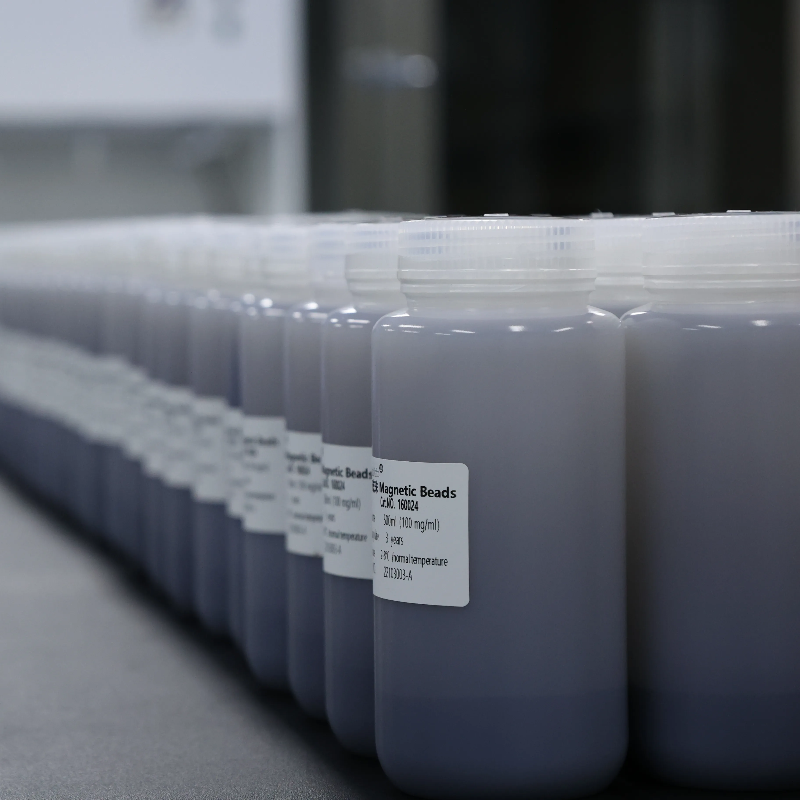
شركة شنغهاي لينغجون للتكنولوجيا الحيوية, المحدودة. طورت نماذج مختلفة من الخرز المغناطيسي القائم على السيليكا والتي يمكن تطبيقها على نطاق واسع في تشخيص الأمراض المسببة للأمراض. توفر هذه التقنية حساسية كشف عالية للغاية, تمكين الفحص السريع في مراحل العدوى المبكرة وتوفير وقت ثمين لمكافحة الأمراض والوقاية منها.
ال 16 سلسلة و 22 سلسلة الخرز المغناطيسي التي تم تطويرها وإنتاجها بواسطة Shanghai Lingjun تظهر قوة تشبع مغناطيسي ممتازة واستقرار التعليق, مع أحجام الجسيمات المتعددة المتاحة. فهي تتميز بمعدلات امتصاص عالية، على سبيل المثال, تحقيق أكثر 95% استعادة الحمض النووي المستهدف في 20 نانوغرام / ميكرولتر, مع معدلات امتصاص عالية لكل من أجزاء الحمض النووي/الحمض النووي الريبي (DNA) الكبيرة والصغيرة.
| لا. | رمز المنتج | اسم المنتج | مجموعة | حجم الجسيمات | المحتوى الصلب | تحديد |
| 1 | 160011 | حبات السيليكا المغناطيسية | سي-أوه | 800نانومتر | 50ملغم/مل | 2مل, 10مل, 50مل, 500مل, 1000مل |
| 2 | 160013 | حبات السيليكا المغناطيسية | سي-أوه | 1.2ميكرومتر | 50ملغم/مل | 2مل, 10مل, 50مل, 500مل, 1000مل |
| 3 | 160014 | حبات السيليكا المغناطيسية | سي-أوه | 2ميكرومتر | 100ملغم/مل | 2مل, 10مل, 50مل, 500مل, 1000مل |
| 4 | 160019 | حبات السيليكا المغناطيسية | سي-أوه | 4ميكرومتر | 200ملغم/مل | 2مل, 10مل, 50مل, 500مل, 1000مل |
| 5 | 160024 | حبات السيليكا المغناطيسية | سي-أوه | 1.4ميكرومتر | 100ملغم/مل | 2مل, 10مل, 50مل, 500مل, 1000مل |
| 6 | 220011 | حبات السيليكا المغناطيسية | سي-أوه | 500نانومتر | 50ملغم/مل | 2مل, 10مل, 50مل, 500مل, 1000مل |
| 7 | 220012 | حبات السيليكا المغناطيسية | سي-أوه | 400نانومتر | 25ملغم/مل | 2مل, 10مل, 50مل, 500مل, 1000مل |
4. خاتمة
من خلال تعزيز الحساسية, خصوصية, والكفاءة, أصبحت الخرزات الحيوية المغناطيسية “المعيار الذهبي” أداة للكشف عن مسببات الأمراض التنفسية. لكن, وتعظيم أدائها يعتمد على الاختيار العلمي, عمليات موحدة, ومراقبة الجودة الصارمة. نحن نؤمن إيمانًا راسخًا بأنه فقط من خلال فهم التفاصيل الفنية يمكن للاكتشاف الدقيق أن يحمي الصحة حقًا.
إذا كانت لديك أسئلة محددة حول اختيار الخرزة المغناطيسية أو سيناريوهات التطبيق, لا تتردد في ترك تعليق! يتقدم العلم من خلال التبادل, ويتم تحقيق الصحة من خلال الدقة.
مزود
شركة شنغهاي لينغجون للتكنولوجيا الحيوية, المحدودة.تأسست في 2016 وهي شركة متخصصة في تصنيع المواد المغناطيسية الحيوية وكواشف استخلاص الحمض النووي.
لدينا خبرة غنية في استخراج وتنقية الحمض النووي, تنقية البروتين, فصل الخلايا, التألق الكيميائي, وغيرها من المجالات التقنية.
منتجاتنا تستخدم على نطاق واسع في العديد من المجالات, مثل الفحوصات الطبية, الاختبارات الجينية, البحوث الجامعية, التكاثر الوراثي, وهكذا. نحن لا نقدم المنتجات فحسب، بل يمكننا أيضًا إجراء تصنيع المعدات الأصلية, أوديإم, وغيرها من الاحتياجات. إذا كان لديك حاجة ذات صلة, لا تتردد في الاتصال بنا .