Professional Manufacturer of Biomagnetic Beads


Future Market Size and Growth Forecast Analysis Report for Agarose Gel Electrophoresis Kits
1. Executive Summary
The agarose gel electrophoresis kit, a critical tool in basic life science research and clinical diagnostics, is projected to experience steady and sustained growth in the coming years. This growth is primarily driven by increasing global investment in life sciences R&D, the rapid development of genomics and precision medicine, and iterative technological innovations. Despite competition from emerging technologies, its cost-effectiveness, ease of use, and reliability ensure its indispensable role in laboratories worldwide. This report provides an in-depth analysis of core market data, growth drivers, challenges, and future trends.
2. Market Overview and Core Size Forecast
Agarose gel electrophoresis kits represent a significant segment of the broader electrophoresis reagents market. Understanding its potential requires examining the overall parent market.
Parent Market Benchmark: The global electrophoresis reagents market is expected to be valued at approximately $1.5 billion in 2025. Forecasts indicate this market will grow to $2.6 billion by 2035, representing a Compound Annual Growth Rate (CAGR) of 5.4% during the period from 2026 to 2035.
Segment Market Position: Among various electrophoresis reagent types, agarose gel is one of the most widely used categories, primarily due to its prevalence in nucleic acid analysis. It is estimated to hold a significant share of approximately 32.7% of the total electrophoresis reagents market, underscoring its importance.
Global Market Outlook: The global market for agarose gel electrophoresis kits is universally expected to continue its expansion throughout the 2025-2031 forecast period, although specific growth rates will vary by region and downstream demand.

3. Regional Market Analysis
The global market exhibits distinct regional characteristics, with growth engines located in different areas.
North American Market: As the world’s most mature market, North America (particularly the United States) is projected to hold the largest share of the global electrophoresis reagents market, around 38.5%. Its growth is fueled by substantial government and private sector R&D funding, highly concentrated biotechnology clusters, and advanced healthcare infrastructure.
Asia-Pacific Market: The Asia-Pacific region (including China, India, Japan, etc.) is anticipated to be the fastest-growing market globally. This momentum stems from continuous government investment in life sciences research infrastructure, rising healthcare expenditures, and a booming biopharmaceutical industry across the region.
4. Core Drivers of Market Growth
Several powerful drivers are collectively shaping the future growth of the agarose gel electrophoresis kit market:
Sustained Increase in R&D Investment: Steady growth in funding from governments and private entities worldwide for basic life science research, genomics, and drug discovery/development creates stable demand for routine laboratory consumables, including kits.
Expanding Clinical Applications: Due to its reliability in nucleic acid detection, the technology is being increasingly adopted in clinical diagnostics, genetic disease screening, pathogen detection, and forensics, expanding its market boundaries from a research tool to a diagnostic aid.
Boom in Precision Medicine and Biopharmaceuticals: Personalized medicine and biomarker discovery rely on accurate nucleic acid and protein analysis. Furthermore, the biopharmaceutical industry creates consistent demand for agarose gel electrophoresis in drug quality control and assurance processes.
Ongoing Technological Advancements: Even as a classic technique, continuous improvements such as higher-resolution formulations, safer precast gels, and enhanced sensitivity of companion imaging systems continue to optimize the user experience and maintain its market relevance.
5. Market Challenges and Constraints
Despite the optimistic outlook, the market’s development faces several notable challenges:
Competitive Pressure from Alternative Technologies: Newer technologies like Next-Generation Sequencing (NGS), digital PCR, mass spectrometry, and high-performance capillary electrophoresis offer advantages in throughput, sensitivity, automation, and data richness, potentially displacing traditional gel electrophoresis in some high-end applications.
Cost and Technical Barriers: High-end or automated electrophoresis systems and their dedicated reagents can be costly. Additionally, operation requires a certain level of technical skill, posing entry barriers for budget-constrained small and medium-sized laboratories or research institutions in emerging markets.
Throughput and Efficiency Bottlenecks: Compared to alternative methods, traditional manual gel electrophoresis is lower in throughput, involves more cumbersome steps, and is more time-consuming, making it less suitable for modern high-throughput screening requirements.
6. Competitive Landscape and Future Trends
6.1 Competitive Landscape
The global market is dominated by a few international giants, alongside numerous regional players. Key vendors include:
International Leaders: Thermo Fisher Scientific, Bio-Rad Laboratories, Merck KGaA, Qiagen, Takara Bio, etc. These companies hold a dominant market position due to their extensive product portfolios, strong brand recognition, and global distribution networks.
Local Participants: In emerging markets like China, local companies such as Shanghai Haling Biotechnology and Beijing Zongsheng Biao Biological Technology are active, leveraging advantages in cost control and localized services.
6.2 Future Technology Trends
The future evolution of the market will revolve around several key directions:
Automation and High-Throughput: Automated workstations integrating loading, electrophoresis, imaging, and analysis functions will gain popularity to meet the demands for efficiency and reproducibility in large-scale studies.
Miniaturization and Convenience: Development of portable, low-sample-consumption miniaturized electrophoresis systems aims to cater to point-of-care testing and resource-limited settings.
Intelligence and Analysis Software: Artificial Intelligence (AI) and machine learning are being increasingly applied to automate gel image analysis, enabling more accurate and rapid band identification, data quantification, and reduction of human error, significantly enhancing data analysis efficiency and reliability.
7. Conclusion
In summary, the agarose gel electrophoresis kit market is on a trajectory of steady growth. Its foundation lies in the continued global expansion of life sciences research and its deepening penetration into clinical applications. While facing competition from newer technologies, ongoing upgrades towards automation, miniaturization, and intelligence will ensure this classic technique remains an indispensable tool in modern biological and medical laboratories. For market participants, focusing on product innovation, cost reduction, and tapping into emerging markets will be key to capturing future opportunities.
Supplier
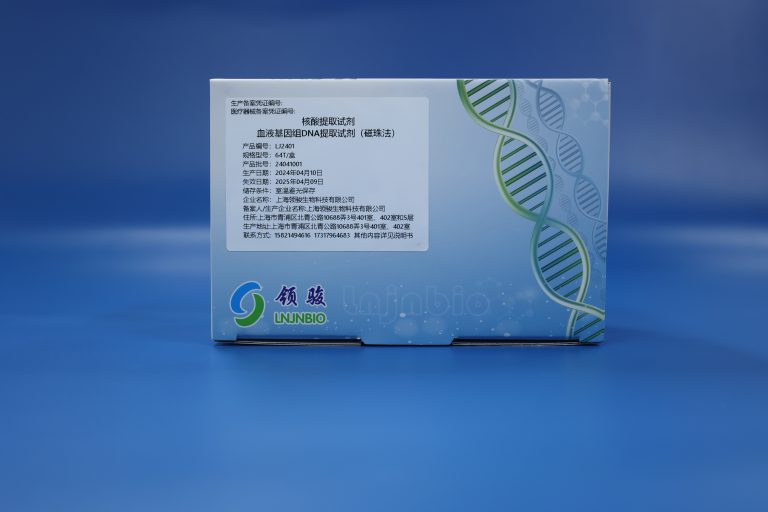
Shanghai Lingjun Biotechnology Co., Ltd. was established in 2016 which is a professional manufacturer of biomagnetic materials and nucleic acid extraction reagents.
We have rich experience in nucleic acid extraction and purification, protein purification, cell separation, chemiluminescence, and other technical fields.
Our products are widely used in many fields, such as medical testing, genetic testing, university research, genetic breeding, and so on. We not only provide products but also can undertake OEM, ODM, and other needs. If you have a related need, please feel free to contact us .