Produsen Profesional Manik Biomagnetik


Apakah Manik Magnetik Terbaik untuk Ekstraksi Asam Nukleat Mycoplasma?
Perkenalan
Itu “Metode Manik Magnetik” dapat dengan tepat dipuji sebagai “patokan baru untuk ekstraksi asam nukleat di Mycoplasma Pneumoniae.” Dengan keunggulan efisiensi tinggi, otomatisasi, keamanan, dan throughput yang tinggi, Teknologi ekstraksi asam nukleat berbasis manik magnetik telah menjadi standar utama dan emas dalam bidang diagnostik molekuler saat ini, termasuk untuk mendeteksi pneumonia Mycoplasma pneumoniae (MPP).
1. Mengapa Ekstraksi Asam Nukleat Penting untuk Mycoplasma Pneumoniae?
Pneumonia Mycoplasma pneumoniae adalah infeksi saluran pernapasan yang disebabkan oleh Mycoplasma pneumoniae. Patogen memiliki struktur yang unik (kekurangan dinding sel), membuatnya sulit dan memakan waktu untuk budaya.
Karena itu, deteksi asam nukleat (seperti PCR) telah menjadi metode pilihan untuk diagnosis klinis cepat. Itu “langkah pertama dan paling penting” dalam pengujian asam nukleat adalah ekstraksi asam nukleat.
Kualitas ekstraksi secara langsung menentukan aspek-aspek berikut dari hasil pengujian selanjutnya:
- Ketepatan: Menghindari negatif palsu (asam nukleat tidak diekstraksi) dan positif palsu (kontaminasi selama ekstraksi).
- Kepekaan: Memungkinkan deteksi jumlah minimal asam nukleat patogen dalam sampel.
- Keandalan: Hasilnya stabil dan dapat direproduksi.
2. Ekstraksi Asam Nukleat Manik Magnetik: Bagaimana Itu Menjadi “Tolok Ukur Baru”?
Dibandingkan dengan metode tradisional (seperti ekstraksi fenol-kloroform dan metode berbasis kolom), metode manik magnetik mencapai peningkatan kinerja yang komprehensif, secara khusus tercermin dalam aspek-aspek berikut:
2.1 Efisiensi Tinggi dan Hasil Tinggi
Prinsip:
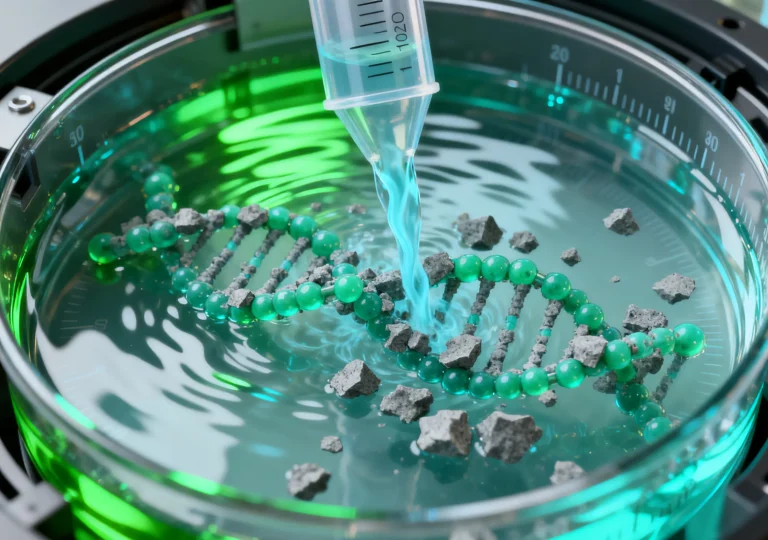
Manik-manik magnetik dilapisi dengan gugus fungsi yang secara khusus menyerap asam nukleat (DNA/RNA). Saat manik-manik dicampur dengan sampel lisat, asam nukleat mengikatnya dengan kuat. Di bawah medan magnet luar, manik-manik (bersama dengan asam nukleat yang terikat) dengan cepat terkonsentrasi dan terpisah. Kotoran seperti protein dan ion garam dihilangkan melalui langkah pencucian, dan akhirnya, asam nukleat murni dielusi menggunakan buffer elusi.
Keuntungan:
Untuk patogen seperti Mycoplasma pneumoniae, yang seringkali memiliki beban rendah, metode manik magnetik memaksimalkan penangkapan dan pemulihan asam nukleat, secara signifikan meningkatkan sensitivitas deteksi dan mengurangi risiko negatif palsu.
2.2 Otomatisasi dan Throughput Tinggi
Prinsip:
Seluruh proses sangat cocok untuk instrumen ekstraksi asam nukleat otomatis. Operator hanya perlu menambahkan sampel dan reagen, dan instrumen secara otomatis menyelesaikan semua langkah: lisis, mengikat, pencucian, dan elusi.
Keuntungan:
- Pemrosesan Throughput Tinggi: Satu instrumen dapat memproses puluhan bahkan ratusan sampel secara bersamaan, sangat meningkatkan efisiensi, menjadikannya ideal untuk laboratorium rumah sakit dan kebutuhan skrining skala besar.
- Penghematan Tenaga Kerja: Membebaskan tenaga teknis dari operasi manual yang membosankan dan berulang.
2.3 Kemurnian dan Konsistensi Luar Biasa
Prinsip:
Metode manik magnet, melalui beberapa pemisahan dan pencucian magnetik yang efisien, dapat menghilangkan inhibitor dari sampel secara lebih menyeluruh (seperti hemoglobin, imunoglobulin, lendir pernapasan, dll.). Inhibitor ini adalah faktor kunci yang mempengaruhi efisiensi amplifikasi PCR.
Keuntungan:
Asam nukleat yang diekstraksi memiliki kemurnian tinggi, menyediakan a “pembersih” template untuk deteksi PCR hilir, memastikan hasil yang akurat dan dapat direproduksi, dan mengurangi kegagalan eksperimental yang disebabkan oleh langkah ekstraksi.
2.4 Keamanan dan Kesederhanaan Operasional
- Operasi Tabung Tertutup: Sistem otomatis kebanyakan menggunakan operasi tabung tertutup, sangat mengurangi pembentukan aerosol dan menurunkan risiko kontaminasi laboratorium dan paparan operator terhadap patogen.
- Alur Kerja yang Efisien: Menghindari langkah-langkah yang rawan kesalahan dan berpotensi mencemari yang umum terjadi pada metode tradisional, seperti sentrifugasi, transfer tabung, dan aspirasi cairan.
2.5 Standardisasi dan Ketertelusuran
Pengoperasian instrumen otomatis dikendalikan oleh program, memastikan volume reagen yang sangat konsisten, waktu reaksi, dan suhu untuk setiap langkah, sehingga standarisasi proses ekstraksi.
Hal ini memfasilitasi pembentukan Prosedur Operasi Standar (SOP) di laboratorium, menjamin kualitas hasil, dan menyederhanakan manajemen data dan ketertelusuran.
Perbandingan dengan Metode Tradisional
| Ciri | Metode Manik Magnetik (Tolok Ukur Baru) | Metode Kolom Tradisional | Fenol-Kloroform (Metode Klasik) |
| Tingkat Otomatisasi | Tinggi, sepenuhnya otomatis | Rendah, terutama manual | Rendah, sepenuhnya manual |
| Hasil | Tinggi | Rendah hingga Sedang | Rendah |
| Efisiensi/Hasil Ekstraksi | Tinggi dan stabil | Sedang | Tinggi, tapi tidak stabil |
| Kemurnian (Penghapusan Inhibitor) | Tinggi | Sedang | Relatif tinggi, tapi variabel |
| Keselamatan Operasional | Tinggi (operasi tabung tertutup) | Sedang (sering melibatkan tabung terbuka) | Rendah (reagen beracun) |
| Reproduksibilitas/Standarisasi | Bagus sekali | Variabel (bergantung pada operator) | Miskin |
| Biaya | Investasi instrumen tinggi, biaya per tes sedang | Rendah (tidak ada biaya instrumen) | Rendah (namun biaya pembuangan limbah beracun) |
| Skenario yang Cocok | Pengujian klinis skala besar, penyaringan throughput tinggi | Penelitian dalam jumlah kecil, laboratorium kecil | Penelitian dasar |
3. Rekomendasi Merek:
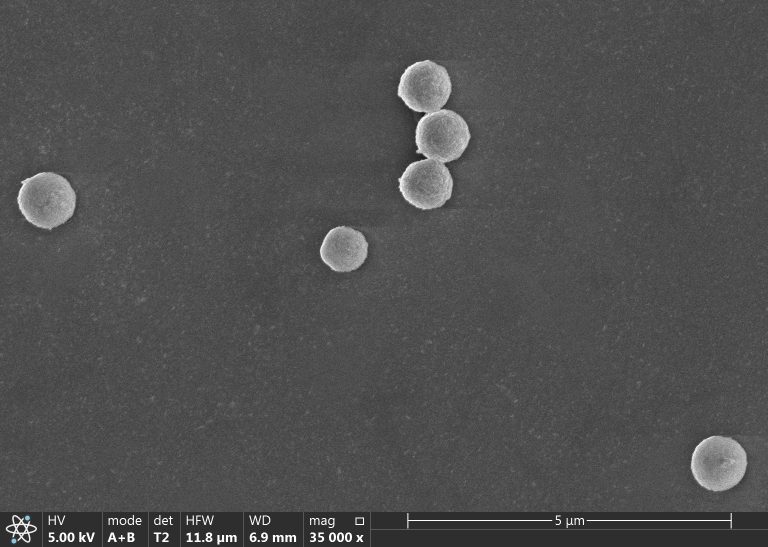
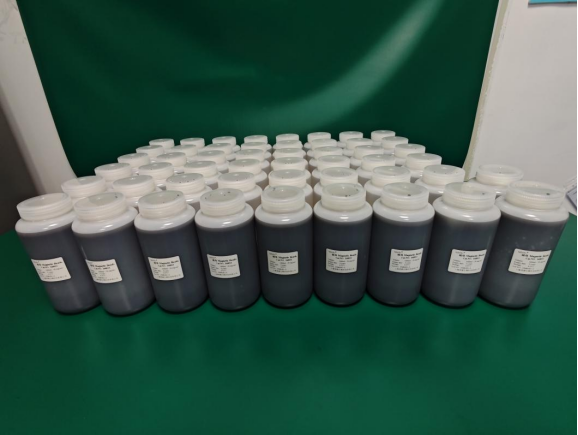
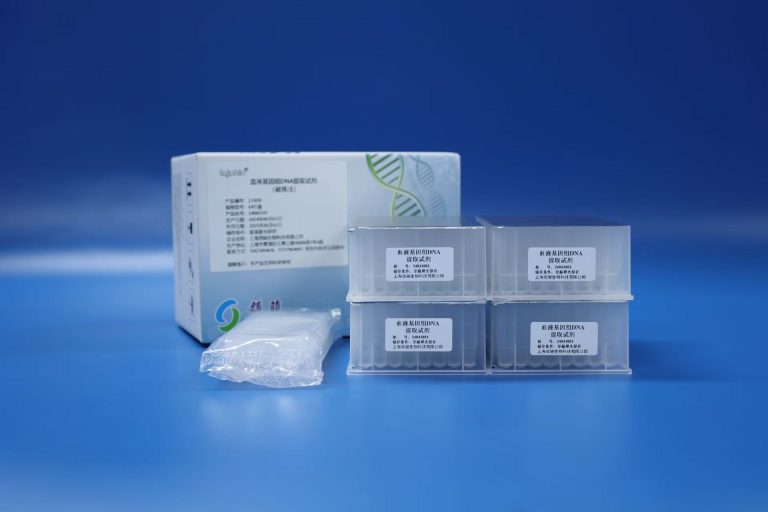
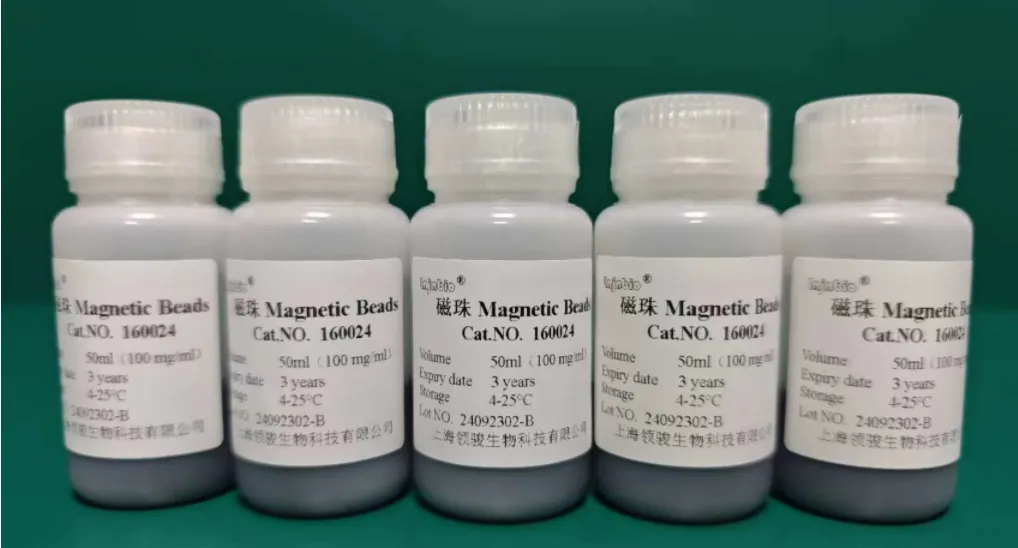
Shanghai Lingjun Bioteknologi Co., Ltd. telah mengembangkan berbagai model manik magnetik berbasis silika yang dapat diterapkan secara luas di bidang diagnosis penyakit patogen. Secara khusus, milik mereka160024 manik-manik magnetik dapat digunakan untuk ekstraksi asam nukleat untuk Mycoplasma pneumoniae. Itu 160024 manik-manik magnetik menawarkan sensitivitas deteksi yang sangat tinggi dalam ekstraksi asam nukleat, memungkinkan skrining cepat pada tahap awal infeksi, sehingga mendapatkan waktu yang berharga untuk pencegahan dan pengendalian penyakit.
3.1 Spesifikasi Produk
Kode Produk: 160024
Konten Padat: 100 mg/mL
Kemasan: 2 mL / 10 mL / 50 mL / 500 mL / 1000 mL
3.2 Parameter Produk
| Parameter | 160024 |
| Grup Aktif | Si-OH |
| Matriks Manik | Silikon Dioksida |
| Ukuran Partikel Rata-rata | 1.4 mikron |
| Magnetisasi Saturasi | 75 ± 5 emu/g |
3.3 Keunggulan Produk
- Tingkat Adsorpsi Tinggi: Tingkat pemulihan maksimum telah berakhir 95%, kinerja adsorpsi yang kuat untuk fragmen besar dan kecil.
- Sifat Magnetik Yang Kuat: Magnetisasi saturasi 75 ± 5 emu/g.
- Sangat Cocok Untuk: Ekstraksi asam nukleat virus, ekstraksi fragmen DNA bebas serum/plasma.
- Kemurnian dan Sensitivitas Tinggi: Asam nukleat yang diekstraksi memiliki kemurnian tinggi dan sensitivitas tinggi.
- Proses yang Matang dan Konsistensi Batch yang Baik: Produk ini mendapat manfaat dari proses manufaktur yang matang yang memastikan stabilitas yang baik antar batch.
4. Kesimpulan
Dalam diagnosis pneumonia Mycoplasma pneumoniae, kecepatan, ketepatan, dan hasil yang tinggi merupakan persyaratan klinis inti. Teknologi ekstraksi asam nukleat manik magnetik memenuhi kebutuhan ini dengan sempurna: otomatisasinya memungkinkan efisiensi tinggi, mampu menangani tekanan pengujian dari sampel dalam jumlah besar dari pasien rawat jalan dan rawat inap.
Karena itu, mengacu pada metode manik magnetik sebagai “patokan baru untuk ekstraksi asam nukleat pada pneumonia Mycoplasma pneumoniae” memang layak. Hal ini tidak hanya mencerminkan kemajuan teknologi tetapi juga merupakan landasan penting untuk mempromosikan rutinitas, skala besar, dan penerapan standar diagnostik molekuler dalam praktik klinis.
Pemasok
Shanghai Lingjun Bioteknologi Co., Ltd.didirikan pada 2016 yang merupakan produsen profesional bahan biomagnetik dan reagen ekstraksi asam nukleat.
Kami memiliki pengalaman yang kaya dalam ekstraksi dan pemurnian asam nukleat, pemurnian protein, pemisahan sel, kimialuminesensi, dan bidang teknis lainnya.
Produk kami banyak digunakan di berbagai bidang, misalnya tes kesehatan, pengujian genetik, penelitian universitas, pemuliaan genetik, dan sebagainya. Kami tidak hanya menyediakan produk tetapi juga dapat melakukan OEM, ODM, dan kebutuhan lainnya. Jika Anda memiliki kebutuhan terkait, jangan ragu untuk menghubungi kami .