Fabricante profissional de esferas biomagnéticas


As esferas magnéticas são as melhores para extração de ácido nucleico de micoplasma?
Introdução
O “Método de Conta Magnética” pode ser justamente aclamado como o “nova referência para extração de ácido nucleico em Mycoplasma Pneumoniae.” Com suas vantagens de alta eficiência, automação, segurança, e alto rendimento, a tecnologia de extração de ácido nucleico baseada em esferas magnéticas tornou-se o padrão principal e ouro no campo atual de diagnóstico molecular, inclusive para a detecção de pneumonia por Mycoplasma pneumoniae (MPP).
1. Por que a extração de ácido nucleico é crucial para Mycoplasma Pneumoniae?
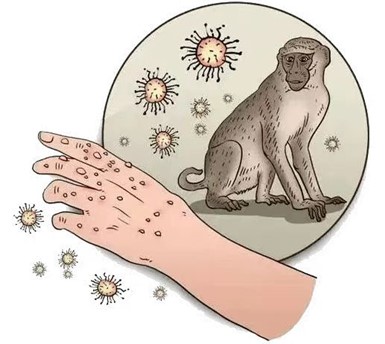
A pneumonia por Mycoplasma pneumoniae é uma infecção respiratória causada por Mycoplasma pneumoniae. O patógeno tem uma estrutura única (sem parede celular), tornando difícil e demorado a cultura.
Portanto, detecção de ácido nucleico (como PCR) tornou-se o método preferido para diagnóstico clínico rápido. O “primeiro e mais crítico passo” no teste de ácido nucleico é a extração de ácido nucleico.
A qualidade da extração determina diretamente os seguintes aspectos dos resultados de testes subsequentes:
- Precisão: Evita falsos negativos (ácido nucleico não extraído) e falsos positivos (contaminação durante a extração).
- Sensibilidade: Permite a detecção de quantidades mínimas de ácido nucleico do patógeno na amostra.
- Confiabilidade: Os resultados são estáveis e reproduzíveis.
2. Extração de ácido nucleico de esfera magnética: Como isso se tornou o “Nova referência”?
Comparado aos métodos tradicionais (como extração com fenol-clorofórmio e métodos baseados em coluna), o método do cordão magnético alcança melhorias abrangentes de desempenho, refletido especificamente nos seguintes aspectos:
2.1 Alta eficiência e alto rendimento
Princípio:
Esferas magnéticas são revestidas com grupos funcionais que adsorvem especificamente ácidos nucleicos (ADN/ARN). Quando as esferas são misturadas com o lisado da amostra, ácidos nucléicos se ligam firmemente a eles. Sob um campo magnético externo, as contas (junto com os ácidos nucléicos ligados) são rapidamente concentrados e separados. Impurezas como proteínas e íons de sal são removidas através de etapas de lavagem, e finalmente, ácidos nucleicos puros são eluídos usando um tampão de eluição.
Vantagem:
Para patógenos como Mycoplasma pneumoniae, que muitas vezes têm carga baixa, o método do cordão magnético maximiza a captura e recuperação de ácidos nucléicos, melhorando significativamente a sensibilidade de detecção e reduzindo o risco de falsos negativos.
2.2 Automação e alto rendimento
Princípio:
Todo o processo é adequado para instrumentos automatizados de extração de ácidos nucleicos. Os operadores só precisam adicionar amostras e reagentes, e o instrumento completa automaticamente todas as etapas: lise, vinculativo, lavar, e eluição.
Vantagem:
- Processamento de alto rendimento: Um instrumento pode processar dezenas ou até centenas de amostras simultaneamente, melhorando significativamente a eficiência, tornando-o ideal para laboratórios hospitalares e necessidades de triagem em larga escala.
- Economia de trabalho: Libera o pessoal técnico de operações manuais tediosas e repetitivas.
2.3 Excelente Pureza e Consistência
Princípio:
O método do cordão magnético, através de múltiplas separações e lavagens magnéticas eficientes, pode remover mais completamente os inibidores da amostra (como hemoglobina, imunoglobulinas, muco respiratório, etc.). Esses inibidores são fatores-chave que afetam a eficiência da amplificação por PCR.
Vantagem:
Os ácidos nucleicos extraídos são de alta pureza, fornecendo um “limpador” modelo para detecção de PCR downstream, garantindo resultados precisos e reproduzíveis, e reduzindo falhas experimentais causadas pela etapa de extração.
2.4 Segurança Operacional e Simplicidade
- Operação em tubo fechado: Os sistemas automatizados usam principalmente operações de tubo fechado, reduzindo significativamente a geração de aerossóis e diminuindo o risco de contaminação do laboratório e exposição do operador a patógenos.
- Fluxo de trabalho simplificado: Evita etapas propensas a erros e potencialmente contaminantes comuns em métodos tradicionais, como centrifugação, transferências de tubo, e aspiração de líquidos.
2.5 Padronização e Rastreabilidade
A operação automatizada do instrumento é controlada por programa, garantindo volumes de reagentes altamente consistentes, tempos de reação, e temperaturas para cada etapa, padronizando assim o processo de extração.
Isso facilita o estabelecimento de Procedimentos Operacionais Padrão (POPs) em laboratórios, garante a qualidade do resultado, e simplifica o gerenciamento de dados e a rastreabilidade.
Comparação com métodos tradicionais
| Característica | Método de Conta Magnética (Nova referência) | Método de Coluna Tradicional | Fenol-Clorofórmio (Método Clássico) |
| Nível de automação | Alto, totalmente automático | Baixo, principalmente manual | Baixo, inteiramente manual |
| Taxa de transferência | Alto | Baixo a Médio | Baixo |
| Eficiência/Rendimento de Extração | Alto e estável | Médio | Alto, mas instável |
| Pureza (Remoção do Inibidor) | Alto | Médio | Relativamente alto, mas variável |
| Segurança Operacional | Alto (operação em tubo fechado) | Médio (muitas vezes envolve tubos abertos) | Baixo (reagentes tóxicos) |
| Reprodutibilidade/Padronização | Excelente | Variável (dependente do operador) | Pobre |
| Custo | Alto investimento em instrumentos, custo médio por teste | Baixo (nenhum custo de instrumento) | Baixo (mas os custos de eliminação de resíduos tóxicos) |
| Cenários adequados | Testes clínicos em grande escala, triagem de alto rendimento | Pesquisa em pequenos lotes, pequenos laboratórios | Pesquisa básica |
3. Recomendação de marca:
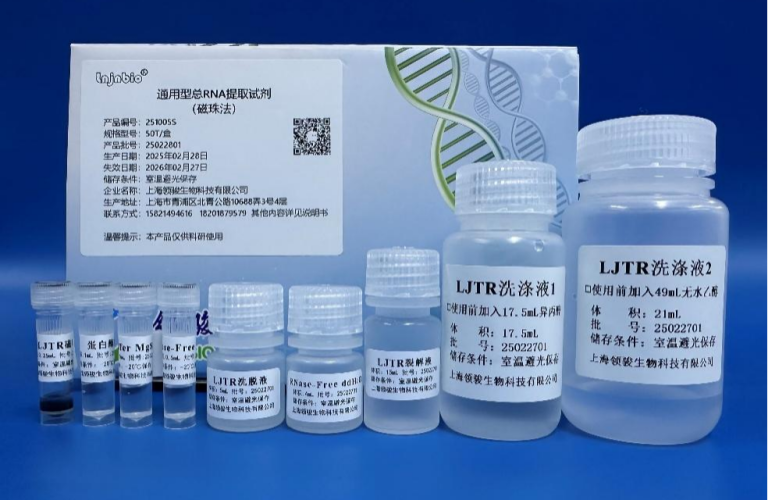
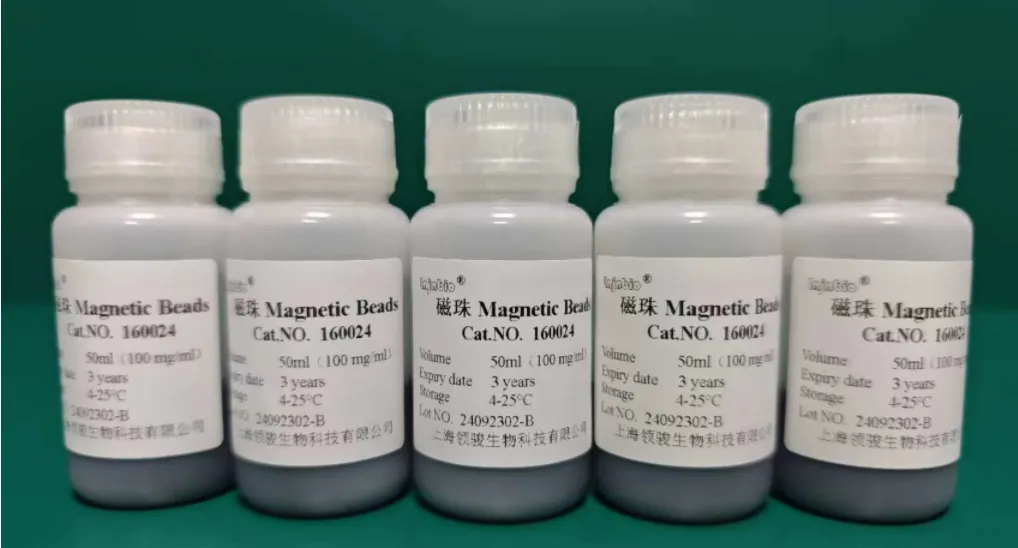
Xangai Lingjun Biotecnologia Co., Ltda. desenvolveu vários modelos de esferas magnéticas à base de sílica amplamente aplicáveis no campo do diagnóstico de doenças patogênicas. Especificamente, deles160024 contas magnéticas pode ser usado para extração de ácido nucleico para Mycoplasma pneumoniae. O 160024 esferas magnéticas oferecem sensibilidade de detecção extremamente alta na extração de ácido nucleico, permitindo uma triagem rápida nos estágios iniciais da infecção, ganhando assim um tempo valioso para a prevenção e controle de doenças.
3.1 Especificações do produto
Código do produto: 160024
Conteúdo Sólido: 100 mg/mL
Embalagem: 2 mL / 10 mL / 50 mL / 500 mL / 1000 mL
3.2 Parâmetros do produto
| Parâmetro | 160024 |
| Grupo ativo | Si-OH |
| Matriz de contas | Dióxido de Silício |
| Tamanho Médio de Partícula | 1.4 µm |
| Magnetização de Saturação | 75 ± 5 emu/g |
3.3 Vantagens do produto
- Alta taxa de adsorção: Taxa máxima de recuperação acima 95%, forte desempenho de adsorção para fragmentos grandes e pequenos.
- Propriedades magnéticas fortes: Magnetização de saturação de 75 ± 5 emu/g.
- Especialmente adequado para: Extração de ácido nucleico viral, extração de fragmentos de DNA sem soro/plasma.
- Alta Pureza e Sensibilidade: Os ácidos nucleicos extraídos são de alta pureza e alta sensibilidade.
- Processo maduro e boa consistência de lote: O produto beneficia de um processo de fabrico maduro que garante uma boa estabilidade entre lotes.
4. Conclusão
No diagnóstico de pneumonia por Mycoplasma pneumoniae, velocidade, precisão, e alto rendimento são requisitos clínicos essenciais. A tecnologia de extração de ácido nucleico com esferas magnéticas atende perfeitamente a essas necessidades: sua automação permite alta eficiência, capaz de lidar com a pressão de teste de grandes volumes de amostras de pacientes ambulatoriais e internados.
Portanto, referindo-se ao método do cordão magnético como o “nova referência para extração de ácido nucleico em pneumonia por Mycoplasma pneumoniae” é bem merecido. Não é apenas um reflexo do avanço tecnológico, mas também uma pedra angular crucial para promover a rotina, em grande escala, e aplicação padronizada de diagnóstico molecular na prática clínica.
Fornecedor
Xangai Lingjun Biotecnologia Co., Ltda.foi estabelecido em 2016 que é um fabricante profissional de materiais biomagnéticos e reagentes de extração de ácido nucleico.
Temos vasta experiência em extração e purificação de ácidos nucleicos, purificação de proteínas, separação celular, quimioluminescência, e outras áreas técnicas.
Nossos produtos são amplamente utilizados em muitos campos, como exames médicos, testes genéticos, pesquisa universitária, melhoramento genético, e assim por diante. Nós não apenas fornecemos produtos, mas também podemos realizar OEM, ODM, e outras necessidades. Se você tiver uma necessidade relacionada, não hesite em contactar-nos .