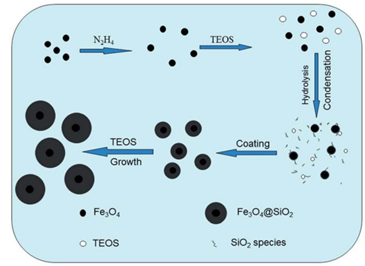
Produttore professionale di perline biomagnetiche


Metodo della perla magnetica: Il miglior metodo di rilevamento degli agenti patogeni
Oggi, let’s explore the application of Estrazione dell'acido nucleico basata su perline magnetiche nella rilevazione dei patogeni respiratori. Questa è un’integrazione tecnologica fondamentale, poiché determina direttamente la precisione, sensibilità, and reliability of subsequent nucleic acid detection methods (such as qPCR and sequencing). Magnetic bead-based extraction has become the mainstream and gold standard method for nucleic acid extraction in clinical pathogen detection.
1. Why Efficient Nucleic Acid Extraction Is Essential for Respiratory Pathogen Detection
Campioni respiratori (such as nasopharyngeal swabs, espettorato, and bronchoalveolar lavage fluid) are highly complex, containing:A large number of host cells and DNA/RNA、Various proteins (including mucins, immunoglobuline, and enzymes)、Salt ions and metabolic waste、Potential PCR inhibitors (such as hemoglobin, mucin, and certain therapeutic drugs).These components can severely interfere with subsequent amplification and detection steps, leading to false-negative results (due to inhibition) or inaccurate quantification. Perciò, an efficient and pure nucleic acid extraction and purification process is essential.
2. Principle of Magnetic Bead-Based Nucleic Acid Extraction
Magnetic bead-based extraction is a technique based on Solid-Phase Reversible Immobilization (SPRI). Its core component is magnetic nano- or micro-sized beads with surface functional groups (such as carboxyl groups).
The basic process, which can be efficiently automated, typically consists of four steps:
Lisi: A lysis buffer (usually containing guanidine salts and surfactants) disrupts viral capsids or cell membranes to release nucleic acids (RNA/DNA) and creates conditions favorable for nucleic acid adsorption onto the magnetic beads.
Legame: Under specific salt concentrations and pH conditions, nucleic acid molecules specifically adsorb to the surface of the magnetic beads via hydrogen bonding and hydrophobic interactions, forming “magnetic bead-nucleic acid” complexes.
Lavaggio: An external magnetic field is applied to immobilize the “magnetic bead-nucleic acid” complexes, and the waste liquid is removed. The complexes are then washed 2–3 times with a 70%–80% ethanol solution to remove proteins, ioni di sale, e altre impurità, leaving only pure “magnetic bead-nucleic acid” complexes.
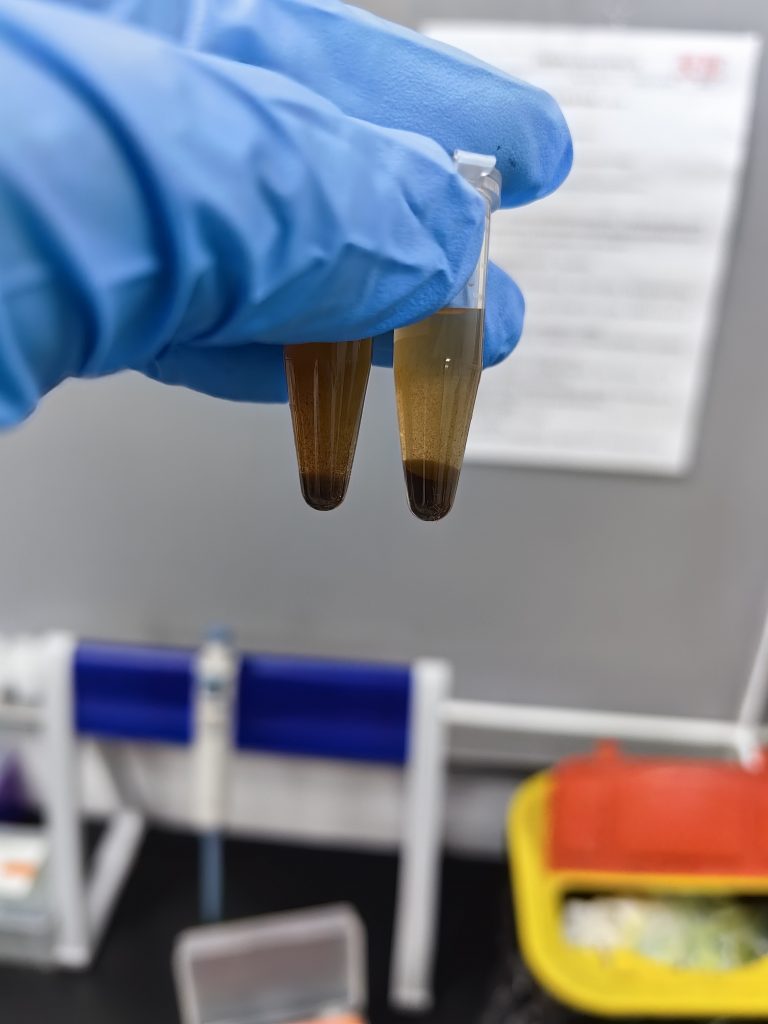
Eluizione: Il campo magnetico viene rimosso, and a low-salt buffer or pure water (per esempio., TE Buffer or Nuclease-Free Water) viene aggiunto. Under these changed conditions, the nucleic acids desorb from the beads and dissolve into the elution buffer, yielding a pure nucleic acid solution ready for downstream experiments.
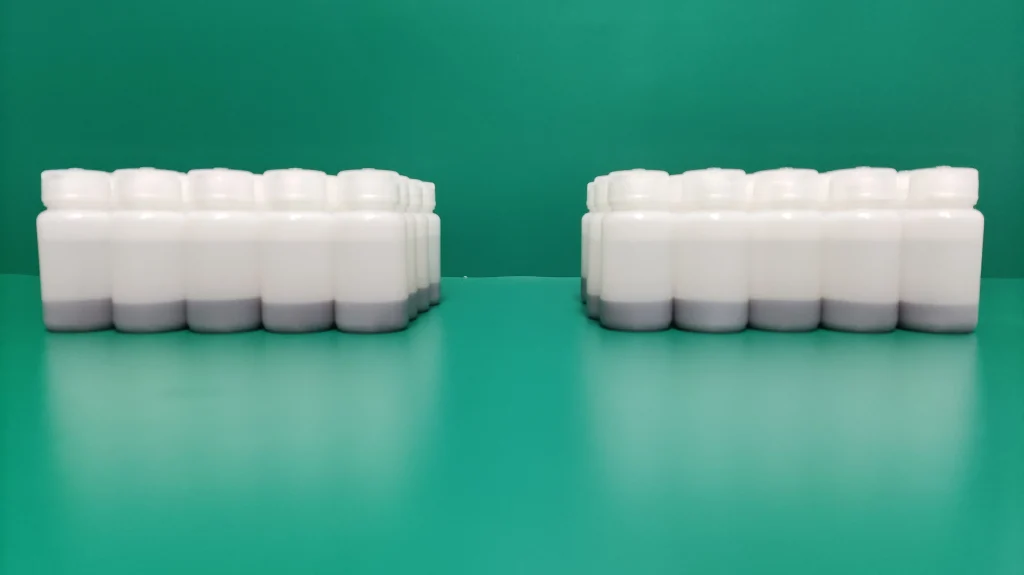
3. Advantages of Magnetic Bead-Based Extraction in Respiratory Pathogen Detection
In the context of respiratory multipathogen detection, the advantages of magnetic bead-based extraction are particularly prominent:
3.1 High Purity and High Yield:
Effectively removes complex PCR inhibitors from respiratory samples, significantly improving detection sensitivity and reducing false-negative rates. This is crucial for samples with low viral loads (per esempio., early infection or asymptomatic carriers).
3.2 Excellent Automation Compatibility:
The entire process can be fully automated on nucleic acid extraction systems. This is essential for high-throughput testing (per esempio., large-scale screening and epidemiological surveillance), enabling simultaneous processing of dozens to hundreds of samples, greatly improving efficiency, and reducing manual操作 errors and biosafety risks.
3.3 Simultaneous Extraction of Multiple Nucleic Acids:
Many magnetic bead-based kits can extract both RNA and DNA simultaneously.
Respiratory pathogens are diverse, including RNA viruses (per esempio., influenza virus, SARS-CoV-2, respiratory syncytial virus RSV, rhinovirus) and DNA viruses (per esempio., adenovirus, human bocavirus). A single extraction meets the detection needs for all pathogens, making it highly efficient and economical.
3.4 Ampia applicabilità e flessibilità:
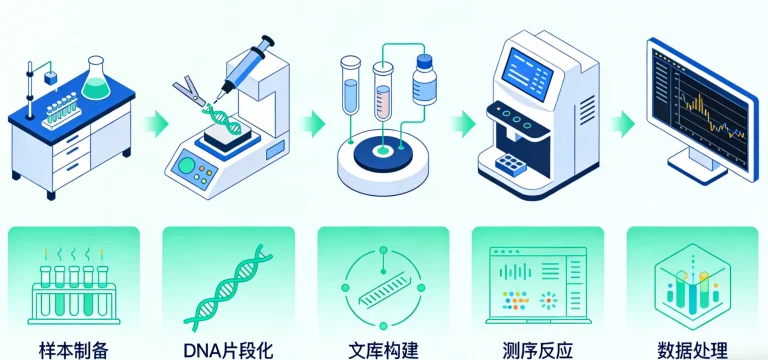
Suitable not only for conventional qPCR detection but also for more advanced applications such as next-generation sequencing (NGS) and genotyping.
NGS is vital for discovering unknown pathogens and monitoring variants, and high-quality nucleic acids are a prerequisite for successful sequencing.
3.5 Safety and Throughput:
Closed-tube operation reduces aerosol generation, minimizing the risk of laboratory infection and cross-contamination between samples.
Flexible throughput options range from 96-well instruments for large laboratories to 8/16-well systems for smaller labs or urgent samples.
| Serial Number | Numero del prodotto | Nome del prodotto | Gruppo | Dimensione delle particelle | Concentrazione | Specifiche |
| 1 | 160011 | Silicon-based Perline magnetiche | Si-OH | 800NM | 50mg/ml | 2ml、10ml、50ml、500ml、1000ml |
| 2 | 160013 | Silicon-based Perline magnetiche | Si-OH | 1.2µm | 50mg/ml | 2ml、10ml、50ml、500ml、1000ml |
| 3 | 160024 | Silicon-based Perline magnetiche | Si-OH | 1.4µm | 100mg/ml | 2ml、10ml、50ml、500ml、1000ml |
| 4 | 220011 | Silicon-based Perline magnetiche | Si-OH | 500nm | 50mg/ml | 2ml、10ml、50ml、500ml、1000ml |
| 5 | 220012 | Silicon-based Perline magnetiche | Si-OH | 400nm | 25mg/ml | 2ml、10ml、50ml、500ml、1000ml |
4. Practical Application Examples
4.1 COVID-19 Nucleic Acid Detection:
During the pandemic, most laboratories worldwide used automated magnetic bead-based extraction systems to extract SARS-CoV-2 RNA from nasopharyngeal swab samples, followed by RT-qPCR detection. This is the most widely recognized application.
4.2 Respiratory Multiplex Testing:
For panels targeting influenza A/B/COVID-19, RSV/hMPV, or broader respiratory pathogen panels (simultaneously detecting over 20 agenti patogeni), magnetic bead-based extraction allows one nucleic acid extraction per sample to be used for multiple detection assays.
4.3 Pathogen Screening for Pneumonia of Unknown Cause:
In cases of severe pneumonia, clinicians need to rapidly screen for all possible pathogens. Nucleic acids extracted via magnetic bead-based methods can be used for multiplex PCR or directly for metagenomic next-generation sequencing (mNGS) to identify the causative agent.
5. Challenges and Considerations
Despite its advantages, certain aspects require attention:
Costo: The initial investment and ongoing expenses for automated instruments and compatible reagents/consumables are relatively high.
Magnetic Bead Residue: Incomplete washing may lead to slight magnetic bead retention, potentially inhibiting downstream PCR reactions.
Sample Type Variability: Different respiratory samples (per esempio., varying sputum viscosity) may require optimized lysis conditions or preprocessing (per esempio., sputum digestion).
Controllo qualità: Regular calibration and maintenance of extraction instruments, as well as quality checks (per esempio., OD260/280) for extracted nucleic acid concentration and purity, are necessary to ensure batch-to-batch consistency.
6. Conclusione
Tecnologia di estrazione degli acidi nucleici basata su perline magnetiche, with its efficiency, purity, automazione, e un rendimento elevato, has become an indispensable cornerstone of modern respiratory pathogen molecular detection. It significantly enhances detection accuracy, sensibilità, ed efficienza, providing reliable technical support for clinical diagnosis, infectious disease control, and public health decision-making. As technology advances, future magnetic bead-based methods will evolve toward faster, more integrated (extraction and amplification combined), and lower-cost solutions, continuing to play a central role in pathogen diagnostics.
In this context, the various models of silica-based magnetic beads developed by Shanghai Lingjun Biotechnology Co., Ltd. are widely used in the field of pathogen disease diagnostics. Questa tecnologia offre una sensibilità di rilevamento estremamente elevata, enabling early screening during infection and providing valuable time for disease control and prevention. Per esempio, the recovery rate for target DNA at 20 ng/μl can exceed 95%. Lingjun’s silica-based magnetic beads also exhibit excellent chemical stability, high purity in nucleic acid extraction, risposta magnetica rapida, and no residue issues.
We welcome you to choose Shanglingjun Nucleic Acid Extraction Magnetic Beads based on your practical needs. Our company provides professional technical services to support your applications.
Fornitore
Shanghai Lingjun Biotecnologia Co., Ltd.è stato fondato nel 2016 che è un produttore professionale di materiali biomagnetici e reagenti per l'estrazione degli acidi nucleici.
Abbiamo una ricca esperienza nell'estrazione e purificazione degli acidi nucleici, purificazione delle proteine, separazione cellulare, chemiluminescenza, e altri campi tecnici.
I nostri prodotti sono ampiamente utilizzati in molti campi, come i test medici, test genetici, ricerca universitaria, allevamento genetico, e così via. Non solo forniamo prodotti, ma possiamo anche intraprendere l'OEM, ODM, e altre esigenze. Se hai un'esigenza correlata, non esitate a contattarci .