生体磁気ビーズの専門メーカー


ポリスチレンマイクロスフェア’ 質問と回答
1. ポリスチレンマイクロスフェアとは?
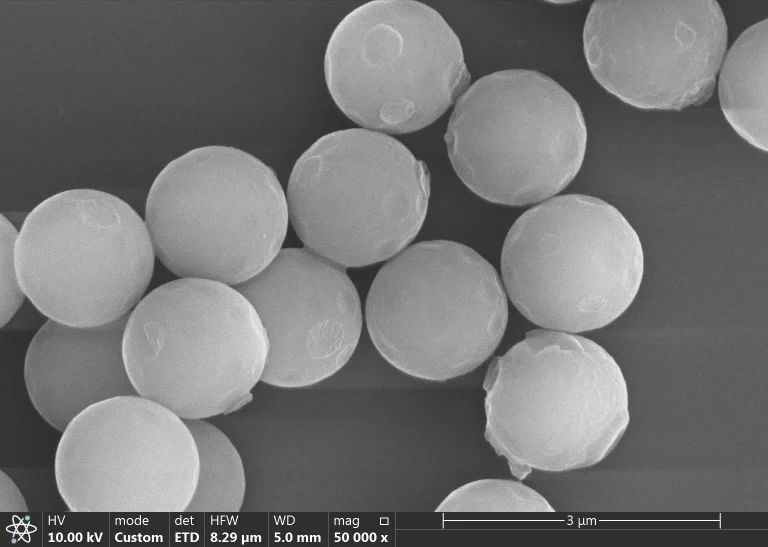
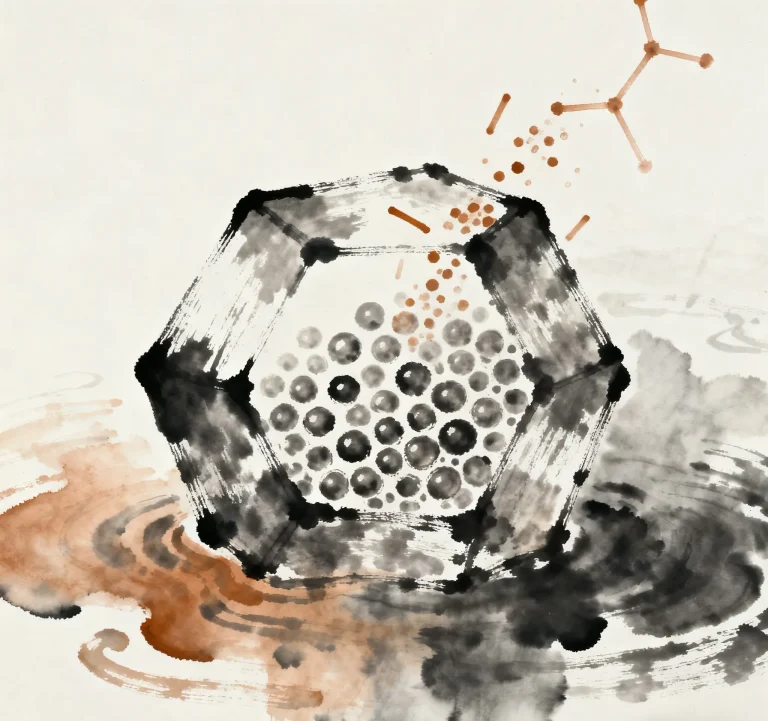
Polystyrene microspheres are spherical particles of highly uniform size made from polystyrene polymer. それらの直径は通常、ナノからミクロンの範囲にあります (例えば. 50nm – 100μm). They are standard particles and functional materials widely used in laboratory and industrial production due to their highly uniform particle size, good stability and easy surface modification.
2. What are the main applications of polystyrene microspheres?
Their applications are very wide-ranging and mainly include:
- Standards and calibration: As standards for particle sizer, flow cytometer, electron microscope, 等. for calibration and accuracy verification.
- Biomedical research: After surface modification with carboxyl and amino groups, it can covalently bind antibodies, タンパク質, nucleic acids and other biomolecules, which can be used for immunoassay, セルソーティング, biosensing and so on.
- Materials Science: As templates for the preparation of photonic crystals and porous materials, or as additives to improve the properties of composite materials.
- Modelling and simulation: used as model particles in colloid science, fluid mechanics research, used to simulate the motion and behaviour of the particle system.
3. Why do polystyrene microspheres usually require surface modification? What are the common modification groups?
The surface of pristine polystyrene microspheres is hydrophobic and lacks active reactive sites, limiting their ability to bind to biomolecules or other materials. Surface modification is possible:
- Introduce reactive functional groups to enable covalent coupling with target molecules.
- Improve hydrophilicity and reduce non-specific adsorption.
- Endow microspheres with specific electrical properties (例えば, negatively charged) or functionality.
Common modifying groups include:
- Carboxylic (-コー): most commonly used and can be coupled to amino-modified biomolecules (例えば. 抗体) by the carbodiimide (EDC) 方法.
- Amino group (-NH₂): positively charged and can bind to negatively charged molecules or surfaces.
- Sulfonic acid group: Provides a stronger negative surface charge and enhances colloidal stability.
- Streptavidin/Affinity: For efficient and specific capture of biotin-labelled molecules.
4. How to choose the size of polystyrene microspheres?
The choice of size depends entirely on the application:
- For instrument calibration: A size that is known to be highly uniform within the measurement range of the instrument.
- For flow cytometry: Micron-sized microspheres (例えば, 1-10 μm) of similar size to the cells are usually chosen for setting thresholds, calibrating light scattering channels, and fluorescence intensity.
- For phagocytosis or internalisation studies: microspheres of 0.5-3μm are often chosen.
- For preparation of photonic crystals: very well dispersed microspheres (200-300nm common) are required, which self-assemble to produce structural colours.
- For in vivo imaging or drug delivery: nanoscale microspheres below 100 nm are often chosen to circulate in blood vessels and penetrate tissues.
5. How is fluorescence produced in fluorescent polystyrene microspheres?
The fluorescence in fluorescent polystyrene microspheres does not come from the polystyrene itself, but from the introduction of fluorescent dyes (例えば. FITC, rhodamine, fluorescein, 等) into the internal polymer matrix of the microspheres, either by physical embedding or chemical bonding. This approach results in a very stable fluorescent signal that is not easily quenched and achieves a very high fluorescence intensity, making it ideal for use as a marker and fluorescent standard for quantitative assays.
サプライヤー
上海霊軍生物技術有限公司, 株式会社に設立されました 2016 生体磁性材料と核酸抽出試薬の専門メーカーです.
核酸抽出・精製の経験が豊富です。, タンパク質の精製, 細胞分離, 化学発光, その他の技術分野.
当社の製品はさまざまな分野で広く使用されています, 医療検査など, 遺伝子検査, 大学の研究, 遺伝子育種, 等々. 製品のご提供だけでなくOEMも承ります, ODM, その他のニーズ. 関連するニーズがある場合, お気軽にお問い合わせください .