Pengeluar Profesional Manik Biomagnet


Mikrosfera Polistirena’ Soalan Dan Jawapan
1. Apakah mikrosfera polistirena?
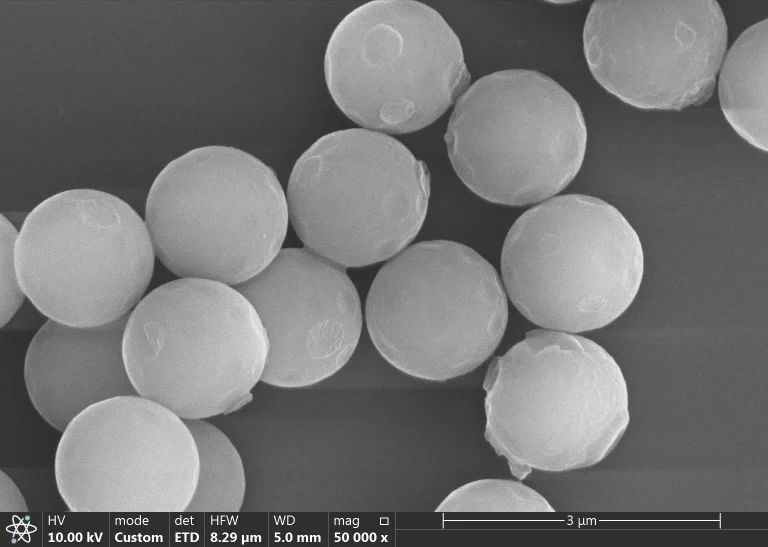
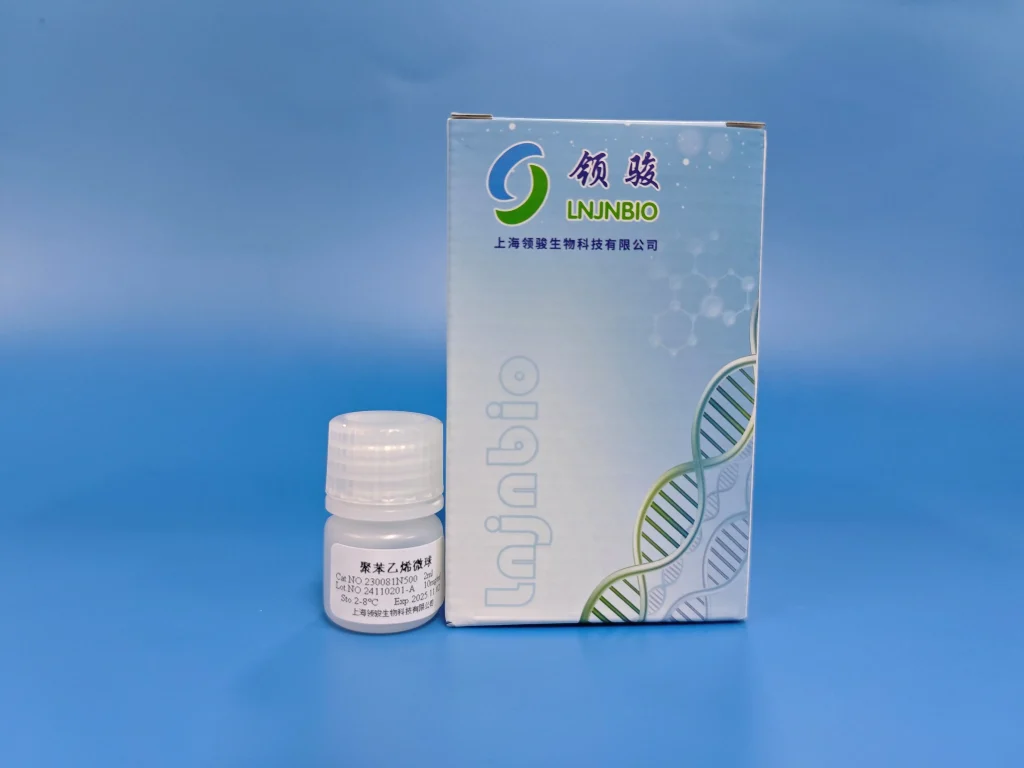
Mikrosfera polistirena adalah zarah sfera dengan saiz yang sangat seragam yang diperbuat daripada polimer polistirena. Diameternya biasanya dalam julat nano hingga mikron (cth. 50nm – 100μm). Ia adalah zarah piawai dan bahan berfungsi yang digunakan secara meluas dalam pengeluaran makmal dan perindustrian kerana saiz zarahnya yang sangat seragam, kestabilan yang baik dan pengubahsuaian permukaan yang mudah.
2. Apakah aplikasi utama mikrosfera polistirena?
Aplikasi mereka sangat luas dan terutamanya termasuk:
- Piawaian dan penentukuran: Sebagai piawaian untuk saiz zarah, sitometer aliran, mikroskop elektron, dll. untuk penentukuran dan pengesahan ketepatan.
- Penyelidikan bioperubatan: Selepas pengubahsuaian permukaan dengan kumpulan karboksil dan amino, ia boleh mengikat antibodi secara kovalen, protein, asid nukleik dan biomolekul lain, yang boleh digunakan untuk immunoassay, pengasingan sel, biosensing dan sebagainya.
- Sains Bahan: Sebagai templat untuk penyediaan kristal fotonik dan bahan berliang, atau sebagai bahan tambahan untuk memperbaiki sifat bahan komposit.
- Pemodelan dan simulasi: digunakan sebagai zarah model dalam sains koloid, penyelidikan mekanik bendalir, digunakan untuk mensimulasikan gerakan dan kelakuan sistem zarah.
3. Mengapakah mikrosfera polistirena biasanya memerlukan pengubahsuaian permukaan? Apakah kumpulan pengubahsuaian yang biasa?
Permukaan mikrosfera polistirena tulen adalah hidrofobik dan tidak mempunyai tapak reaktif aktif, mengehadkan keupayaan mereka untuk mengikat biomolekul atau bahan lain. Pengubahsuaian permukaan adalah mungkin:
- Memperkenalkan kumpulan berfungsi reaktif untuk membolehkan gandingan kovalen dengan molekul sasaran.
- Meningkatkan hidrofilik dan mengurangkan penjerapan tidak spesifik.
- Memberi mikrosfera dengan sifat elektrik tertentu (cth., bercas negatif) atau kefungsian.
Kumpulan pengubahsuaian biasa termasuk:
- Karboksilik (-COOH): paling biasa digunakan dan boleh digabungkan dengan biomolekul diubah suai amino (cth. antibodi) oleh carbodiimide (EDC) kaedah.
- kumpulan amino (-NH₂): bercas positif dan boleh mengikat molekul atau permukaan bercas negatif.
- Kumpulan asid sulfonik: Menyediakan cas permukaan negatif yang lebih kuat dan meningkatkan kestabilan koloid.
- Streptavidin/Afiniti: Untuk penangkapan molekul berlabel biotin yang cekap dan spesifik.
4. Bagaimana untuk memilih saiz mikrosfera polistirena?
Pilihan saiz bergantung sepenuhnya pada aplikasi:
- Untuk penentukuran instrumen: Saiz yang diketahui sangat seragam dalam julat pengukuran instrumen.
- Untuk sitometri aliran: Mikrosfera bersaiz mikron (cth., 1-10 μm) saiz yang serupa dengan sel biasanya dipilih untuk menetapkan ambang, menentukur saluran penyerakan cahaya, dan keamatan pendarfluor.
- Untuk kajian fagositosis atau internalisasi: mikrosfera 0.5-3μm sering dipilih.
- Untuk penyediaan kristal fotonik: mikrosfera yang tersebar dengan baik (200-300nm biasa) diperlukan, yang dipasang sendiri untuk menghasilkan warna struktur.
- Untuk pengimejan in vivo atau penghantaran ubat: mikrosfera berskala nano di bawah 100 nm sering dipilih untuk beredar dalam saluran darah dan menembusi tisu.
5. Bagaimanakah pendarfluor dihasilkan dalam mikrosfera polistirena pendarfluor?
Pendarfluor dalam mikrosfera polistirena pendarfluor tidak datang daripada polistirena itu sendiri, tetapi daripada pengenalan pewarna pendarfluor (cth. FITC, rhodamine, pendarfluor, dll.) ke dalam matriks polimer dalaman mikrosfera, sama ada secara fizikal atau ikatan kimia. Pendekatan ini menghasilkan isyarat pendarfluor yang sangat stabil yang tidak mudah dipadamkan dan mencapai keamatan pendarfluor yang sangat tinggi, menjadikannya ideal untuk digunakan sebagai penanda dan standard pendarfluor untuk ujian kuantitatif.
Pembekal
Shanghai Lingjun Biotechnology Co., Ltd.ditubuhkan pada 2016 yang merupakan pengilang profesional bahan biomagnet dan reagen pengekstrakan asid nukleik.
Kami mempunyai pengalaman yang kaya dalam pengekstrakan dan penulenan asid nukleik, penulenan protein, pemisahan sel, chemiluminescence, dan bidang teknikal yang lain.
Produk kami digunakan secara meluas dalam pelbagai bidang, seperti ujian perubatan, ujian genetik, penyelidikan universiti, pembiakan genetik, dan seterusnya. Kami bukan sahaja menyediakan produk tetapi juga boleh menjalankan OEM, ODM, dan keperluan lain. Jika anda mempunyai keperluan yang berkaitan, sila hubungi kami .