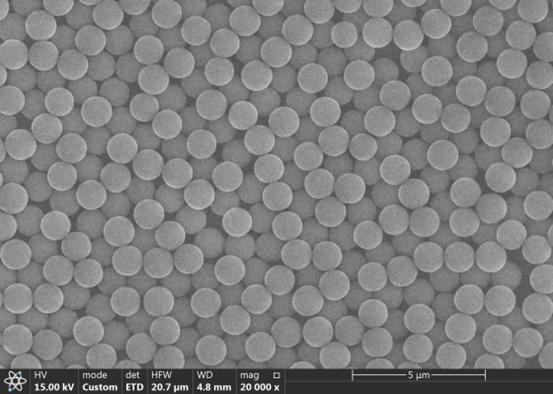
Fabricante profesional de perlas biomagnéticas


Informe de análisis de viabilidad de mercado de los kits de amplificación por PCR
1.Descripción general del proyecto y análisis de antecedentes
Reacción en cadena de la polimerasa (PCR) tecnología, como piedra angular de la investigación en biología molecular, se ha convertido en una herramienta indispensable en la investigación científica universitaria. En la enseñanza experimental en múltiples disciplinas, como las ciencias de la vida., medicamento, agricultura, y bioingeniería, La tecnología PCR ocupa una posición central. Según datos de estudios de mercado, el mercado mundial de PCR alcanzó aproximadamente $7 mil millones en 2019 y se espera que crezca aproximadamente $12 mil millones por 2025, con una tasa de crecimiento anual compuesta de alrededor 10%. Porcelana, como uno de los países con mayor crecimiento en R global&inversión, cuentas por más 30% de la demanda total del mercado de kits de PCR en universidades, y esta proporción sigue aumentando.
La investigación universitaria exige kits de PCR con características distintas: Los laboratorios de enseñanza requieren una relación costo-beneficio, kits estables para experimentos a gran escala, mientras que los laboratorios de investigación necesitan, Productos reproducibles para respaldar estudios de vanguardia.. Sin embargo, Las universidades enfrentan actualmente un dilema: Las marcas importadas son prohibitivamente caras con presupuestos ajustados., mientras que las alternativas nacionales varían ampliamente en calidad, comprometiendo los resultados experimentales. Este desequilibrio es particularmente agudo en instituciones con financiación limitada para la investigación., obstaculizando gravemente tanto la eficiencia como la profundidad del trabajo científico.
El mercado nacional de kits de PCR está actualmente dominado por actores internacionales líderes como Thermo Fisher Scientific., Bio-Rad, y Agilent. Si bien sus productos son confiables, a menudo tienen un precio demasiado alto, y sus servicios posventa pueden no siempre satisfacer las necesidades urgentes de la investigación universitaria. Por lo tanto, desarrollar un sistema rentable, estable, y un kit de amplificación por PCR fácil de usar, diseñado específicamente para la investigación académica, tiene un importante potencial de mercado y valor social..
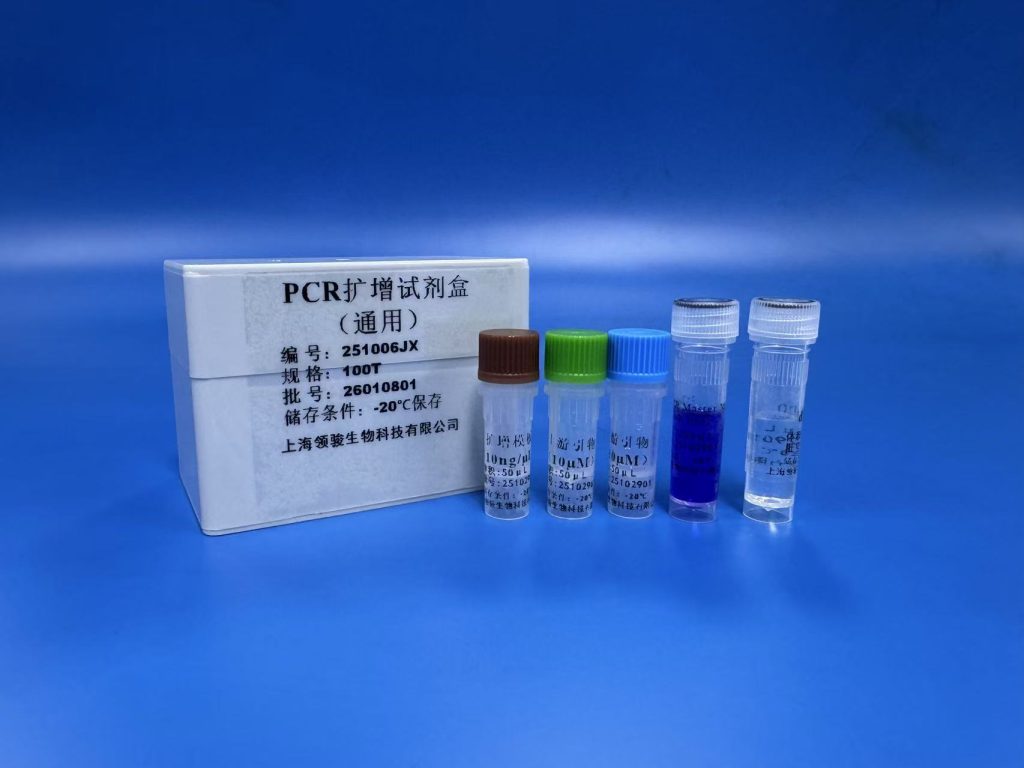
El objetivo principal de este proyecto es desarrollar un sistema rentable, estable, y kit de amplificación por PCR fácil de usar al optimizar su proceso de formulación y producción, abordando así las diversas necesidades de la investigación académica y la enseñanza en las instituciones de educación superior. También tiene como objetivo establecer un sistema integral de soporte técnico posventa., Proporcionar orientación técnica oportuna y soluciones de resolución de problemas para los usuarios universitarios.. Además, El proyecto busca mejorar la calidad de los reactivos de investigación de producción nacional., reducir los costos de investigación para las instituciones académicas, y contribuir al avance de los sectores de investigación científica y educación de China..
2.Análisis de la demanda del mercado Impulsores del mercado
El mercado de kits de PCR universitarios se caracteriza por su escala masiva y crecimiento sostenido. Las estadísticas muestran que China ha superado 3,000 instituciones de educación superior, con más de 500 ofreciendo ciencias de la vida y disciplinas relacionadas. Cada institución mantiene múltiples laboratorios de investigación y enseñanza de diferentes tamaños., creando una fuerte demanda de kits de PCR. Por ejemplo, La Facultad de Ciencias de la Vida de una universidad integral normalmente gasta entre 100,000 a 500,000 Yuanes anuales en reactivos de PCR para experimentos de biología molecular., con un tamaño total anual del mercado estimado en decenas de miles de millones de yuanes.
Mientras tanto, con el continuo aumento de la inversión nacional en investigación científica, La financiación de la investigación universitaria ha mantenido un crecimiento constante., proporcionando un fuerte impulso de crecimiento para el mercado de kits de PCR. Especialmente en el contexto de la “Doble Primera Clase” construcción de disciplina, Las universidades han enfatizado cada vez más la calidad de la enseñanza experimental y los niveles de investigación., aumentando aún más la demanda de kits de PCR de alta calidad. Según informes de la industria, Se espera que la industria china de kits de amplificación de PCR multiplex mantenga una tendencia de crecimiento estable desde 2023 a 2028, que proporciona un entorno de mercado favorable para proyectos generales de kits de PCR dirigidos a universidades.
3.Análisis de viabilidad técnica
El desarrollo de kits de amplificación por PCR estándar se basa en técnicas maduras de biología molecular., con barreras técnicas relativamente manejables. Desde su invención en 1985, La tecnología de PCR ha evolucionado hasta convertirse en un sistema bien establecido., respaldado por una cadena de suministro de materias primas bien desarrollada, Proporcionar una base técnica sólida para el proyecto..
En términos de materias primas básicas, Se han logrado avances en la producción nacional de tecnologías clave como la expresión y purificación de la ADN polimerasa., Síntesis y purificación de dNTP., y optimización del sistema buffer. This has eliminated complete reliance on imported materials, paving the way for cost reduction. Several domestic biotech companies have mastered the production technology of high-quality Taq DNA polymerase, with product quality matching imported counterparts while achieving significantly lower costs.
In terms of equipment, the laboratory facilities and production equipment required for PCR kit development are now widely available in China, including fermenters, protein purification systems, and freeze-dryers. This allows the establishment of standardized production lines without requiring substantial investment. University research teams typically possess standard molecular biology laboratory conditions, which can meet the basic needs for kit development and testing.
4.Technical Innovation
Intelligent Buffer System. This system addresses the common complex templates in universities by developing an adaptive buffer system that automatically optimizes reaction conditions based on template characteristics, thereby improving the success rate of single-round amplification. The system integrates multiple stabilizers and enhancers to handle templates of varying complexity, significantly reducing optimization time.
The rapid amplification procedure: the enzyme composition and buffer composition were optimized, which shortened the PCR amplification time by 30%-50%, supported the rapid cycle condition, improved the efficiency of scientific research in universities, and was especially suitable for the limited teaching experiment time.
Multi-functional formulation design: We developed a multi-purpose premixed solution that enables a single kit to meet diverse application scenarios including standard PCR, high-fidelity PCR, and long-fragment PCR. This innovation enhances user convenience for academic institutions while reducing the variety of reagent stocks required.
The addition of direct loading dye in the reagent allows for direct electrophoresis without loading buffer after amplification, simplifying the procedure and reducing the operational difficulty for beginners, making it particularly suitable for teaching experiments.
5.The production and operation
PCR reagent kits will follow the principles of standardization and normalization, and establish a sound quality management system. The production process mainly includes raw material procurement and inspection, core enzyme preparation, buffer preparation, packaging and finished product inspection.
The production model employs a hybrid strategy of “in-house core manufacturing + outsourced collaboration”: core materials such as Taq DNA polymerase are produced in-house to maintain control over key technologies; generic materials like dNTPs and standard chemical reagents are procured through outsourcing, with a stringent supplier audit system in place; packaging materials are fully outsourced but require customized production and enhanced quality control upon delivery.
The quality control system will follow the Good Manufacturing Practice (GMP) for medical devices and ISO13485 standards, establishing a comprehensive quality control system from raw material storage to finished product release. Each batch must undergo performance testing (including amplification efficiency, especificidad, y estabilidad), sterility testing, and packaging integrity checks to ensure consistent and reliable product quality.
6.Risk Analysis and Response Strategies
Market risks are mainly reflected in intensified market competition, changes in market demand, and market acceptance.
6.1 Market Competition Risks:
International brands leverage their technological edge and brand influence, while domestic manufacturers compete through price wars, intensifying market competition. Strategies to address this include: 1) Defining clear target market positioning by focusing on university research sectors, and building competitive advantages through cost-effective products and premium technical services; 2) Establishing strategic partnerships with key universities to conduct technical seminars and training programs, thereby enhancing brand awareness.
6.2 Market demand volatility risk:
As university research focuses and hotspots evolve continuously, demand may shift. To address this, implement a flexible production system to enhance responsiveness to market changes; develop modular product lines to meet specialized needs across different sectors; and conduct regular market research to promptly identify research trends and adjust product strategies.
6.3Market Acceptance Risk:
University users may harbor biases or concerns regarding domestically produced diagnostic kits. To address this, the following strategies should be implemented: 1) Provide free trial kits and comparative efficacy data to enable users to evaluate product performance through hands-on experience; 2) Publish methodological papers in authoritative journals with detailed application data and comparative results to scientifically validate product performance; 3) Invite influential experts in the field to conduct third-party evaluations to enhance product credibility.
Resumen
The project demonstrates strong market viability. The academic research sector has a rigid demand for PCR kits, with a large and steadily growing market. By delivering cost-effective, reliable products supported by professional technical services, the project is well-positioned to achieve significant market share within 3-5 años.
En segundo lugar, from a technical feasibility standpoint, PCR technology is mature and reliable, with an increasingly robust supply chain. Domestic teams are fully capable of developing high-quality products that meet the research needs of universities. Through strategic technological innovation and process optimization, we can produce products that rival international brands in performance while offering more competitive pricing.
Thirdly, from the economic feasibility analysis, the total investment of the project is moderate, the investment recovery period is reasonable, the expected economic benefit is remarkable, and the financial feasibility is good. After the project is implemented, it can not only achieve considerable economic benefit, but also produce social benefit of reducing the cost of scientific research in colleges and universities and promoting the development of scientific research and education.
En conclusión, the general PCR amplification kit project for university research demonstrates high feasibility and significant investment value, warranting prompt implementation. Key implementation priorities include: 1) Enhancing technological innovation and product quality to build core competitiveness; 2) Establishing a flexible marketing system to rapidly penetrate the academic market; 3) Strengthening talent development to ensure sustainable project growth.
Through the implementation of this project, it will provide high-quality domestic PCR reagent kits for university research work, reduce the cost of scientific research, improve the overall level of scientific research and education in China, and create good economic returns for investors, achieving a win-win situation of social and economic benefits.
Proveedor
Shanghai Lingjun Biotecnología Co., Limitado.se estableció en 2016 que es un fabricante profesional de materiales biomagnéticos y reactivos de extracción de ácidos nucleicos..
Tenemos una rica experiencia en extracción y purificación de ácidos nucleicos., purificación de proteínas, separación celular, quimioluminiscencia, y otros campos técnicos.
Nuestros productos son ampliamente utilizados en muchos campos., como pruebas médicas, pruebas genéticas, investigación universitaria, mejoramiento genético, etcétera. No solo proporcionamos productos sino que también podemos realizar OEM, ODM, y otras necesidades. Si tienes una necesidad relacionada, no dude en contactarnos .