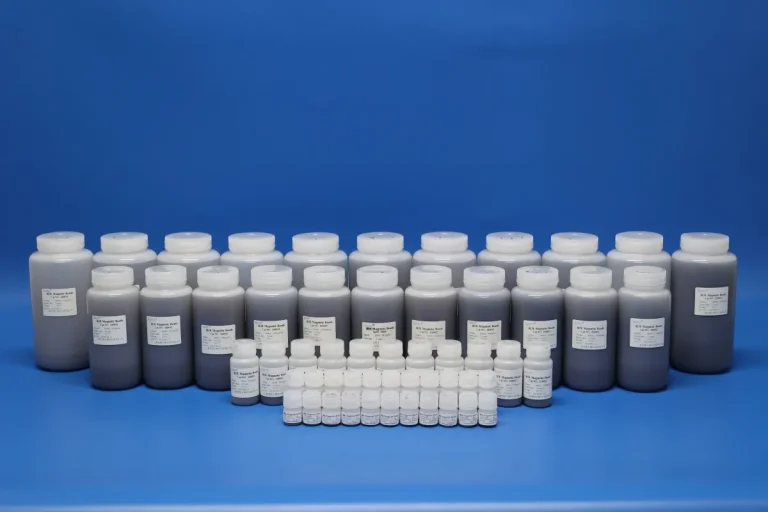
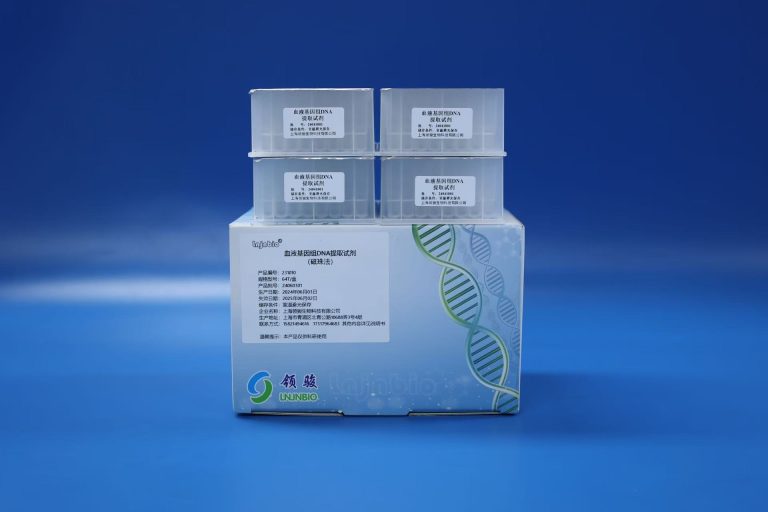
Fabricante profissional de esferas biomagnéticas


Exploração de mercado e análise de classificação de fragmentos de DNA
Tecnologia de classificação de fragmentos de DNA, como um componente central do sequenciamento de alto rendimento(NGS) construção de biblioteca, está intimamente ligado à procura do mercado e à inovação tecnológica. Com o rápido desenvolvimento da medicina de precisão, diagnóstico molecular, and research fields, this market exhibits significant trends such as domestic substitution, accelerated technological iteration, and intensified cost competition. The following provides a comprehensive analysis from aspects including current market status, technical pathways, competitive landscape, e tendências futuras:
1. Market status and driving factors
Traditional magnetic bead sorting technology has long been dominated by imported brands(such as Beckman’s AMPure XP magnetic beads). No entanto, in recent years, domestic magnetic beads have rapidly risen due to their high cost-effectiveness and localized services. Domestic manufacturers have gradually broken the import dependency through large-scale production and technical optimization. Por 2024, the share of domestically produced magnetic beads in China’s market had exceeded 64%.
The precise control of DNA fragment length required by NGS promoted the development of magnetic bead sorting technology to high repeatability and high compatibility (such as supporting 100 bp~10 kb fragment sorting).
With the surge in demand for automated workstations, domestic magnetic beads have been adapted to mainstream liquid handling systems to improve laboratory efficiency.
China’s 14th Five-Year Plan emphasizes the independent control of the biomedical industry chain and promotes the research and development of domestic reagents.
2. Technical path and innovation direction
Based on the principle of solid phase reversible immobilization (SPRI), fragment sorting is achieved by adjusting the ratio of magnetic beads to samples, which is simple and has a high recovery rate (mais do que 90%).
Emerging technologies such as the Xdrop system, which encapsulates DNA fragments in a bimiscellaneously emulsified droplet, supports long fragment (aproximadamente 100 KB) sorting and single-cell analysis for structural variation detection and gene mapping studies.
Multiple detection optimization combined with fluorescence coding technology improves the target detection capability of a single reaction and solves the bottleneck of NGS multiple library construction.
Terceiro, competitive pattern and major players
North America leads the market, with mature healthcare systems and research spending driving growth, contabilidade para 40 per cent of global revenues.
Asia Pacific is growing fastest, with China as the core market, driven by policy dividends and local innovative enterprises.
3. Market Challenges and Future Trends
The concept of users is solidified, and some laboratories still tend to import brands and doubt the quality of domestic products.
No futuro, domestic manufacturers are expected to reduce the cost by another 30% in the next five years through large-scale production and technological iteration.
Application expansion: from NGS library construction to POCT and environmental monitoring (such as pathogen detection).
Integração tecnológica: AI assisted sorting data analysis, nanomaterials improve the adsorption efficiency of magnetic beads, and promote the improvement of sorting accuracy and automation level.
5. Resumo
The DNA fragment sorting market is currently in a period of technological dividend release, with domestic substitution and technological innovation serving as the core driving forces. Future competition will focus on enhancing multiple detection capabilities, popularizing automated equipment, and exploring new application scenarios. Leveraging policy support and indigenous innovation, China is poised to secure a more significant strategic position in the global market.
Fornecedor
Xangai Lingjun Biotecnologia Co., Ltda.foi estabelecido em 2016 que é um fabricante profissional de materiais biomagnéticos e reagentes de extração de ácido nucleico.
Temos vasta experiência em extração e purificação de ácidos nucleicos, purificação de proteínas, separação celular, quimioluminescência, e outras áreas técnicas.
Nossos produtos são amplamente utilizados em muitos campos, como exames médicos, testes genéticos, pesquisa universitária, melhoramento genético, e assim por diante. Nós não apenas fornecemos produtos, mas também podemos realizar OEM, ODM, e outras necessidades. Se você tiver uma necessidade relacionada, não hesite em contactar-nos .