Профессиональный производитель биомагнитных бусин

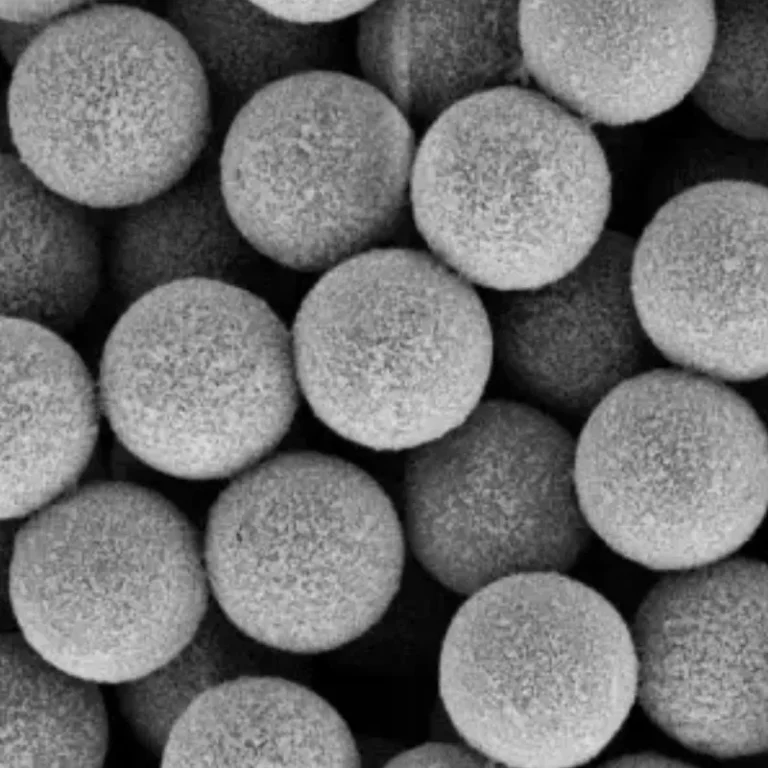
Роль хлорида железа, этиленгликоль и полиэтиленгликоль в синтезе магнитных шариков
В сольвотермическом синтезе (например, гидротермальные или полиольные методы) из магнитных бусин (особенно шарики Fe₃O₄), хлорид железа (FeCl₃), этиленгликоль (НАПРИМЕР), и полиэтиленгликоль (ПЭГ) работают синергетически, регулируя зародышеобразование, рост, морфология, и стабильность бусин. Ниже приводится подробное объяснение их механизмов.:
я. Роль хлорида железа (FeCl₃)
Основная функция: Источник железа (Поставляет ионы Fe³⁺)
Предоставление предшественника реакции
FeCl₃ диссоциирует в растворе с выделением ионов Fe³⁺., служит основным источником железа для образования Fe₃O₄.
В восстановительных средах (например, системы этиленгликоля), Fe³⁺ частично восстанавливается до Fe²⁺., в конечном итоге образуя Fe₃O₄ (Fe²⁺Fe³⁺₂O₄).
Контроль гидролиза (Требует осторожности)
Fe³⁺ легко гидролизуется с образованием оксигидроксидов железа. (например, ФеООХ), которые могут мешать образованию чистой фазы Fe₃O₄.
Гидролиз необходимо подавлять с помощью щелочных условий. (например, добавление ацетата натрия) или восстановители (например, этиленгликоль) для обеспечения генерации Fe₃O₄.
II. Роль этиленгликоля (НО-СН2-СН2-ОН)
Основные функции: Растворитель, Восстановитель, ПАВ
Восстановитель (Критическая роль)
При высоких температурах (>150°С), этиленгликоль окисляется до глиоксаля (ОХК-ЧО) или уксусная кислота, уменьшение Fe³⁺ до Fe²⁺:
2Фе3++ХОЧ2СН2ОН→2Fe2++OHC-CHO+2H+
Поддерживает Fe²⁺/Fe³⁺ ≈ 1:2 соотношение, обеспечение образования магнитного Fe₃O₄ вместо Fe₂O₃.
Растворитель с высокой температурой кипения
Высокая температура кипения (197°С) обеспечивает сольвотермические/гидротермальные реакции (окружающая среда/высокое давление, высокотемпературные условия), содействие росту кристаллов.
Модификация поверхности и контроль морфологии
Гидроксильные группы (-ОЙ) этиленгликоля адсорбируется на поверхности Fe₃O₄, подавление агломерации посредством стерических препятствий.
Модулирует кинетику роста частиц, продвижение монодисперсных сферических или кубических частиц.
III. Роль полиэтиленгликоля (ПЭГ, ЧАС-(О-СН₂-СН₂)_н-ОН)
Основная функция: Полимерное поверхностно-активное вещество (диспергатор, Директор по морфологии)
Стерический стабилизатор
Цепи ПЭГ адсорбируются на поверхности частиц, образует гидрофильный защитный слой, который физически блокирует агломерацию частиц.
Значительно повышает долговременную коллоидную стабильность. (особенно в водных средах).
открытый текст
[Fe₃O₄ Сердечник] ← Цепи ПЭГ (Гидрофильная оболочка) → Барьер против частиц
Морфология и контроль размера
Длина цепи зависит от молекулярной массы (например, ПЭГ-2000, ПЭГ-6000):
Короткоцепочечный ПЭГ (низкий МВт): Дает мелкие частицы (5-20 нм).
ПЭГ с длинной цепью (высокий МВт): Способствует самосборке в сложные структуры. (например, похожий на цветок, цепочечный).
Селективная адсорбция на гранях кристалла способствует анизотропному росту. (например, кубики, октаэдры).
Повышенная биосовместимость
Шарики с ПЭГ-покрытием содержат эфир. (-О-) и гидроксил (-ОЙ) группы, предоставление:
Низкая адсорбция белка → Снижение неспецифического связывания
Высокая гидрофильность → Идеально подходит для биомедицинских применений. (например, Контрастные вещества для МРТ, перевозчики наркотиков).
Синергетический механизм «Трио»
Начальная стадия реакции
FeCl₃ растворяется в этиленгликоле., образуя комплексы Fe³⁺-EG.
Этиленгликоль восстанавливает Fe³⁺ до Fe²⁺ при высоких температурах., в то время как ПЭГ адсорбируется на зарождающихся ядрах.
Стадия роста кристаллов
ПЭГ контролирует направление/размер роста; этиленгликоль поддерживает восстанавливающую среду.
Fe³⁺/Fe²⁺ соосаждаются в виде Fe₃O₄ в щелочных условиях. (представлен ацетатом натрия, и т. д.).
Обеспечение стабильности
ПЭГ и этиленгликоль вместе образуют двойной защитный слой. (стерическое препятствие + электростатическое отталкивание), предотвращение агломерации.
Типичный рабочий процесс синтеза (Сольвотермический метод)
Ключевые различия и резюме
| Реагент | Основная функция(с) | Уникальный вклад |
| FeCl₃ | Источник железа (Fe³⁺) | Предшественник реакции |
| Этиленгликоль | Растворитель + Восстановитель + диспергатор | Снижает содержание Fe³⁺→Fe²⁺, контролирует морфологию |
| ПЭГ | Полимерное ПАВ | Стерическая стабилизация, повышение биосовместимости |
Путем регулирования соотношений этих компонентов и условий реакции (температура, время), размер бусины (5-200 нм), морфология (сферы, кубики, цветы), и магнитная чувствительность может быть точно спроектирована.
Поставщик
Шанхайская биотехнологическая компания Линцзюнь., ОООбыл создан в 2016 который является профессиональным производителем биомагнитных материалов и реагентов для экстракции нуклеиновых кислот..
Мы имеем богатый опыт в экстракции и очистке нуклеиновых кислот., очистка белка, разделение клеток, хемилюминесценция, и другие технические области.
Наша продукция широко используется во многих областях., например, медицинское тестирование, генетическое тестирование, университетские исследования, генетическое разведение, и так далее. Мы не только поставляем продукцию, но и можем взять на себя OEM, ОДМ, и другие потребности. Если у вас есть соответствующая потребность, пожалуйста, не стесняйтесь обращаться к нам .