Produttore professionale di perline biomagnetiche

Il ruolo del cloruro ferrico, glicole etilenico e glicole polietilenico nella sintesi di biglie magnetiche
Nella sintesi solvotermica (per esempio., metodi idrotermali o polioli) di perline magnetiche (in particolare perle di Fe₃O₄), cloruro ferrico (FeCl₃), glicole etilenico (PER ESEMPIO), e polietilenglicole (PEG) lavorano in sinergia per regolare la nucleazione, crescita, morfologia, e stabilità delle perle. Di seguito è riportata una spiegazione dettagliata dei loro meccanismi:
IO. Ruolo del cloruro ferrico (FeCl₃)
Funzione fondamentale: Fonte di ferro (Fornisce ioni Fe³⁺)
Fornire il precursore della reazione
FeCl₃ si dissocia in soluzione per rilasciare ioni Fe³⁺, fungendo da fonte primaria di ferro per la formazione di Fe₃O₄.
In ambienti riduttivi (per esempio., sistemi di glicole etilenico), Fe³⁺ è parzialmente ridotto a Fe²⁺, alla fine formando Fe₃O₄ (Fe²⁺Fe³⁺₂O₄).
Controllo dell'idrolisi (Richiede cautela)
Fe³⁺ si idrolizza facilmente per formare ossiidrossidi di ferro (per esempio., FeOOH), che può interferire con la formazione di Fe₃O₄ in fase pura.
L'idrolisi deve essere soppressa tramite condizioni alcaline (per esempio., aggiungendo acetato di sodio) o agenti riducenti (per esempio., glicole etilenico) per garantire la generazione di Fe₃O₄.
II. Ruolo del glicole etilenico (HO-CH₂-CH₂-OH)
Funzioni principali: Solvente, Agente riducente, Tensioattivo
Agente riducente (Ruolo critico)
Ad alte temperature (>150°C), il glicole etilenico viene ossidato a gliossale (OHC-CHO) o acido acetico, riducendo Fe³⁺ a Fe²⁺:
2Fe3++HOCH2CH2OH→2Fe2++OHC−CHO+2H+
Mantiene il Fe²⁺/Fe³⁺ ≈ 1:2 rapporto, garantendo la formazione di Fe₃O₄ magnetico invece di Fe₂O₃.
Solvente ad alto punto di ebollizione
Alto punto di ebollizione (197°C) consente reazioni solvotermiche/idrotermali (ambiente/alta pressione, condizioni di alta temperatura), facilitando la crescita dei cristalli.
Modificazione della superficie e controllo della morfologia
Gruppi idrossilici (-OH) di glicole etilenico adsorbito su superfici Fe₃O₄, sopprimere l’agglomerazione tramite ostacolo sterico.
Modula la cinetica di crescita delle particelle, promuovere particelle sferiche o cubiche monodisperse.
III. Ruolo del glicole polietilenico (PEG, H-(O-CH₂-CH₂)_n-OH)
Funzione fondamentale: Tensioattivo polimerico (Disperdente, Direttore della morfologia)
Stabilizzatore sterico
Le catene PEG vengono adsorbite sulle superfici delle particelle, formando uno strato protettivo idrofilo che blocca fisicamente l'agglomerazione delle particelle.
Migliora significativamente la stabilità colloidale a lungo termine (soprattutto in mezzi acquosi).
testo in chiaro
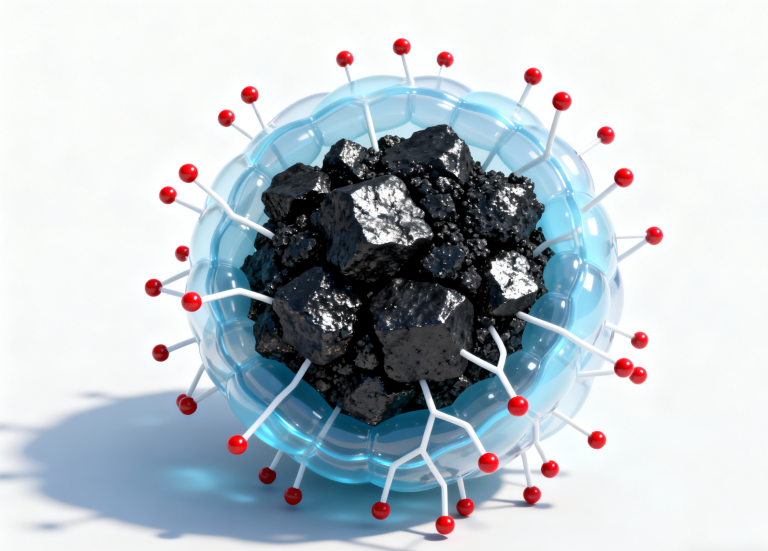
[Nucleo Fe₃O₄] ← Catene PEG (Guscio idrofilo) → Barriera contro l'approccio particellare
Morfologia e controllo dimensionale
La lunghezza della catena varia con il peso molecolare (per esempio., PEG-2000, PEG-6000):
PEG a catena corta (basso MW): Produce piccole particelle (5-20 nm).
PEG a catena lunga (MW elevato): Promuove l'autoassemblaggio in strutture complesse (per esempio., simile a un fiore, a catena).
L'adsorbimento selettivo sulle sfaccettature del cristallo guida la crescita anisotropa (per esempio., cubi, ottaedri).
Biocompatibilità migliorata
Le perle rivestite con PEG contengono etere (-O-) e idrossile (-OH) gruppi, fornendo:
Basso assorbimento proteico → Ridotto legame non specifico
Elevata idrofilia → Ideale per applicazioni biomediche (per esempio., Agenti di contrasto per RM, trasportatori di farmaci).
Meccanismo sinergico del Trio
Fase di reazione iniziale
FeCl₃ si dissolve nel glicole etilenico, formando complessi Fe³⁺-EG.
Il glicole etilenico riduce Fe³⁺ a Fe²⁺ ad alte temperature, mentre il PEG viene adsorbito sui nuclei nascenti.
Fase di crescita dei cristalli
Il PEG controlla la direzione/dimensione della crescita; il glicole etilenico mantiene l'ambiente riducente.
Coprecipitato di Fe³⁺/Fe²⁺ come Fe₃O₄ in condizioni alcaline (fornito da acetato di sodio, ecc.).
Garanzia di stabilità
PEG e glicole etilenico formano congiuntamente un doppio strato protettivo (ostacolo sterico + repulsione elettrostatica), prevenendo l’agglomerazione.
Flusso di lavoro tipico della sintesi (Metodo Solvotermico)
Differenze chiave e riepilogo
| Reagente | Funzione fondamentale(S) | Contributo unico |
| FeCl₃ | Fonte di ferro (Fe³⁺) | Precursore della reazione |
| Glicole etilenico | Solvente + Agente riducente + Disperdente | Riduce Fe³⁺→Fe²⁺, controlla la morfologia |
| PEG | Tensioattivo polimerico | Stabilizzazione sterica, miglioramento della biocompatibilità |
Regolando i rapporti di questi componenti e le condizioni di reazione (temperatura, tempo), dimensione della perla (5-200 nm), morfologia (sfere, cubi, fiori), e la reattività magnetica può essere progettata con precisione.
Fornitore
Shanghai Lingjun Biotecnologia Co., Ltd.è stato fondato nel 2016 che è un produttore professionale di materiali biomagnetici e reagenti per l'estrazione degli acidi nucleici.
Abbiamo una ricca esperienza nell'estrazione e purificazione degli acidi nucleici, purificazione delle proteine, separazione cellulare, chemiluminescenza, e altri campi tecnici.
I nostri prodotti sono ampiamente utilizzati in molti campi, come i test medici, test genetici, ricerca universitaria, allevamento genetico, e così via. Non solo forniamo prodotti, ma possiamo anche intraprendere l'OEM, ODM, e altre esigenze. Se hai un'esigenza correlata, non esitate a contattarci .