생체자기비즈 전문제조업체

NGS 시퀀싱에서 대형 DNA 단편 선택 기술을 수행하는 방법
대형 DNA 단편 선택 기술은 NGS 시퀀싱에서 중요한 역할을 합니다., 특히 구조적 변형 탐지에서, 게놈 조립, 및 일배체형 분석. 다음은 핵심 응용 프로그램과 기술 원리입니다.::
나. 응용 시나리오
구조적 변형 (SV) 발각
도전: 기존의 짧은 읽기 시퀀싱 (예를 들어, 일루미나) 변형을 정확하게 포착하는 데 어려움을 겪음 >1 kb (삽입, 삭제, 반전, 전위).
해결책: 큰 DNA 조각을 선택하여 (10–50kb) 도서관 건립을 위해, 긴 읽기 시퀀싱과 결합 (팩바이오/나노포어) 또는 연결된 읽기 분석, 반복적인 영역에 걸쳐 있는 복잡한 SV를 해결할 수 있습니다..
예: 암 게놈의 융합 사건 (예를 들어, *ALK-EML4*) 종종 큰 조각 데이터가 필요함.
고품질 게놈 조립
도전: 짧은 읽기 데이터는 종종 반복 영역에서 조립 오류로 이어집니다., 게놈 단편화 유발.
해결책: 큰 조각 (예를 들어, 포스미드 도서관) 장거리 물리적 연결 제공, 지속적인 비계 조립 가능 (5N50에서 –10배 개선).
예: T2T 컨소시엄이 최종 합격 8% Hi-C 및 Ultra-Long-Read 기술을 사용하여 인간 참조 게놈의 격차.
일배체형 위상
도전: 짧은 읽기 시퀀싱은 이형 접합 사이트에서 대립 유전자 연결을 유지하지 못합니다..
해결책: 바코드 기반 기술 (예를 들어, 10X 유전체학) 수백 kb에 달하는 일배체형 블록을 재구성합니다..
값: HLA 유형화 및 질병 유발 유전자 연결 식별에 중요.
II. 핵심 선정 기술
1. 물리적 분리 방법
펄스장 겔 전기영동 (PFGE): 조각을 분리합니다 >50 메타게놈 또는 복합 샘플 스크리닝을 위한 kb.
자기 비드 선택 (SPRI선택): 특정 조각 크기를 복구합니다. (예를 들어, 0.1–10kb 또는 >15 kb) 비드 대 샘플 비율을 조정하여.
2. 바코드 기반 강화
10X 유전체학 크롬: 기름 방울에 DNA 조각을 캡슐화합니다., 바코드를 사용하여 동일한 대형 조각의 짧은 판독값 라벨링.
TELL-Seq/링크된 읽기: 가상의 긴 단편 재구성을 위해 미세유체를 사용합니다. 50% 10X보다 저렴한 비용.
3. 순환 기반 증폭
루프 유전체학: 롤링 서클 복제를 통해 DNA 단편이 원형화되고 증폭됩니다., 표준 NGS 플랫폼에 대한 물리적 인접성 보존.
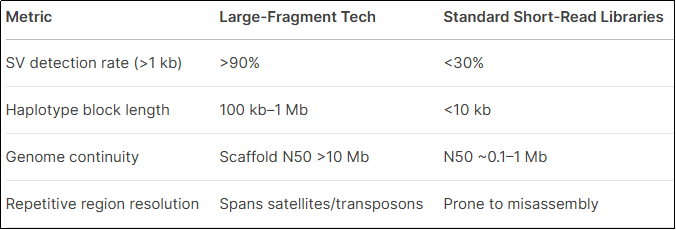
III. 장점 대. 기존 방법
IV. 과제와 최적화
높은 DNA 품질 필요: 손상되지 않은 DNA가 필요함 (DV200 >50%), FFPE 샘플과 부적합하여 저손상 추출 키트 개발.
비용 관리: 긴 읽기 시퀀싱은 하이브리드 전략에 여전히 비용이 많이 듭니다. (예를 들어, 연결된 읽기 및 Illumina) 비용 절감.
생물정보학 업그레이드: 전문적인 도구가 필요함 (예를 들어, 조립용 카누, 페이징용 HapCUT2).
다섯. 대표적인 응용
코로나19 추적: 나노기공 시퀀싱 및 자기 비드 선택 (>20 kb 조각) 신속하게 해결된 SARS-CoV-2 게놈 및 재조합 사건.
유전질환 진단: 10X Genomics가 SMN1 엑손을 감지했습니다. 7 삭제, SMN2의 간섭 방지.
식물유전체학: 보리 게놈 어셈블리에서, BAC 라이브러리 (40–100kb) Contig N50을 다음으로 증가시켰습니다. 486 kb.
결론
대규모 DNA 단편 선택은 장거리 게놈 컨텍스트를 제공하여 짧은 판독 NGS의 한계를 극복합니다.. 바코드 기술의 발전으로 (예를 들어, TELL-Seq) 그리고 현지화된 플랫폼 (예를 들어, MGI 쿨MPS), 이 기술은 임상 진단 분야의 적용을 가속화할 것입니다., 진화론적 연구, 정밀육종.
공급자
상하이 링쥔 생명공학 유한회사, 주식회사에 설립되었습니다 2016 생체자성재료 및 핵산추출시약 전문제조업체입니다..
핵산 추출 및 정제 분야에서 풍부한 경험을 보유하고 있습니다., 단백질 정제, 세포 분리, 화학발광, 및 기타 기술 분야.
우리의 제품은 많은 분야에서 널리 사용됩니다., 의료 테스트와 같은, 유전자 검사, 대학 연구, 유전자 육종, 등. 우리는 제품을 제공할 뿐만 아니라 OEM도 수행할 수 있습니다., ODM, 그리고 다른 필요. 관련된 필요사항이 있는 경우, 저희에게 연락하게 자유롭게 느끼십시오 .