Professional Manufacturer of Biomagnetic Beads


Magnetic Bead DNA Fragment Selection: Precise Sorting, Smart Future – Revolutionizing Life Sciences
Foreword
In an era of accelerating iteration in life science tools and technologies, DNA fragment selection is evolving from a “supportive purification step” into a core enabling technology driving breakthroughs across multiple disciplines. From single-cell multi-omics to spatial transcriptomics, from the clinical translation of third-generation sequencing to the industrialization of synthetic biology, precise nucleic acid fragment selection is unlocking previously unattainable dimensions of scientific research. This article systematically analyzes the technological evolution, core advantages, and future directions of magnetic bead-based selection, revealing its role as a foundational force at the forefront of exploration.
1. Technological Evolution: From “Size Separation” to “Intelligent Selection”
Traditional fragment selection focused solely on “separating fragments of a specific size from others.” However, modern selection technology has evolved into a systematic project of multi-parameter coordinated optimization:
It must consider not only fragment length but also sample input amount, fragment integrity, automation compatibility, and the specific requirements of downstream applications. With the integrated development of microfluidics, magnetic bead surface engineering, and automation technology, fragment selection is advancing towards ultra-high resolution, ultra-low input, and ultra-long fragments, providing key technical support for cutting-edge scientific exploration.
2. Five Core Technical Advantages of Magnetic Bead-Based Fragment Selection
Facing increasingly stringent application challenges, the magnetic bead method, leveraging its unique physicochemical properties, demonstrates irreplaceable advantages:
2.1 Adaptability to Ultra-Low Input Quantities
Scenarios such as single-cell sequencing,microbiopsy, and early diagnosis impose extremely high demands on input material. High-quality magnetic beads, through optimized surface silanol group density and distribution, maintain efficient binding kinetics even at very low DNA concentrations.
2.2 Precision Multi-Parameter Tunability
Modern magnetic bead selection has moved beyond simple “ratio adjustment,” achieving precise multi-parameter control over binding kinetics, elution stringency, and fragment selectivity. By combinatorially optimizing bead volume, incubation time, elution steps, and buffer conditions, it enables precise discrimination of specific fragment lengths (e.g., mononucleosomal vs. dinucleosomal fragments in cfDNA).
2.3 Deep Automation Integration
Cutting-edge applications often come with high-throughput demands. Magnetic bead technology is now deeply integrated into various automation platforms—from single-channel workstations to high-throughput liquid handling systems—allowing for precise and reproducible fragment selection. Automation not only increases throughput but, more critically, eliminates batch-to-batch variability introduced by manual operation, ensuring data consistency in large-scale studies.
2.4 Multi-Omics Compatibility
Addressing the needs of spatial multi-omics and single-cell multimodal analysis, magnetic bead methods have developed two modes: “non-sequence-specific selection” and “sequence-specific selection.” The former is suitable for general library preparation, while the latter, through conjugated probes or binding proteins, enables targeted enrichment of specific sequences or modification states (e.g., methylation), providing flexible tools for multi-dimensional biological information decoding.
2.5 Emphasis on Both Miniaturization and Standardization
In clinical translational research, method standardization is paramount. The operational parameters of magnetic bead-based fragment selection can be precisely quantified and documented. Once an optimal workflow is established for a specific application, it can be perfectly replicated across different laboratories and operators. This transition from “art” to “science” is a key prerequisite for technology moving from the lab to the clinic.
3 Technology Outlook: Four Directions for the Next Generation of Fragment Selection
DNA fragment selection technology will continue to evolve in the following directions:
- Intelligent Selection Systems: Integrating microfluidics and machine learning to create “smart selection” platforms that automatically optimize parameters based on sample characteristics. By monitoring binding kinetics in real-time and dynamically adjusting elution conditions, both selection precision and recovery can be optimized simultaneously.
- Single-Molecule Resolution Selection: Breaking through the current population-based paradigm to achieve length measurement and targeted recovery of individual DNA molecules, offering an ultimate solution for haplotype analysis and structural variant detection.
- Multi-Dimensional Information Integration Selection: Selecting not only based on fragment length but also incorporating multi-dimensional parameters such as sequence features, methylation status, and protein binding information, providing novel tools for epigenetics and complex disease research.
- In Situ Selection Technology: Integrating selection functions onto microfluidic chips or within tissue sections to capture and analyze DNA fragments from specific cells in situ, providing higher-resolution tools for spatial biology.
4 Precision Selection Defines the Future
From ultra-long fragment enrichment for third-generation sequencing to the extreme challenges of single-cell genomics, from the multi-dimensional integration of spatial multi-omics to the industrial-scale production of synthetic biology, DNA fragment selection technology, with its unique value as a “connector,” is becoming a core engine driving the forefront of life science exploration. Choosing a high-performance, future-ready selection bead means equipping your research with a reliable tool to meet unknown challenges.
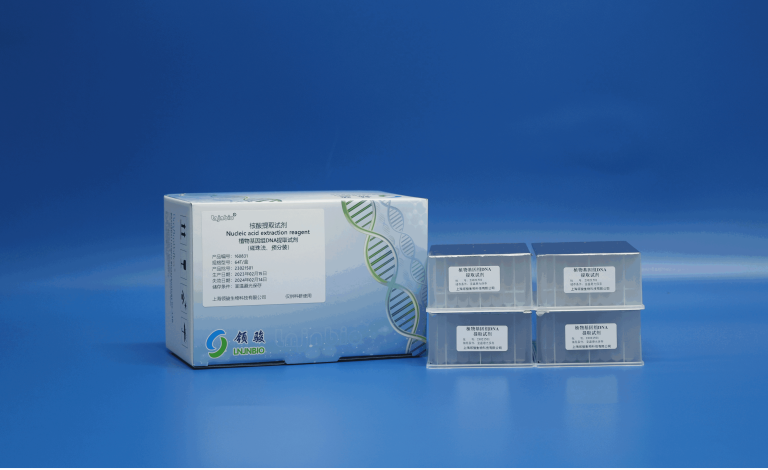
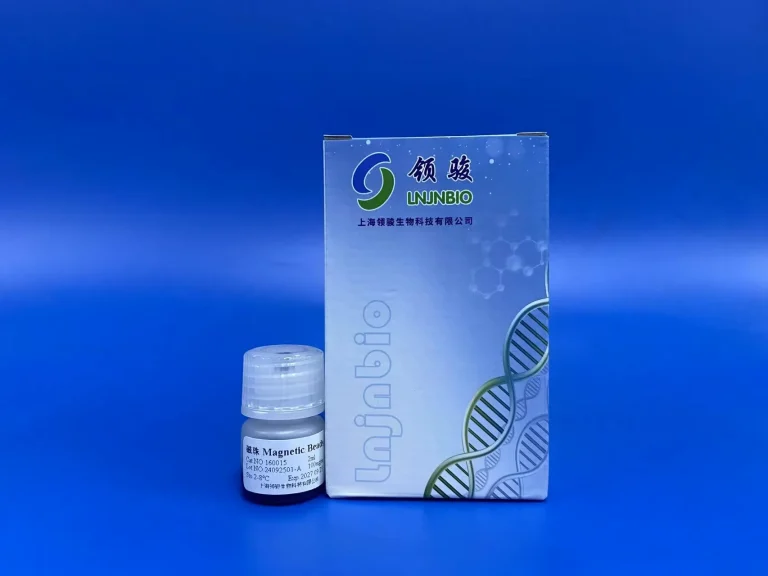
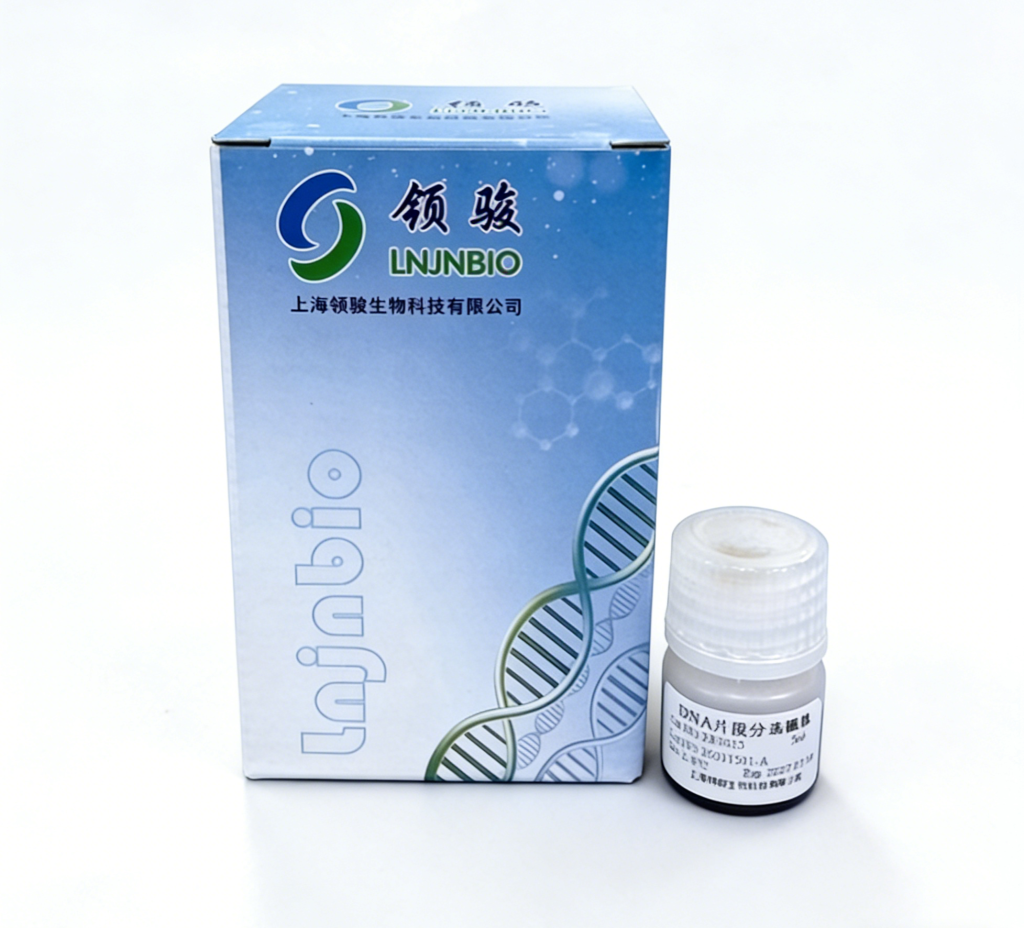
The Lnjnbio FR0015 Series high-performance silica-based magnetic beads, founded on nanometer-scale particle size control technology and atomic-level surface engineering, achieve exceptional particle size uniformity (PDI < 0.05), precisely controllable surface chemistry, and excellent magnetic responsiveness. Whether for the limit recovery of trace samples or the stable output of automated high-throughput workflows, Lingjun magnetic beads deliver solid and reliable selection performance, helping your research and industrial innovation begin with precision and succeed with reliability.
Supplier
Shanghai Lingjun Biotechnology Co., Ltd. was established in 2016 which is a professional manufacturer of biomagnetic materials and nucleic acid extraction reagents.
We have rich experience in nucleic acid extraction and purification, protein purification, cell separation, chemiluminescence, and other technical fields.
Our products are widely used in many fields, such as medical testing, genetic testing, university research, genetic breeding, and so on. We not only provide products but also can undertake OEM, ODM, and other needs. If you have a related need, please feel free to contact us .