Professional Manufacturer of Biomagnetic Beads

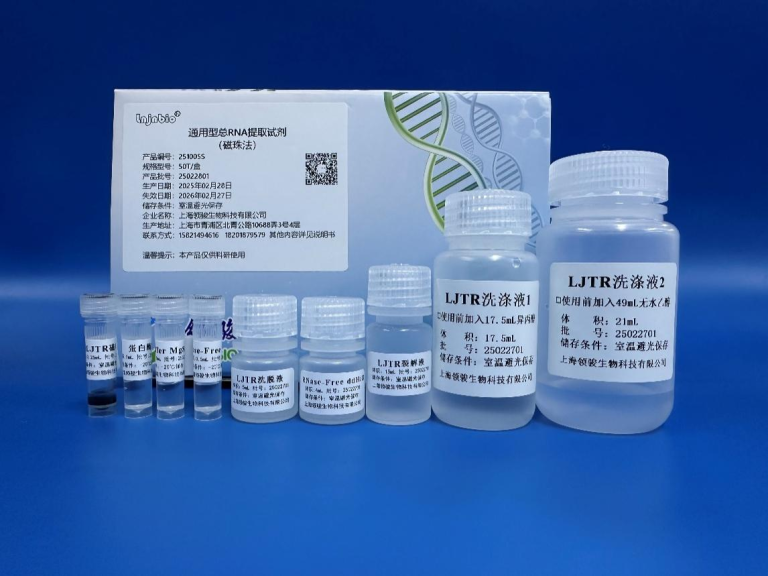
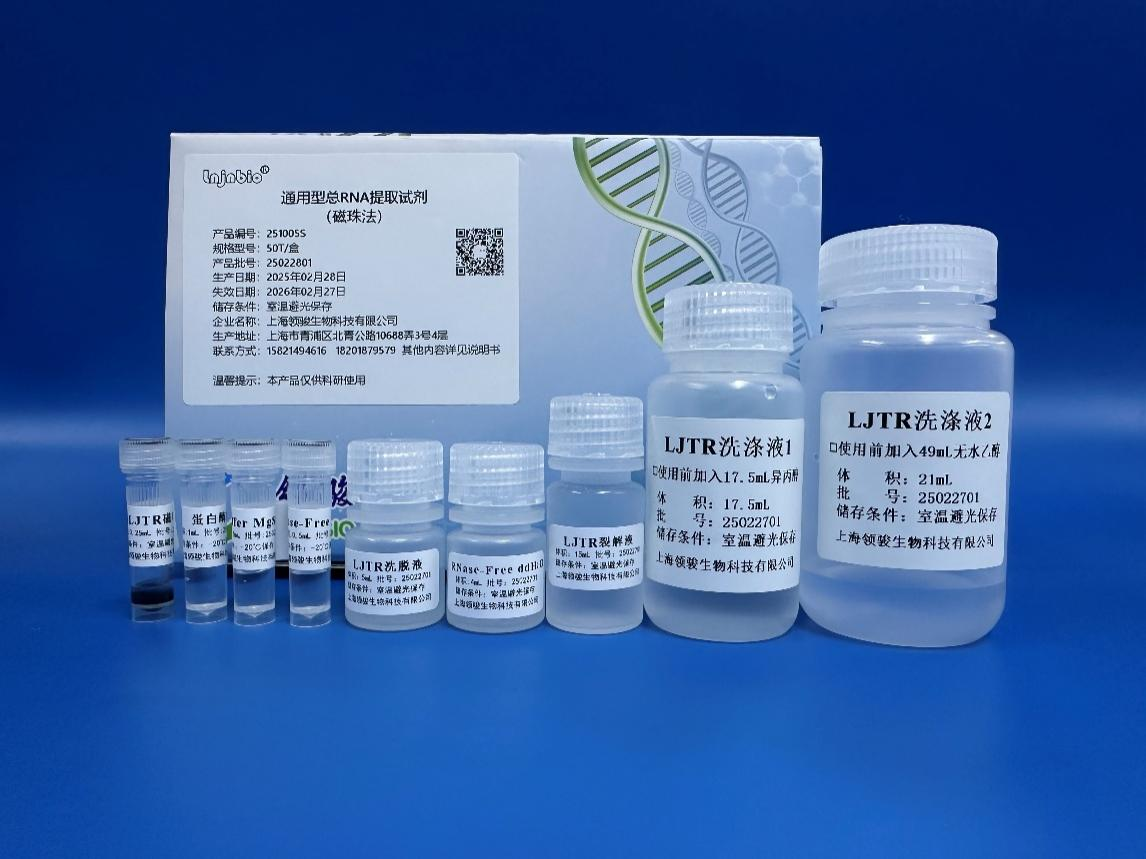
Universal Total RNA Extraction Kit (Medium Volume) (Magnetic Bead Method)
PRODUCT PARAMETERS
Description
【Product Introduction】
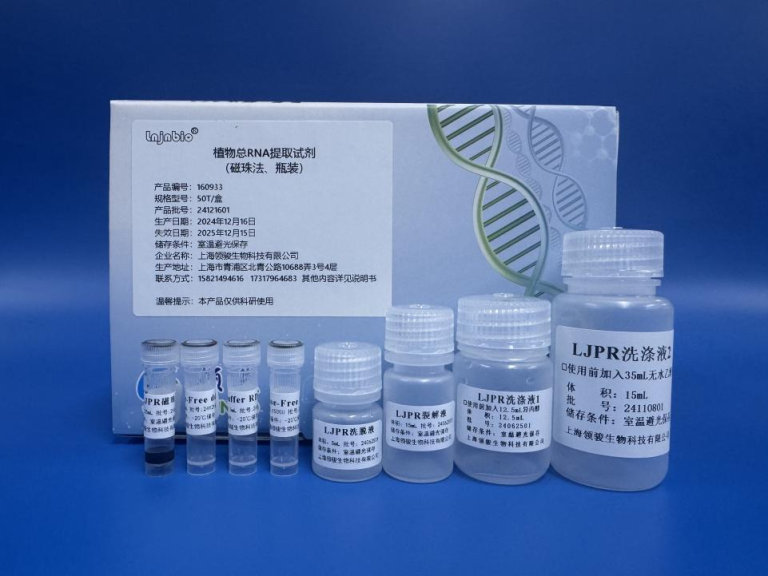
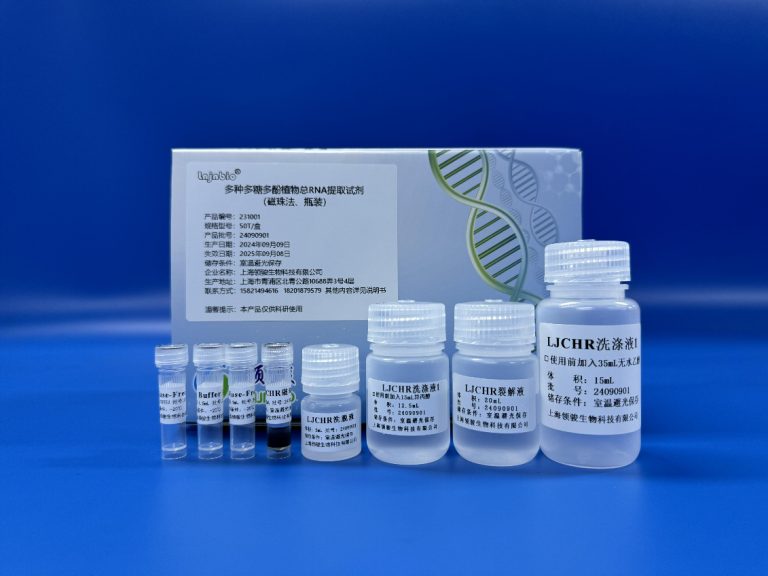
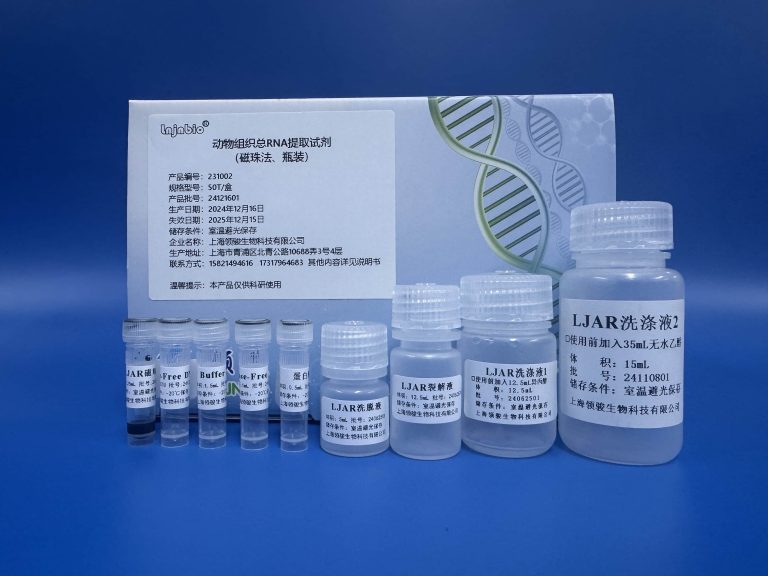
This universal total RNA extraction kit for medium volumes is designed for the rapid extraction of total RNA from a wide range of tissue samples, including fresh plant, animal, fungal and cellular materials. The entire process is straightforward to perform and is particularly well-suited for automated nucleic acid extraction platforms. During extraction, nucleic acids are released from the sample under the action of the lysis buffer; nano-magnetic beads then selectively adsorb the nucleic acids in the binding buffer, separating them from other impurities in the sample; The samples are then washed with a washing buffer to remove proteins, polysaccharides, inorganic salts and other contaminants; high-quality RNA is subsequently eluted. This kit does not require the use of toxic reagents such as phenol or chloroform. The extracted RNA yields high yields, high purity and consistent, reliable quality, making it suitable for a wide range of downstream molecular biology experiments.
【Product advantages】
- Highly versatile, suitable for extracting total RNA from a wide range of tissue samples, including animal, plant, fungal and cellular sources.
- Simple to use; the magnetic bead method can be combined with fully automated nucleic acid extraction systems to enable automated extraction, with lysis and binding carried out in a single step for highly efficient extraction.
- No repeated centrifugation is required, ensuring the integrity of the extracted RNA.
- The extraction product is of high purity and yield, with intact electrophoresis bands.
- Safe to use, with no need for liquid nitrogen grinding; the product contains no harmful reagents such as phenol or chloroform.
【Experimental case】
Case 1: Total RNA was extracted from various fresh tissue samples, with the following results:
| No. | Sample | Intake | A260/A280 | A260/A230 | Conc. (ng/μL) | Yield(μg) |
| 1 | Scallion leaves | 100mg | 1.996 | 2.107 | 254.35 | 25.4 |
| 2 | Coriander leaves | 50mg | 2.006 | 2.006 | 194.05 | 19.4 |
| 3 | Mushroom | 50mg | 2.014 | 2.151 | 308.25 | 30.8 |
| 4 | White beech mushroom | 50mg | 2.067 | 2.054 | 148.45 | 14.8 |
| 5 | Enokitake | 50mg | 1.829 | 1.507 | 103.75 | 10.4 |
| 6 | White mushroom | 50mg | 2.044 | 2.044 | 169.9 | 17 |
| 7 | Pork | 50mg | 1.845 | 1.222 | 136.8 | 13.7 |
| 8 | Pork liver | 50mg | 1.85 | 1.628 | 269.75 | 27 |
The electrophoresis gel is shown below:

Analysis of Results:
Test results from the ultra-micro nucleic acid analyser indicate that:
① The A260/A280 ratio ranges from 1.8 to 2.0, and the A260/A230 ratio is above 1.5, demonstrating the high purity of the extracted product.
② The yield of nucleic acid extracted from different samples is 10 µg or more.
Agarose gel electrophoresis results indicate:
① All samples exhibited bright, well-defined RNA bands with good integrity.
In summary: RNA extracted from various samples using this kit demonstrated high purity, high yield and intact electrophoresis bands.
【Applications】
- Gene expression analysis
qRT-PCR: Quantitative detection of the expression levels of specific genes.
RNA-Seq: High-throughput sequencing for transcriptomic analysis.
- Functional genomics research
Gene function studies: Investigation of gene function using small interfering RNA (e.g. siRNA, shRNA).
Gene editing: Utilising CRISPR technology to investigate gene regulatory mechanisms.
- Disease Diagnosis and Biomarkers
Disease diagnosis: Detection of specific RNA molecules for disease diagnosis.
Biomarkers: Identification of RNA markers associated with diseases.
- Drug Development
Target screening: Identification of drug targets.
Drug Response: Assessing the impact of drugs on gene expression.
- Evolutionary and Comparative Genomics
Evolutionary Studies: Comparing RNA sequences across different species to investigate evolutionary relationships.
Comparative Genomics: Analysing differences in gene expression under varying conditions.
- Epigenetic Studies
RNA Modifications: Investigating RNA modifications and their functions.
Non-coding RNA: Analysing the role of non-coding RNA in gene regulation.
FAQs
What kind of products can we provide, and what are the package specifications?
We have magnetic beads in silica, magnetic beads in carboxylic acid, and various kits for nucleic acid extraction by magnetic bead method (samples can be extracted from whole blood, serum plasma free, plasmid, etc.), and the packing specifications of magnetic beads are 2ml, 10ml, 50ml, 500ml, 1000ml, etc. The packing specifications of the kits are: bottles are 50T/box, 100T/box, 200T/box, and the pre-filled kits are 32T/box, 48T/box, 64T/box, 96T/box, and 48T/box. We have 32T/box, 48T/box, 64T/box, 96T/box, and so on.
What kind of logistics transportation?
Land transportation, sea transportation, air transportation, you can choose according to your requirements.
Can it be customized according to my requirements?
Of course, we provide customized service and also support OEM\ODM.
What is the ordering process?
First, confirm the demand, then sign the contract; after receiving the payment, we will ship the goods within the stipulated or mutually agreed delivery period.
What is the delivery period?
Usually, we will send out the goods within 15 working days after receiving the payment; customized products and large quantities of orders (magnetic beads ≥ 10L, nucleic acid extraction reagents ≥ 300000T) need to be determined by both sides to communicate with the delivery period.