Professional Manufacturer of Biomagnetic Beads


How does the direct amplification of cfDNA extracted via magnetic bead technology to approach simplify precision medicine?
Foreword
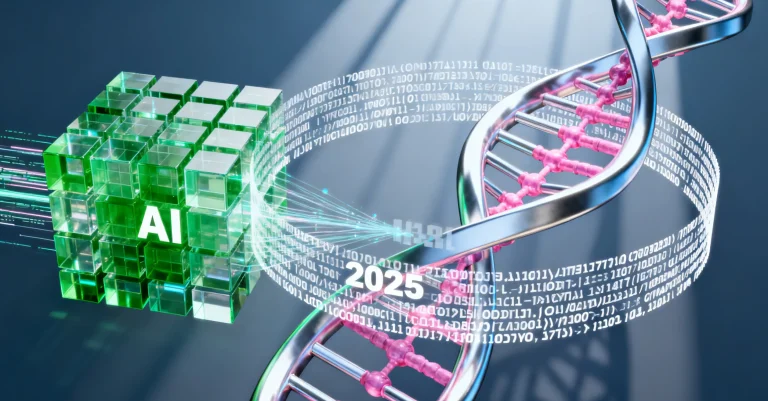
In 2026, as liquid biopsy continues to gain momentum, the extraction efficiency of cell-free DNA (cfDNA) is regarded as the ‘first critical hurdle’ determining detection sensitivity. Whether achieving precise diagnosis of foetal chromosomal aneuploidy in non-invasive prenatal testing (NIPT) or capturing rare mutations in circulating tumour DNA (ctDNA) for early cancer screening, researchers are pursuing purer, more efficient, and ultra-low-volume nucleic acid recovery.
However, the traditional extraction process harbours a long-standing, tacitly accepted ‘efficiency bottleneck’—elution. Each step of eluting DNA from the purification medium and re-adsorbing it for library construction further depletes the already insufficient template.
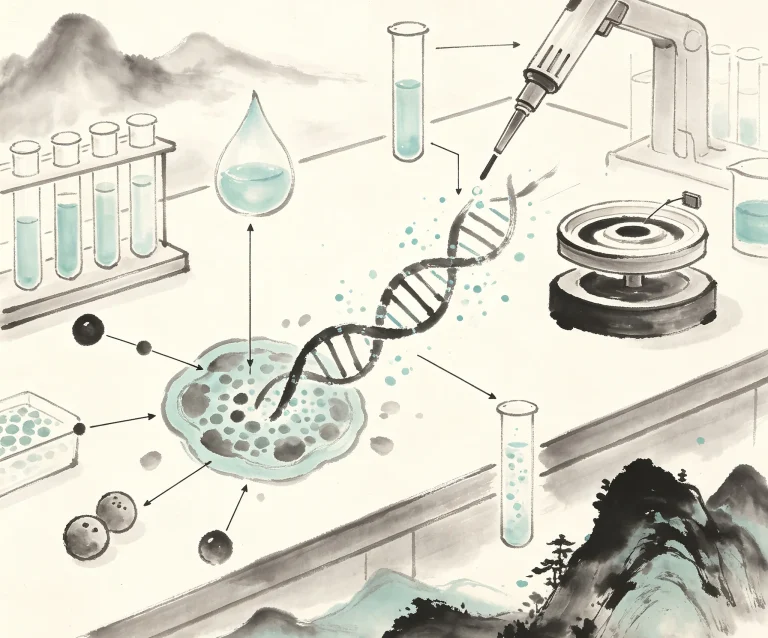
Today, with the evolution of magnetic bead-based methods and functionalised magnetic nanomaterials, a ‘simplifying complexity’ approach is becoming a reality: following cfDNA extraction via magnetic beads, amplification is performed directly with the beads attached.
The dual role of magnetic beads: both as capture agents and as reactors:
Traditional column-based extraction or conventional magnetic bead methods require elution following cfDNA isolation, yielding liquid DNA for subsequent PCR or library preparation systems. This process not only heightens the risk of pipetting errors but, more critically, often entails irreversible sample loss during elution for cfDNA—which predominantly exhibits a length of approximately 166 base pairs and extremely low concentrations.
Currently, several leading biotechnology enterprises and research institutions are promoting an ‘in situ amplification’ concept. For instance, in the latest technical literature, extraction methods based on novel functionalised magnetic beads have demonstrated remarkable efficiency. A 2025 study published in a leading clinical oncology journal revealed that the optimised magnetic bead method not only surpassed the traditional silica membrane column method in extraction yield (39.91 ng vs 31.17 ng in simulated samples), but more significantly, it more than doubled pre-library yield and markedly improved mapping ratios.
This data is attributable to innovations in magnetic bead carrier technology—magnetic beads serve not only as ‘grabbers’ for capturing circulating free DNA, but their surface-modified functional groups, upon binding with cfDNA, can directly enter the amplification system, acting as ‘solid carriers’ for minute template quantities.
Case Study Spotlight: When Magnetic Bead Amplification Meets Real-World Applications
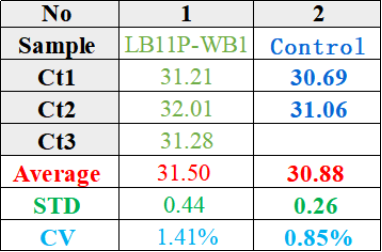
Using Shanghai Lingjun Biotechnology’s 220015 (10 mg/ml) silyl-hydroxyl magnetic beads, perform alcohol-free extraction on porcine serum spiked with a 233-bp fragment. Following washing, proceed directly to amplification with the beads attached:
Ct Value:
Amplification curve:
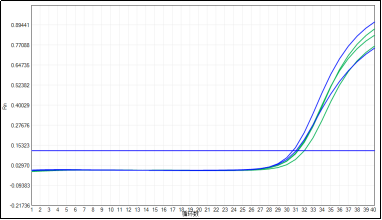
Based on Ct values, the alcohol-free protocol we employed in conjunction with 220015 magnetic beads demonstrated an average Ct difference of 0.62 compared to the control.
No significant differences were observed in the peak values of the amplification curves, indicating satisfactory amplification performance.
In practical application
Researchers have discovered that the ‘magnetic bead direct amplification’ workflow, which omits the elution step, significantly reduces the risk of contamination for precious samples such as plasma from early-stage lung cancer patients or pregnant women in the first trimester. Furthermore, it enables a truly automated process from sample input to result output through automated extraction instruments.
In the era of precision medicine’s intensifying competition, we often default to additive approaches—increasing sequencing depth, expanding sample sizes, and boosting replication numbers. Yet the ‘direct amplification’ strategy following magnetic bead-based extraction takes the opposite tack, reducing errors by streamlining intermediate steps.
From enhancing the accuracy of prenatal diagnosis to achieving breakthroughs in the sensitivity of tumour gene testing, and pushing the boundaries of forensic identification, “amplification with magnetic beads” is redefining the value of nucleic acid purification: purification is not the end goal; efficient detection is.
For those grappling with missed low-frequency mutations or failed library preparation with minimal samples, it may be time to consider this ‘subtractive’ approach. After all, lingering a little longer on the magnetic beads is precisely to shine brighter on the sequencer.
Supplier
Shanghai Lingjun Biotechnology Co., Ltd. was established in 2016 which is a professional manufacturer of biomagnetic materials and nucleic acid extraction reagents.
We have rich experience in nucleic acid extraction and purification, protein purification, cell separation, chemiluminescence, and other technical fields.
Our products are widely used in many fields, such as medical testing, genetic testing, university research, genetic breeding, and so on. We not only provide products but also can undertake OEM, ODM, and other needs. If you have a related need, please feel free to contact us .