Fabricant professionnel de perles biomagnétiques


Comment l’amplification directe du cfDNA extrait via la technologie des billes magnétiques simplifie-t-elle la médecine de précision?
Avant-propos
Dans 2026, alors que la biopsie liquide continue de prendre de l’ampleur, l'efficacité d'extraction de l'ADN acellulaire (cfDNA) est considéré comme le « premier obstacle critique »’ détermination de la sensibilité de détection. Qu'il s'agisse d'obtenir un diagnostic précis de l'aneuploïdie chromosomique fœtale lors de tests prénatals non invasifs (NIPT) ou capturer des mutations rares dans l'ADN tumoral circulant (ADNct) pour le dépistage précoce du cancer, les chercheurs recherchent des solutions plus pures, plus efficace, et récupération d'acide nucléique à très faible volume.
Cependant, le processus d'extraction traditionnel recèle une tradition de longue date, « goulot d’étranglement en matière d’efficacité » tacitement accepté – élution. Chaque étape d'élution de l'ADN du milieu de purification et de sa réadsorption pour la construction d'une bibliothèque épuise encore davantage la matrice déjà insuffisante..
Aujourd'hui, avec l'évolution des méthodes basées sur les billes magnétiques et des nanomatériaux magnétiques fonctionnalisés, une « complexité simplificatrice »’ cette approche devient une réalité: après extraction de cfDNA via des billes magnétiques, l'amplification est réalisée directement avec les billes attachées.
Le double rôle des billes magnétiques: à la fois comme agents de capture et comme réacteurs:
L'extraction traditionnelle sur colonne ou les méthodes conventionnelles de billes magnétiques nécessitent une élution après l'isolement du cfDNA, produisant de l'ADN liquide pour des systèmes ultérieurs de préparation de PCR ou de bibliothèque. Ce processus augmente non seulement le risque d'erreurs de pipetage, mais, de manière plus critique, entraîne souvent une perte irréversible d'échantillon lors de l'élution du cfDNA, qui présente principalement une longueur d'environ 166 paires de bases et concentrations extrêmement faibles.
Actuellement, plusieurs grandes entreprises de biotechnologie et instituts de recherche promeuvent une « amplification in situ »’ concept. Par exemple, dans la dernière littérature technique, les méthodes d'extraction basées sur de nouvelles billes magnétiques fonctionnalisées ont démontré une efficacité remarquable. UN 2025 Une étude publiée dans une importante revue d'oncologie clinique a révélé que la méthode optimisée des billes magnétiques surpassait non seulement la méthode traditionnelle sur colonne à membrane de silice en termes de rendement d'extraction. (39.91 de contre 31.17 de dans des échantillons simulés), mais plus significativement, il a plus que doublé le rendement des pré-bibliothèques et a nettement amélioré les ratios de cartographie.
Ces données sont attribuables aux innovations dans la technologie des supports de billes magnétiques : les billes magnétiques ne servent pas seulement à « saisir »’ pour capturer l'ADN libre en circulation, mais leurs groupes fonctionnels modifiés en surface, lors de la liaison avec cfDNA, peut entrer directement dans le système d'amplification, agissant comme des « porteurs solides »’ pour des quantités de modèles minute.
Pleins feux sur les études de cas: Quand l’amplification par billes magnétiques rencontre les applications du monde réel
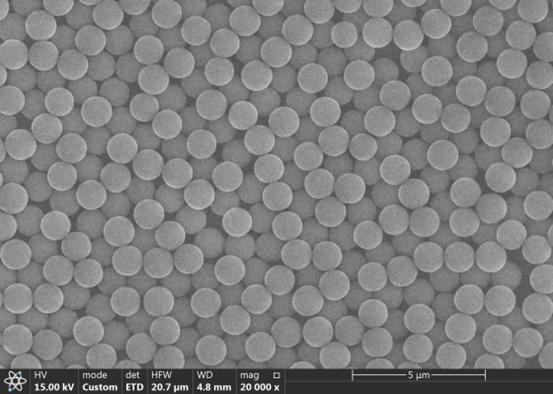
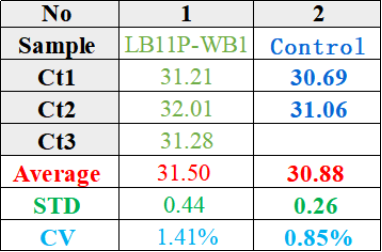
Utilisation de la biotechnologie de Shanghai Lingjun 220015 (10 mg/ml) billes magnétiques silyle-hydroxyle, effectuer une extraction sans alcool sur du sérum porcin enrichi avec un fragment de 233 pb. Après le lavage, procéder directement à l'amplification avec les billes attachées:
Valeur CT:
Courbe d'amplification:
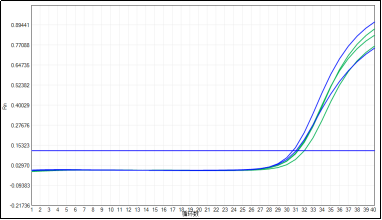
Basé sur les valeurs Ct, le protocole sans alcool que nous avons utilisé en collaboration avec 220015 les billes magnétiques ont démontré une différence moyenne de Ct de 0.62 par rapport au contrôle.
Aucune différence significative n'a été observée dans les valeurs maximales des courbes d'amplification., indiquant des performances d'amplification satisfaisantes.
En application pratique
Les chercheurs ont découvert que « l’amplification directe par billes magnétiques’ flux de travail, qui omet l'étape d'élution, réduit considérablement le risque de contamination d'échantillons précieux tels que le plasma de patients atteints d'un cancer du poumon à un stade précoce ou de femmes enceintes au cours du premier trimestre. En outre, il permet un processus véritablement automatisé depuis l'entrée de l'échantillon jusqu'à la sortie des résultats via des instruments d'extraction automatisés.
À l’ère de la concurrence croissante de la médecine de précision, nous optons souvent par défaut pour des approches additives : augmentation de la profondeur de séquençage, expansion de la taille des échantillons, et augmenter le nombre de réplications. Pourtant, « l’amplification directe’ la stratégie suite à l’extraction à base de billes magnétiques prend le contre-pied, réduire les erreurs en rationalisant les étapes intermédiaires.
De l’amélioration de la précision du diagnostic prénatal à la réalisation de percées dans la sensibilité des tests génétiques tumoraux, et repousser les limites de l'identification médico-légale, “amplification avec billes magnétiques” redéfinit la valeur de la purification des acides nucléiques: la purification n'est pas le but final; une détection efficace est.
Pour ceux qui sont aux prises avec des mutations basse fréquence manquées ou un échec de préparation de bibliothèque avec un minimum d’échantillons, il est peut-être temps de considérer cette « soustraction »’ approche. Après tout, s'attarder encore un peu sur les billes magnétiques, c'est justement pour briller davantage sur le séquenceur.
Fournisseur
Société de biotechnologie Shanghai Lingjun., Ltd.a été établi en 2016 qui est un fabricant professionnel de matériaux biomagnétiques et de réactifs d'extraction d'acide nucléique.
Nous avons une riche expérience dans l'extraction et la purification des acides nucléiques, purification des protéines, séparation cellulaire, chimiluminescence, et autres domaines techniques.
Nos produits sont largement utilisés dans de nombreux domaines, comme les tests médicaux, tests génétiques, recherche universitaire, sélection génétique, et ainsi de suite. Nous fournissons non seulement des produits, mais pouvons également entreprendre des OEM, ODM, et autres besoins. Si vous avez un besoin connexe, n'hésitez pas à nous contacter .