Fabricant professionnel de perles biomagnétiques


Manual Magnetic Bead Extraction in Winter: Key Precautions for Low-Temp Handling
Avant-propos
When manually using magnetic bead – based nucleic acid extraction reagents in cold winter, special attention should be paid to the impact of temperature on reagent activity, magnetic bead adsorption efficiency, and experimental operations. The specific precautions are as follows:
1. Reagent Rewarming in Advance
Reagents such as magnetic bead suspensions, lysis buffers, and washing buffers are prone to component precipitation or magnetic bead aggregation at low temperatures. Take them out of the refrigerator 15 – 30 minutes in advance, let them rewarm at room temperature, and gently invert and mix them. Avoid violent shaking to prevent magnetic beads from breaking.
2. Maintain a Stable Operating Environment Temperature
Try to operate in a laboratory with a room temperature of 18 – 25℃. Avoid areas directly blown by cold air, comme l'air – conditioner outlets and doors and windows. If the ambient temperature is too low, use a constant – temperature metal bath or water bath to maintain the temperature of samples and reagents, preventing a decrease in the efficiency of the lysis buffer and insufficient binding between DNA and magnetic beads.
3. Control Time in Magnetic Bead Adsorption and Separation Steps
Low temperatures will slow down the binding speed of magnetic beads and nucleic acids. Appropriately extend the incubation time of magnetic beads (usually increase by 5 – 10 minutes). En même temps, when separating magnetic beads on the magnetic stand, the sedimentation speed of magnetic beads slows down at low temperatures. Prolong the standing time to ensure that the magnetic beads are completely adsorbed on the tube wall before discarding the waste liquid to avoid the loss of magnetic beads.
4. Optimize the Temperature of the Eluent
The temperature of the eluent directly affects the nucleic acid elution efficiency. In winter, pre – warm the eluent to 50 – 65℃ before use. Briefly vortex and mix during elution and let it stand for 2 – 3 minutes to improve the nucleic acid recovery rate. The eluted nucleic acid sample should be stored at a low temperature as soon as possible to prevent degradation.
5. Operational Details and Consumable Preparation
Pre – warm the pipette in advance to avoid inaccurate liquid aspiration by the pipette at low temperatures. Use enzyme – free centrifuge tubes and pipette tips to prevent the loss of nucleic acids adsorbed on the surface of consumables in a low – temperature environment. Operate gently to reduce reagent volatilization and sample contamination.
Fournisseur
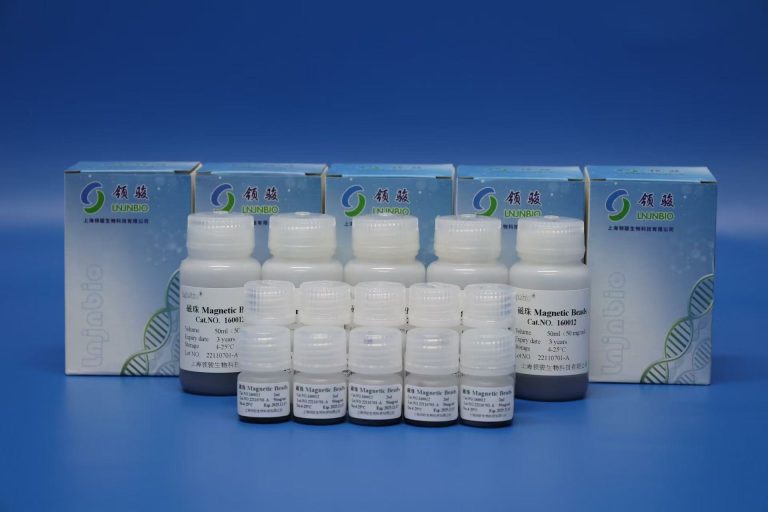
Société de biotechnologie Shanghai Lingjun., Ltd.a été établi en 2016 qui est un fabricant professionnel de matériaux biomagnétiques et de réactifs d'extraction d'acide nucléique.
Nous avons une riche expérience dans l'extraction et la purification des acides nucléiques, purification des protéines, séparation cellulaire, chimiluminescence, et autres domaines techniques.
Nos produits sont largement utilisés dans de nombreux domaines, comme les tests médicaux, tests génétiques, recherche universitaire, sélection génétique, et ainsi de suite. Nous fournissons non seulement des produits, mais pouvons également entreprendre des OEM, ODM, et autres besoins. Si vous avez un besoin connexe, n'hésitez pas à nous contacter .