Fabricant professionnel de perles biomagnétiques


Optimisation de la température et du temps pour les billes magnétiques à base de silice dans la sélection de fragments d'ADN
Avant-propos
Dans l'opération précise de sélection de fragments d'ADN à l'aide de billes magnétiques à base de silice, la température de réaction et le temps d'incubation sont un autre ensemble de variables décisives, à côté des perles’ performance intrinsèque et rapport d'addition. Ils ne sont pas simplement “contexte environnemental” mais ce sont des leviers de contrôle essentiels qui régulent directement la cinétique de liaison et de dissociation des billes d'ADN. Un contrôle précis de ces deux facteurs est l'étape cruciale du simple “obtenir un produit” à “obtenir un résultat hautement reproductible, produit haute résolution.”
1. Principes fondamentaux: Comment la température et le temps influencent la sélection des fragments d'ADN”
L'essence de la sélection avec des billes à base de silice est une adsorption réversible basée sur les différences de longueur des fragments d'ADN.. Ce processus est doublement contrôlé par l'équilibre thermodynamique et les taux cinétiques, la température et le temps étant les facteurs clés agissant à ces deux niveaux.
1.1 Température: Le “Régulateur” de l'équilibre thermodynamique
Constante de liaison (K): La liaison de l'ADN à la surface des billes est généralement un processus exothermique.. Une augmentation de la température entraîne généralement une diminution de la constante de liaison, déplacer l’équilibre vers la dissociation. Cela signifie que dans des conditions identiques, des températures plus élevées entraînent une force de liaison globalement plus faible entre l'ADN et les billes.
Voie d'influence: Les changements de température affectent la viscosité du système tampon PEG/sel, activité ionique, et la conformation des molécules d'ADN, modifiant ainsi la force du “effet d'exclusion stérique” et le “interaction pont de sel.” Les expériences montrent que dans la plage opérationnelle commune, une fluctuation de température de ±2°C peut entraîner un déplacement de la fenêtre de sélection de 5-15 pb et affecter les taux de récupération.
1.2 Temps: Le “Minuteur” du processus cinétique
Taux de liaison/dissociation: Il faut du temps pour que l'ADN diffuse à la surface des billes et complète l'adsorption., et inversement, pour que l'élution des billes atteigne un nouvel équilibre.
Voie d'influence: Un temps de liaison insuffisant signifie que la réaction ne parvient pas à atteindre l’équilibre, conduisant à une adsorption inefficace de certains ADN cibles, ce qui entraîne une récupération réduite et des résultats instables. Un temps de liaison excessivement long peut augmenter l’adsorption non spécifique des impuretés à fragments courts. Un temps d'élution insuffisant conduit à une élution incomplète des fragments cibles; un temps d'élution trop long peut augmenter la co-élution des fragments non cibles.
2. Stratégie d'optimisation: Établir des protocoles standardisés de contrôle de la température et du temps
Objectif principal: Créer un environnement de réaction absolument cohérent pour les interactions ADN-billes au sein et entre les lots en laboratoire.
2.1 Contrôle de la température: La cohérence est primordiale
2.1.1 Déterminer et normaliser la température de fonctionnement optimale
Norme recommandée: Température ambiante (25°C) est la condition optimisée et validée pour la plupart des kits commerciaux et est recommandée comme température standard de laboratoire. Définir clairement le “température ambiante” gamme (par ex., 24-26°C) et surveillez-le à l’aide d’un thermomètre/hygromètre de laboratoire.
Stratégie d'adaptation: Si la température ambiante du laboratoire fluctue considérablement (par ex., en raison des changements saisonniers), il est fortement recommandé d'effectuer toutes les étapes d'incubation à l'aide d'un bain métallique ou d'un thermomixeur avec module de contrôle de température intégré. Éviter l'incubation naturelle des tubes de réaction sur la paillasse.
2.1.2 Considérations opérationnelles clés
Préchauffage: Équilibrer brièvement les réactifs clés (tampon de liaison, tampon d'élution) et les échantillons à la température de fonctionnement avant utilisation pour éviter les changements de température localisés causés par l'ajout de réactifs froids.
Uniformité: Assurez-vous que tous les échantillons du même lot, et les mêmes étapes sur différents lots, sont effectués à la même température constante. C’est la pierre angulaire pour garantir la comparabilité des données.
2.2 Contrôle du temps: Précision sur estimation
2.2.1 Optimisation des temps d'incubation pour les étapes clés
Étape de liaison: Nécessite généralement5-10 minutes pour obtenir une liaison suffisante. Des expériences pilotes à petite échelle peuvent être menées en établissant des gradients de temps (par ex., 5, 7.5, 10, 12.5 minutes) à température fixe. Évaluer la récupération et la pureté par électrophorèse microfluidique pour déterminer le moment minimum où un plateau est atteint.
Étape d'élution: C’est la clé pour contrôler la résolution de la sélection. Temps d'élution trop court (par ex., <1 minute) peut être incomplet; trop longtemps (par ex., >5 minutes) peut provoquer un élargissement de la fenêtre.
Stratégie recommandée: Utiliser un timing précis et une élution fractionnée. Par exemple, après avoir ajouté la première aliquote du tampon d'élution, incuber précisément à température ambiante pendant 2 minutes, puis récupérez le surnageant. Ajouter une deuxième aliquote de tampon d'élution, incuber pendant 1 minute, et collecter. Cela permet de séparer les fragments avec des forces de liaison légèrement différentes, optimiser l'homogénéité des produits.
2.2.2 Établir et respecter strictement la procédure opérationnelle standard(AMADOUER)
Une fois que la combinaison optimale de temps d’incubation est déterminée grâce à des expériences pilotes (par ex., obligatoire: 8 minutes; élution 1-2 minutes; elution 2- 1 minute), it should be documented in the laboratory SOP. Train all personnel to use atimer for precise control, maintaining an error within ±10 seconds, and abandoning “estimation by feel.”
3. Advanced Considerations: A Holistic View Beyond Individual Steps
Monitoring and Recording Ambient Temperature: Record the ambient temperature for each experiment. When inter-batch result discrepancies occur, temperature is a primary factor to investigate.
Consistency in Bead Separation and Transfer Times: The standing time after placing reaction tubes on the magnetic rack (par ex., the time to ensure solution clarification) should also be standardized (par ex., always 30 seconds or 1 minute), as the dissociation reaction continues slowly during this period.
The Temperature Advantage of Automated Platforms: For high-throughput applications, employing automated liquid handling workstations with temperature control modules provides unparalleled uniformity in temperature and time, representing the ultimate solution for achieving the highest reproducibility.
Conclusion: Transforming Variables into Constants, Making Excellence Inevitable
In fragment selection, fine control over temperature and time is a crucial marker for transforming the method from an “art” dans un “science.” By converting these two easily fluctuating environmental variables into strictly defined and executed standard constants within the laboratory, experimental error can be greatly minimized, ensuring that every selection is based on the same physicochemical foundation.
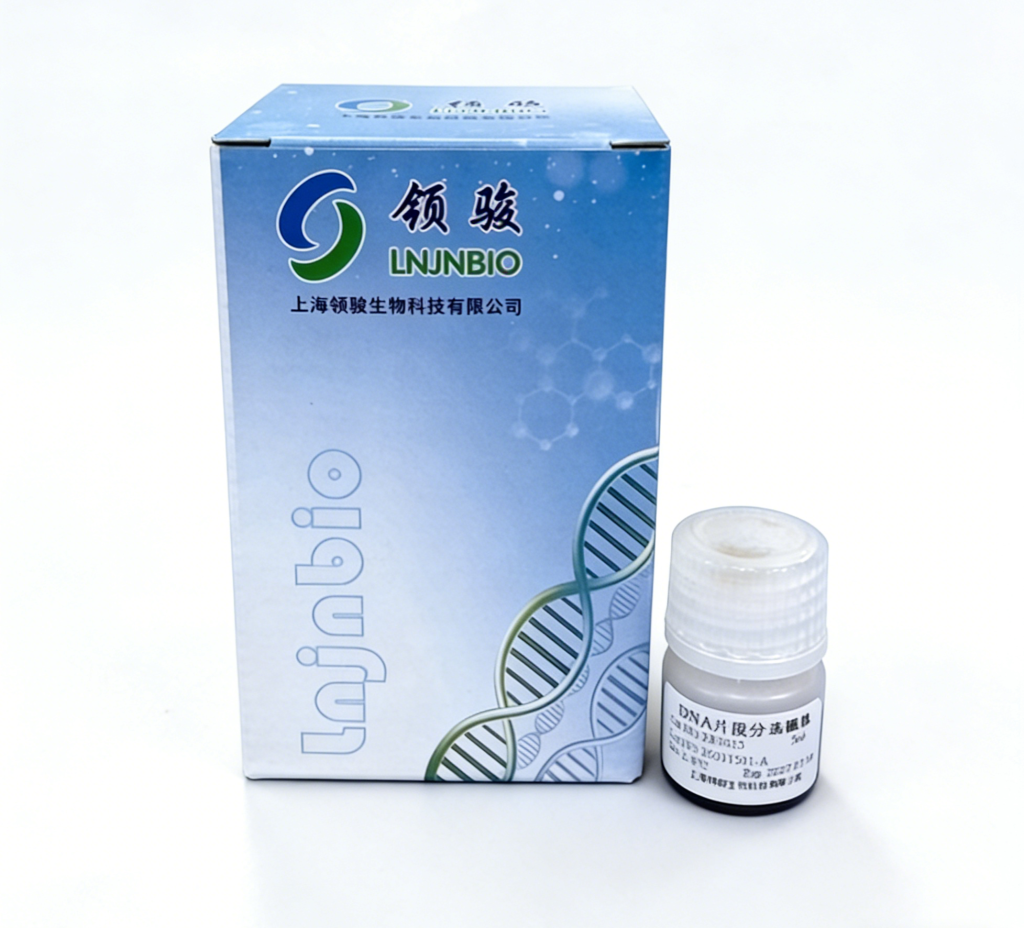
Our provided LnJnBio FR0015 Series high-performance silica-based magnetic beads exhibit excellent stability and predictability in their reaction kinetics under standardized temperature and time conditions. Combined with the optimization strategies outlined here, they can help you establish a robust and reliable technical barrier, ensuring the acquisition of the highest quality NGS libraries or analytical-grade DNA fragments from your precious samples, transforming exceptional experimental results from a possibility into a certainty.
Fournisseur
Société de biotechnologie Shanghai Lingjun., Ltd.a été établi en 2016 qui est un fabricant professionnel de matériaux biomagnétiques et de réactifs d'extraction d'acide nucléique.
Nous avons une riche expérience dans l'extraction et la purification des acides nucléiques, purification des protéines, séparation cellulaire, chimiluminescence, et autres domaines techniques.
Nos produits sont largement utilisés dans de nombreux domaines, comme les tests médicaux, tests génétiques, recherche universitaire, sélection génétique, et ainsi de suite. Nous fournissons non seulement des produits, mais pouvons également entreprendre des OEM, ODM, et autres besoins. Si vous avez un besoin connexe, n'hésitez pas à nous contacter .