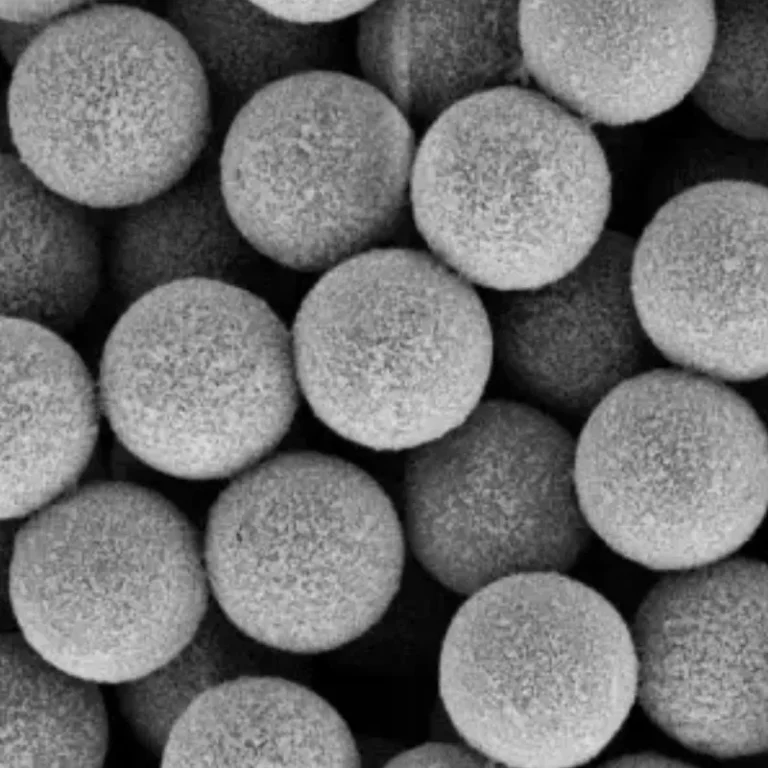
Monaróir Gairmiúil Coirníní Bithmhaighnéadacha


Optamú Teicniúil ar Eastóscadh Iomlán RNA ó Fhíocháin Ainmhithe Coimpléascacha: Evaluation of a Mini-Extraction Protocol Based on the Magnetic Bead Method
1.Abstract
Animal visceral tissues (such as liver, kidney, croí, and intestinal tissues) are rich in endogenous nucleases, polaisiúicrídí, lipidí, and connective tissue components. Mar thoradh air sin, the extraction of total RNA from these tissues has long faced technical challenges such as a high risk of degradation, low product purity, and unstable yields. The traditional phenol-chloroform extraction method is not only cumbersome and time-consuming but also involves toxic organic reagents, making it difficult to meet the demands of high-throughput and automated experiments.
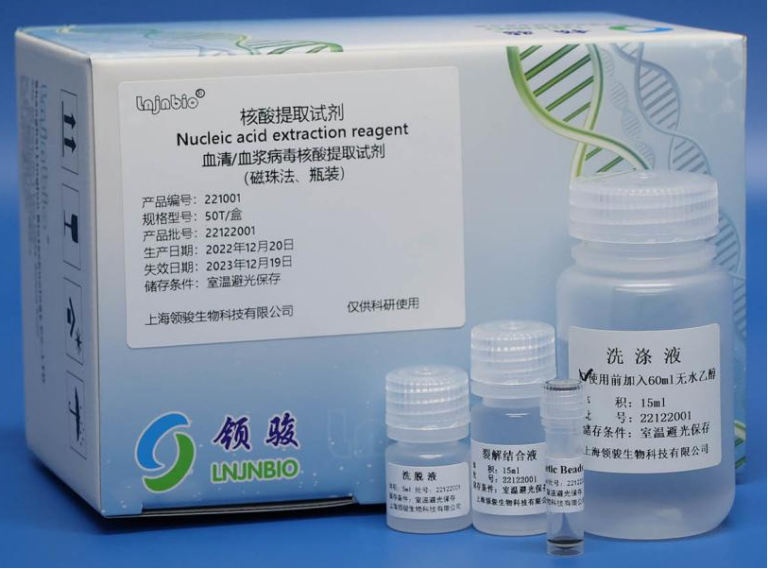
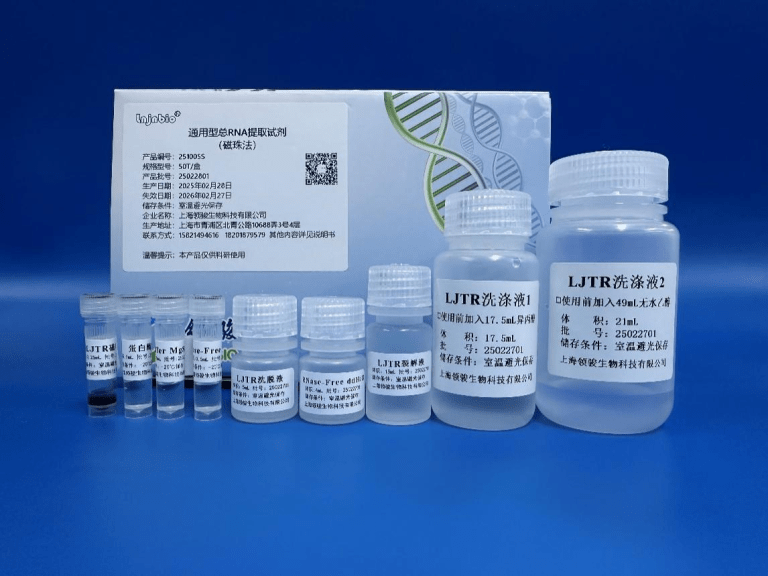
Based on application data from the Shanghai Lingjun Biotech Kit Uilíoch Iomlán RNA Eastóscadh (Modh Coirnín Maighnéadach) in various animal visceral samples, this paper systematically evaluates its performance in small-volume extractions. The results indicate that the kit effectively removes protein and polysaccharide contamination. The A260/A280 and A260/A230 ratios of the extracted RNA both meet the quality requirements for downstream molecular biology experiments, and the yield is sufficient for various applications, such as RT-qPCR and transcriptomic sequencing, providing a safe and efficient solution for RNA extraction from complex tissue samples.
2.Réamhrá
The integrity and purity of ribonucleic acid (RNA) are critical prerequisites for molecular biology experiments such as gene expression analysis, transcriptomic sequencing, and non-coding RNA research. Animal visceral tissues—particularly the liver, kidneys, croí, and intestines—are typically considered “difficult samples” for RNA extraction. The liver is rich in glycogen and endogenous RNases; kidney and intestinal tissues contain large amounts of polysaccharides and proteolytic enzymes; and the heart, due to the dense structure of its muscle fibers, does not lysis sufficiently. These factors can all lead to RNA degradation, low yield, or the co-purification of impurities, which in turn affect reverse transcription efficiency and the reliability of quantification results.
Le blianta beaga anuas, the magnetic bead method for nucleic acid extraction has gradually emerged as an alternative to traditional centrifugation column and organic solvent methods, thanks to its advantages of operational safety, ease of automation, and consistent product quality. This study evaluated the performance of a universal total RNA extraction kit based on the magnetic bead method, developed by Shanghai Lingjun Biotechnology, in visceral samples from pigs and mice, providing a systematic technical reference for RNA extraction from such samples.
3.Product Technical Principles
This kit is based on surface-modified magnetic bead technology and utilizes the selective adsorption of nucleic acids by magnetic beads in a specific buffer system to purify RNA. The extraction process includes: releasing total RNA from the sample using a lysis buffer; specific binding of nucleic acids to the magnetic beads; removal of protein and salt ion impurities using wash buffers; and elution with a nuclease-free wash to obtain high-purity RNA. This system does not require the use of organic solvents such as phenol and chloroform, thereby avoiding the health risks and waste disposal burdens associated with traditional methods. Ina theannta sin, the magnetic bead method prevents column clogging caused by sample particulates during centrifugation-based filtration, and offers flexible elution volumes (30–100 μL), making it suitable for the concentration and recovery of low-concentration RNA samples.
4.Experimental Data and Analysis
Approximately 5–10 mg each of fish liver, fíochán intestinal, gills, and heart were collected and extracted using the Lingjun Biotech Universal Total RNA Small-Volume Extraction Kit. The results are shown in the table below.
| Níl. | Sampla | 260/280 | 260/230 | Conc. (ng/μL) |
| 1 | 5 mg ae éisc | 1.92 | 1.54 | 272.95 |
| 2 | 10mg Fish guts | 1.84 | 2.04 | 119.15 |
| 3 | 10mg Fish gill | 1.92 | 2.13 | 276.15 |
| 4 | 10mg Croí éisc | 1.89 | 1.89 | 113.70 |
Electrophoresis Results:
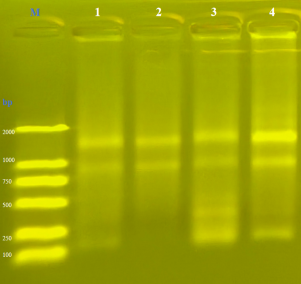
Mar atá le feiceáil, the A260/280 ratios are above 1.9, the concentrations are all above 100 ng/μL, agus tá an príomhbhanna le feiceáil go soiléir.
5.Discussion and Recommendations for Application
5.1 Technical Advantages of the Magnetic Bead Method
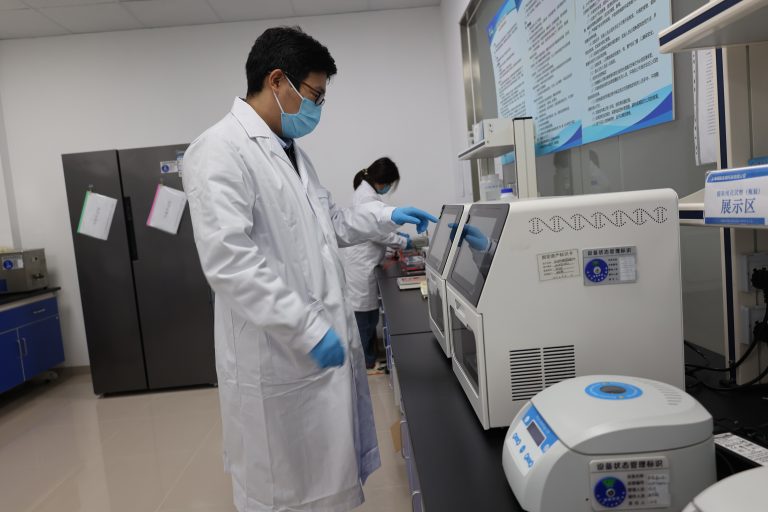
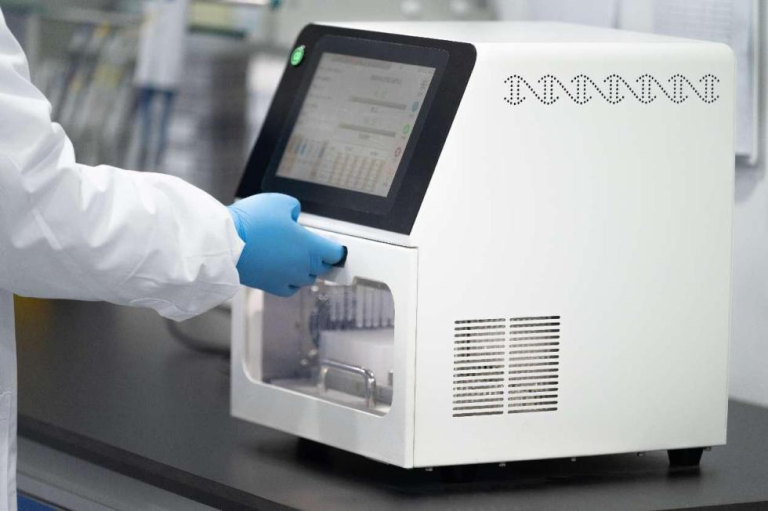
Compared to the traditional Trizol method, the magnetic bead method significantly reduces processing time (the entire process can be completed in under 40 nóiméad) and minimizes the risk of RNA degradation due to exposure during the procedure. Ina theannta sin, the magnetic bead method is compatible with automated nucleic acid extraction platforms, rud a fhágann go bhfuil sé oiriúnach do phróiseáil samplach ard-thréchuir.
5.2Extraction Strategy
Small-volume extraction is suitable for routine analyses such as RT-qPCR, cDNA library construction, and Northern blot; it requires only a small amount of sample and is ideal for the initial screening of precious samples. For tissues with high fat content or high RNase levels (such as the pancreas), the amount of lysis buffer can be appropriately increased or an RNase inhibitor can be added in advance to optimize extraction efficiency.
6.Conclúid
The Shanghai Lingjun Biotech Universal Total RNA Extraction Kit (Modh Coirnín Maighnéadach) demonstrates excellent purity, toradh, and ease of use in the extraction of RNA from animal visceral tissues. This system provides a technical solution that combines efficiency and quality for RNA research on complex biological samples, and the resulting RNA is suitable for a wide range of downstream applications, from RT-qPCR to transcriptomic sequencing.
Soláthraí
Shanghai Lingjun Biteicneolaíocht Co., Teo.bunaíodh i 2016 atá ina mhonaróir gairmiúil d'ábhair bithmhaighnéadacha agus imoibrithe eastóscadh aigéid núicléacha.
Tá taithí shaibhir againn in eastóscadh agus íonú aigéad núicléasach, íonú próitéine, scaradh cille, ceimileacanacht, agus réimsí teicniúla eile.
Úsáidtear ár gcuid táirgí go forleathan i go leor réimsí, mar thástáil leighis, tástáil ghéiniteach, taighde ollscoile, pórú géiniteach, agus mar sin de. Ní chuirimid ar fáil ach táirgí ach freisin is féidir tabhairt faoi OEM, ODM, agus riachtanais eile. Má tá riachtanas gaolmhar agat, bíodh leisce ort teagmháil a dhéanamh linn .