생체자기비즈 전문제조업체


다당류로부터 게놈 DNA 추출에 있어서 마그네틱 비드 기반 방법의 응용 및 전망- 폴리페놀이 풍부한 식물
머리말
오늘, 우리는 응용 프로그램과 전망을 탐구할 것입니다 다당류로부터 게놈 DNA 추출의 자기 비드 기반 방법- 그리고 폴리페놀이 풍부한 식물. 이것은 매우 인기가 높지만 도전적인 분야입니다., 그리고 Magnetic Bead 기술의 출현으로 이러한 DNA 추출이 크게 향상되었습니다. “어려운” 식물 샘플.
1. 전통적인 방법의 과제
다당류- 그리고 폴리페놀이 풍부한 식물 (예를 들어, 찻잎, 딸기, 토마토, 포플러 나무, 그리고 호두) 오랫동안 분자생물학 연구에 어려움을 겪어왔습니다.. 주요 과제는 다음과 같습니다.:
- 다당류: DNA와 함께 침전, 효소 소화와 같은 하류 반응을 억제하는 점성 젤 같은 물질을 형성합니다., PCR, 그리고 시퀀싱.
- 폴리페놀: 추출 중 퀴논으로 쉽게 산화됨, DNA에 비가역적으로 결합하는 것, 갈색으로 분해된 물질로 변해 DNA 순도와 품질에 심각한 영향을 미침.
- 2차 대사산물: 다른 2차 대사산물도 다운스트림 적용을 억제합니다..
- 전통적인 CTAB 방법: 수년에 걸쳐 최적화되었지만, 그것은 단계를 포함한다, 시간이 많이 걸린다, 독성 유기 시약에 크게 의존합니다. (예를 들어, 클로로포름), 처리량이 많은 애플리케이션 및 자동화에는 비효율적입니다..
2. 자기 비드 기반 방법의 구체적인 적용 전략
다당류의 독특한 과제를 해결하기 위해- 그리고 폴리페놀이 풍부한 식물, 자기 비드 기반 핵산 추출은 일반적으로 다음과 같은 최적화된 전략을 사용합니다.:
2.1 강화된 용해 완충액:
고농도 CTAB/SDS: 완전한 세포 용해 및 단백질 변성을 보장합니다..
2.2 고농도의 환원제:
β-메르캅토에탄올 (2%-4%) 또는 더 효율적인 DTT (디티오트레이톨) 폴리페놀 산화를 방지하는 데 필수적입니다..
폴리머 첨가제: 폴리비닐피롤리돈 (PVP) 또는 불용성 PVP (PVPP) 폴리페놀에 우선적으로 결합, 원심분리를 통해 제거할 수 있는 불용성 복합체 형성, 후속 단계에 대한 간섭 방지.
높은 염분 농도: NaCl은 다당류 제거를 돕고 자성 비드에 대한 DNA 결합을 향상시킵니다..
최적화된 결합 조건:
불순물 결합보다 DNA 결합을 선호하는 환경을 조성하기 위해 결합 완충액의 pH 및 염 농도를 정밀하게 제어합니다..
2.3 엄격한 세탁:
추가 세척 단계 또는 에탄올과 구아니딘 염산염이 포함된 세척 완충액을 사용하면 잔류 다당류와 염분을 더욱 철저하게 제거할 수 있습니다..
2.4 마그네틱 비드 선택:
다양한 크기의 자석 구슬, 표면 수정, 농도에 따라 결합력과 특이성이 달라집니다.. 식물 게놈 DNA의 큰 조각을 처리하려면 적절한 크기의 비드를 선택하는 것이 중요합니다..
3. 적용 전망 및 향후 방향
다당류로부터 DNA 추출 시 자기 비드 기반 방법의 전망- 폴리페놀이 풍부한 식물은 널리 퍼져 있습니다.,주로 다음과 같은 측면에 반영됩니다.:
3.1 처리량이 많은 유전체학 연구의 핵심 동인:
작물 육종이 게놈 선택 시대로 접어들면서, 수천 명의 개인의 유전자형 분석 (예를 들어, GBS를 사용하여, SSR, 재배열, SNP 칩 분석) 높은 처리량의 자동화가 필요합니다, 자기 비드 기반 방법을 전처리에 이상적인 선택으로 만듭니다..
3.2 3세대 시퀀싱 기술과의 완벽한 호환성:
장기 판독 시퀀싱 기술 (예를 들어, 팩바이오 데스, 옥스퍼드 나노포어) 높은 무결성이 필요합니다, 고분자량 (HMW) DNA. 최적화된 Magnetic Bead 기반 방법으로 고품질의 물질을 효과적으로 추출 (본사) HMW DNA, 긴 판독 시퀀싱을 위한 라이브러리 준비 요구 사항을 충족하고 복잡한 식물 게놈 분석 가능.
3.3 현장 기반의 신속한 탐지 (현장 진료 테스트):
휴대용 핵산 추출기 및 qPCR 장비와 결합, 자기 비드 기반 방법을 사용하여 식물 질병의 현장 기반 신속한 진단 가능 (예를 들어, 병원체, 바이러스), 유전자 변형 작물의 현장 식별, 멸종위기 또는 희귀식물의 유전자원 현장조사 및 현장조사.
3.4 키트 표준화 및 상용화:
특정 식물 유형에 최적화된 보다 상업적으로 이용 가능한 자기 비드 기반 키트 (예를 들어, 쌀, 숲속의 나무들, 약초) 나타날 것이다, 방법론적 표준화를 촉진하고 실험실 간 결과 비교 가능성을 강화합니다..
4. 결론
자기 비드 기반 방법, 효율적인 억제제 제거로, 간단, 및 자동화 호환성, 다당류로부터 게놈 DNA 추출에 혁명을 일으켰습니다.- 그리고 폴리페놀이 풍부한 식물. 이들은 전통적인 방법의 병목 현상을 성공적으로 해결하고 고급 분자 생물학 분석을 위한 고품질 DNA를 제공합니다..
정밀농업의 급속한 발전으로, 기능유전체학, 그리고 합성생물학, the demand for high-quality plant DNA will only grow. Magnetic bead-based methods are not only indispensable today but will also continue to integrate with these cutting-edge fields, driving plant science research to new heights.
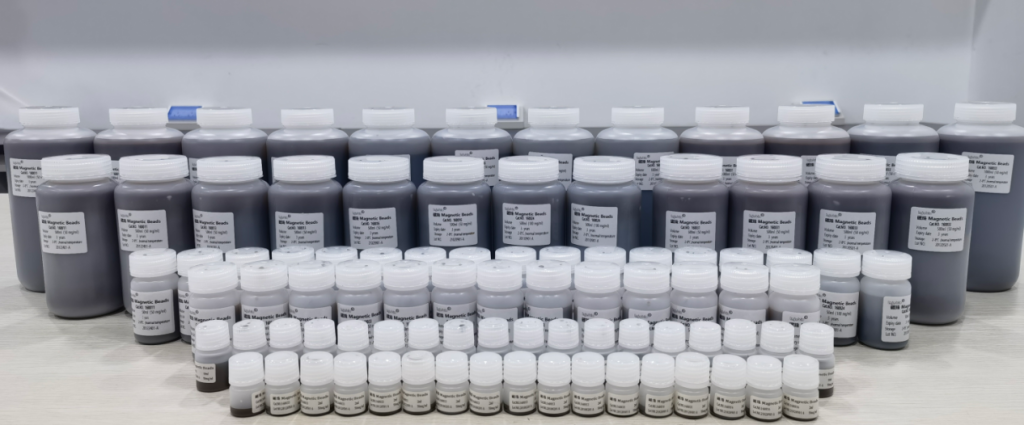
상하이 링쥔 생명공학 유한회사, 주식회사. offers magnetic beads for genomic DNA extraction from polysaccharide- 그리고 폴리페놀이 풍부한 식물, ~와 같은 160014 그리고 160024 자기 구슬. These products feature higher nucleic acid binding capacity, stronger resistance to inhibitor interference, and excellent biocompatibility, making them ideal for extracting genomic DNA from such plants.
You can choose the most suitable magnetic beads based on your experimental requirements. We are committed to providing you with the highest-quality products and efficient, reliable services. Our professional team is always available to support you. We look forward to establishing successful collaborations with you.
공급자
상하이 링쥔 생명공학 유한회사, 주식회사에 설립되었습니다 2016 생체자성재료 및 핵산추출시약 전문제조업체입니다..
핵산 추출 및 정제 분야에서 풍부한 경험을 보유하고 있습니다., 단백질 정제, 세포 분리, 화학발광, 및 기타 기술 분야.
우리의 제품은 많은 분야에서 널리 사용됩니다., 의료 테스트와 같은, 유전자 검사, 대학 연구, 유전자 육종, 등. 우리는 제품을 제공할 뿐만 아니라 OEM도 수행할 수 있습니다., ODM, 그리고 다른 필요. 관련된 필요사항이 있는 경우, 저희에게 연락하게 자유롭게 느끼십시오 .