Profesjonell produsent av biomagnetiske perler

Anvendelse og utsikter for magnetiske perler-baserte metoder i genomisk DNA-ekstraksjon fra polysakkarid- og polyfenolrike planter
Forord
I dag, vi vil fordype oss i søknaden og utsiktene til magnetiske perler-baserte metoder i genomisk DNA-ekstraksjon fra polysakkarid- og polyfenolrike planter. Dette er et svært populært, men utfordrende felt, og fremveksten av magnetisk perleteknologi har betydelig forbedret DNA-ekstraksjon fra slike “vanskelig” planteprøver.
1. Utfordringer ved tradisjonelle metoder
Polysakkarid- og polyfenolrike planter (f.eks., teblader, jordbær, tomater, poppeltrær, og valnøtter) har lenge skapt vanskeligheter i molekylærbiologisk forskning. Hovedutfordringene inkluderer:
- Polysakkarider: Samutfelles med DNA, danner viskøse gel-lignende stoffer som hemmer nedstrømsreaksjoner som enzymatisk fordøyelse, PCR, og sekvensering.
- Polyfenoler: Kan lett oksideres til kinoner under ekstraksjon, som binder seg irreversibelt til DNA, gjør det til brunt nedbrutt materiale og påvirker DNA-renheten og -kvaliteten alvorlig.
- Sekundære metabolitter: Andre sekundære metabolitter hemmer også nedstrømsapplikasjoner.
- Tradisjonell CTAB-metode: Selv om den er optimert gjennom årene, det innebærer trinn, er tidkrevende, og er sterkt avhengig av giftige organiske reagenser (f.eks., kloroform), gjør den ineffektiv for høykapasitetsapplikasjoner og automatisering.
2. Spesifikke anvendelsesstrategier for magnetiske perlebaserte metoder
For å møte de unike utfordringene med polysakkarid- og polyfenolrike planter, magnetisk perlebasert nukleinsyreekstraksjon bruker vanligvis følgende optimaliserte strategier:
2.1 Forbedret lysisbuffer:
Høye konsentrasjoner av CTAB/SDS: Sørg for fullstendig cellelyse og proteindenaturering.
2.2 Høye konsentrasjoner av reduksjonsmidler:
β-merkaptoetanol (2%–4 %) eller mer effektiv DTT (ditiotreitol) er avgjørende for å forhindre polyfenoloksidasjon.
Polymer tilsetningsstoffer: Polyvinylpyrrolidon (PVP) eller uløselig PVP (PVPP) binder seg fortrinnsvis til polyfenoler, danner uløselige komplekser som kan fjernes via sentrifugering, forhindre forstyrrelser med påfølgende trinn.
Høye saltkonsentrasjoner: NaCl hjelper til med fjerning av polysakkarid og fremmer bedre DNA-binding til magnetiske perler.
Optimaliserte bindingsbetingelser:
Kontroller pH og saltkonsentrasjonen til bindingsbufferen nøyaktig for å skape et miljø som favoriserer DNA-binding fremfor urenhetsbinding.
2.3 Streng vask:
Ytterligere vasketrinn eller bruk av vaskebuffere som inneholder etanol og guanidinhydroklorid fjerner gjenværende polysakkarider og salter grundigere.
2.4 Utvalg av magnetiske perler:
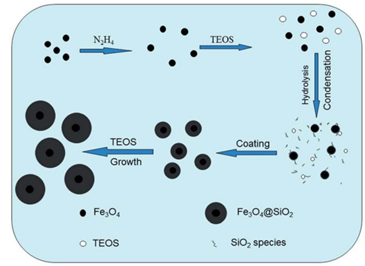
Magnetiske perler i forskjellige størrelser, overflatemodifikasjoner, og konsentrasjoner varierer i bindingskapasitet og spesifisitet. Å velge kuler av passende størrelse er avgjørende for å håndtere store fragmenter av plantegenomisk DNA.
3. Søknadsutsikter og fremtidige retninger
Utsiktene for magnetiske perler-baserte metoder i DNA-ekstraksjon fra polysakkarid- og polyfenolrike planter er brede,Det gjenspeiles hovedsakelig i følgende aspekter:
3.1 Kjernedriver for forskning med høy gjennomstrømning av genomikk:
Etter hvert som avling går inn i æraen for genomisk seleksjon, genotyping av tusenvis av individer (f.eks., bruker GBS, SSR, resekvensering, SNP-brikkeanalyse) krever høykapasitetsautomatisering, gjør magnetiske perlebaserte metoder til et ideelt valg for forbehandling.
3.2 Perfekt kompatibilitet med tredjegenerasjons sekvenseringsteknologier:
Langlest sekvenseringsteknologi (f.eks., PacBio DØD, Oxford Nanopore) krever høy integritet, høy molekylvekt (HMW) DNA. Optimaliserte magnetiske perlebaserte metoder trekker effektivt ut høy kvalitet (HQ) HMW DNA, oppfyller bibliotekets forberedelseskrav for langlest sekvensering og muliggjør analyse av komplekse plantegenomer.
3.3 Feltbasert rask deteksjon (Point-of-Care-testing):
Kombinert med bærbare nukleinsyreekstraktorer og qPCR-instrumenter, magnetiske perlebaserte metoder kan brukes for feltbasert rask diagnose av plantesykdommer (f.eks., patogener, virus), identifisering på stedet av genmodifiserte avlinger, og feltgenetiske ressursundersøkelser av truede eller sjeldne planter.
3.4 Standardisering og kommersialisering av sett:
Flere kommersielt tilgjengelige magnetiske perlebaserte sett optimalisert for spesifikke plantetyper (f.eks., ris, skogtrær, medisinske urter) vil dukke opp, fremme metodisk standardisering og forbedre sammenlignbarheten av resultater på tvers av laboratorier.
4. Konklusjon
Metoder basert på magnetiske perler, med deres effektive inhibitorfjerning, enkelhet, og automatiseringskompatibilitet, har revolusjonert genomisk DNA-ekstraksjon fra polysakkarid- og polyfenolrike planter. De adresserer flaskehalsene til tradisjonelle metoder og gir høykvalitets DNA for avanserte molekylærbiologiske analyser.
Med den raske utviklingen av presisjonslandbruk, funksjonell genomikk, og syntetisk biologi, etterspørselen etter høykvalitets plante-DNA vil bare vokse. Magnetiske perlebaserte metoder er ikke bare uunnværlige i dag, men vil også fortsette å integreres med disse banebrytende feltene, driver plantevitenskapelig forskning til nye høyder.
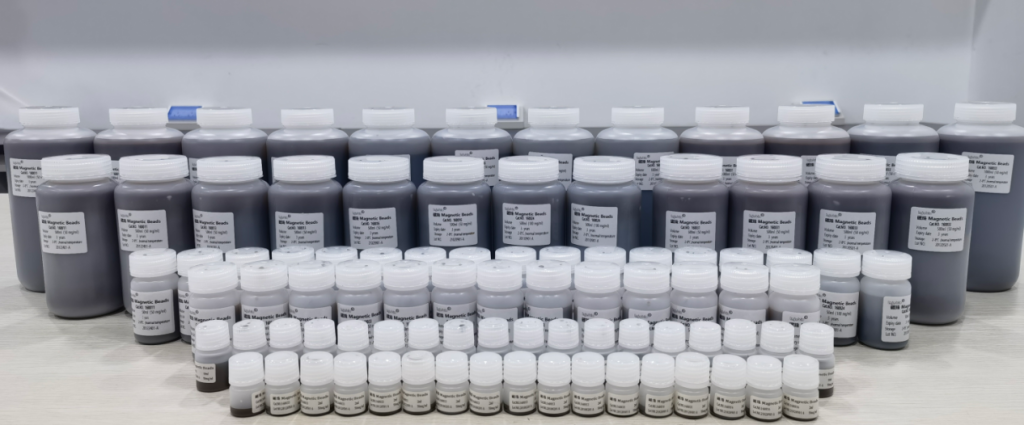
Shanghai Lingjun Biotechnology Co., Ltd. tilbyr magnetiske perler for genomisk DNA-ekstraksjon fra polysakkarid- og polyfenolrike planter, slik som 160014 og 160024 magnetiske perler. Disse produktene har høyere nukleinsyrebindingskapasitet, sterkere motstand mot inhibitorinterferens, og utmerket biokompatibilitet, gjør dem ideelle for å trekke ut genomisk DNA fra slike planter.
Du kan velge de mest passende magnetiske perlene basert på dine eksperimentelle krav. Vi er forpliktet til å gi deg produkter av høyeste kvalitet og effektive, pålitelige tjenester. Vårt profesjonelle team er alltid tilgjengelig for å støtte deg. Vi ser frem til å etablere vellykkede samarbeid med deg.
Leverandør
Shanghai Lingjun Biotechnology Co., Ltd.ble etablert i 2016 som er en profesjonell produsent av biomagnetiske materialer og nukleinsyreekstraksjonsreagenser.
Vi har rik erfaring innen utvinning og rensing av nukleinsyre, proteinrensing, celleseparasjon, kjemiluminescens, og andre tekniske felt.
Våre produkter er mye brukt på mange felt, som medisinsk testing, genetisk testing, universitetsforskning, genetisk avl, og så videre. Vi leverer ikke bare produkter, men kan også påta oss OEM, ODM, og andre behov. Hvis du har et relatert behov, ta gjerne kontakt med oss .