生体磁気ビーズの専門メーカー


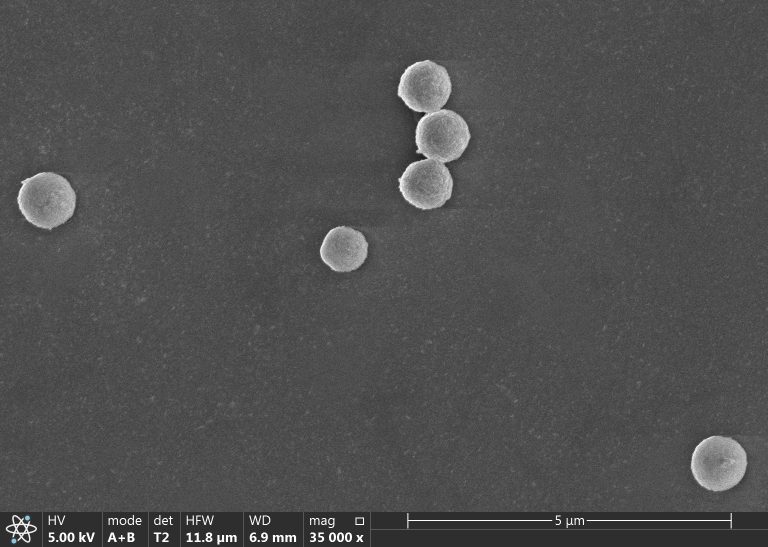
デジタル PCR におけるポリスチレンマイクロスフェアの応用
PCRの第3世代として, デジタル PCR には絶対定量という利点があります, サンプル要件が低い, 高感度, 阻害剤に対する耐性, 遺伝子変異の検出に広く使用されています, コピー数のバリエーション, 病原性微生物, そして遺伝子組み換え作物. 市販されているデジタル PCR は通常、Droplet Digital PCR です。 (ddPCR) Bio-Rad および Chip Digital PCR が代表的 (cdPCR) サーモフィッシャーが代表; つまり, バイオ・ラッドは、油中水型のマイクロ流体技術により増幅システムをナノまたはミクロン単位に分割します。, 一方、Thermo Fisher はマイクロ流体技術により増幅システムをナノまたはミクロン単位に分割します。, Thermo Fisher はマイクロ流体技術により増幅システムをナノまたはミクロン単位に分割します. マイクロメートル単位とサーモフィッシャーは物理的切断により増幅システムをナノ/マイクロメートル単位に分離します. これら 2 つの技術ルートは、Bio-Rad 液滴マイクロ流体工学で最も広く使用されています。, 小型化の大きな利点をもたらします, 地域化, 微小球をカプセル化する能力による並列化, 細胞, ナノリットルまたはピコリットルのマイクロリアクター内のその他の試薬.
エクソソームはサブミクロンの膜小胞です (30-200 nm) 細胞によって分泌され、タンパク質などの重要な情報が含まれています。, 小さなRNA, そしてDNA, 病気の診断や予後検査のための臨床リキッドバイオプシーと密接に関連しています。. しかし, サイズが小さいため、複雑な体液からエクソソームを高スループットかつ純度で単離するのは大きな課題となります。. 周らを固定する. 生体適合性ポリマーを添加した粘弾性流体を使用した逆波チャネル構造を提案しました。 [2] サブミクロンの粒子とエクソソームの弾性慣性集束と選別用. 反復波チャネル構造により、マイクロ流体の周期的な逆ディーン二次流が生成され、従来の直線チャネルと比較して微小球の集束が促進されます。. 4つの異なるサイズの蛍光サブミクロン球を使用 (1 μm, 500 nm, 300, そして 100 nm) さまざまな条件下でのフォーカシング動作を研究する, 彼らは単純なことを達成した, 高スループット, より高い純度のエクソソームのラベルフリーソーティング 92% よりも高い回復力 81%. この開発された弾性慣性エクソソーム選別技術は、さまざまなエキソソーム関連の生物学的研究や製薬応用に有望なプラットフォームを提供する可能性があります。.
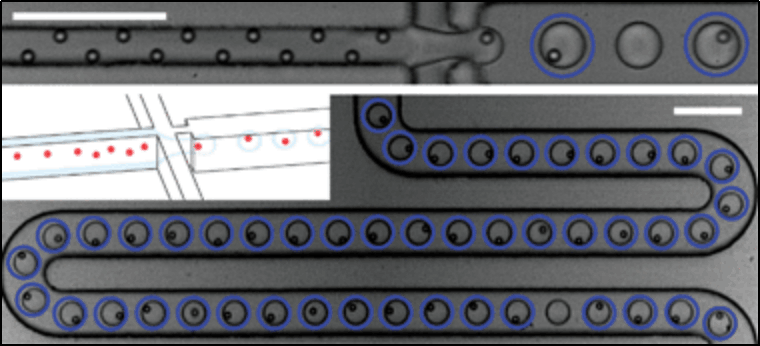
これらのアプリケーションには大きな可能性があるにもかかわらず、, ミクロスフェア/細胞のカプセル化は完全にランダム化されています, ポアソン分布による制約を受ける. 液滴が単一の微小球をカプセル化する確率は、理論的には次のとおりです。 37%, 多数のマイクロスフェアと液滴パーティションが無駄になり、検出スループットが低下します。. マイクロスフェアまたは希少細胞の利用率を向上させるため, 一般的に使用される方法は通常、理論的平均を使用します (λT) < 0.1 適用されるマイクロスフィアの濃度を決定するための、液滴あたりのマイクロスフィア/細胞の数, その結果、個々の微小球のカプセル化率が非常に低くなります。, 通常は以下 10%. 液滴システムの無限数の液滴の恩恵を受ける, 計数するマイクロスフェア/細胞の数が少ない場合、ポアソン分布はサンプル消費量とアッセイ時間にあまり影響を与えません。.
単一細胞またはポリスチレンマイクロスフェアの液滴カプセル化は、デジタルアッセイなどの分野で幅広い用途があります。, 単一細胞シーケンス, そして薬物スクリーニング. しかし, ミクロスフェアのカプセル化はポアソン分布制約によって完全にランダム化されます。, そして、単一の微小球がカプセル化される理論上の可能性は、通常、わずか約 10%. 超高度多重デジタル化検出または多数の微小球の測定を必要とするその他のアプリケーション, カウントする必要があるパーティションの数が非常に多い, 無効な液滴数の大幅な増加と検出データの冗長化につながります。. このため, Xiaoyu Yueがビーズオーダーアレンジドロップレットをデザインしました (ボード) ポアソン分布の制限を打ち破る方法としてのシステム [1].
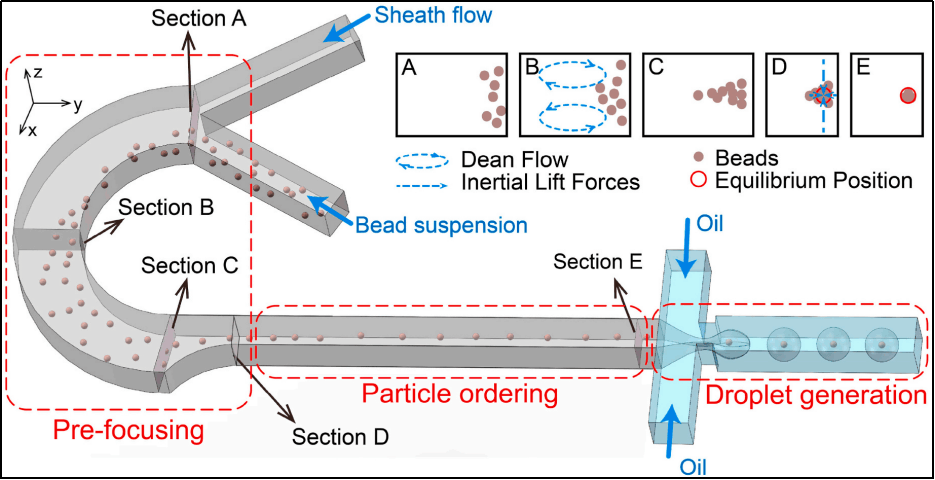
BOADシステムはシースフローを巧みに組み合わせています, ディーンボルテックス, と圧縮流路により、史上初の微小球の秩序配列を実現し、最短構造で最速の微小球の秩序配列を可能にします。, シングルビーズのカプセル化効率は最大約 86%. コード化マイクロスフェアとIL-10を標的とした磁性ポリスチレンマイクロスフェアをカプセル化するさらなる応用により、マイクロスフェアベースの超高度多重デジタル検出の可能性が十分に実証されました。. 結果として, BOAD システムは、限られたコンパートメント内で高い単一粒子カプセル化率を必要とする多くの用途に非常に有望です。, 超多重デジタルバイオアッセイなど, 単一細胞解析, 薬物スクリーニング, 単一エクソソーム検出.
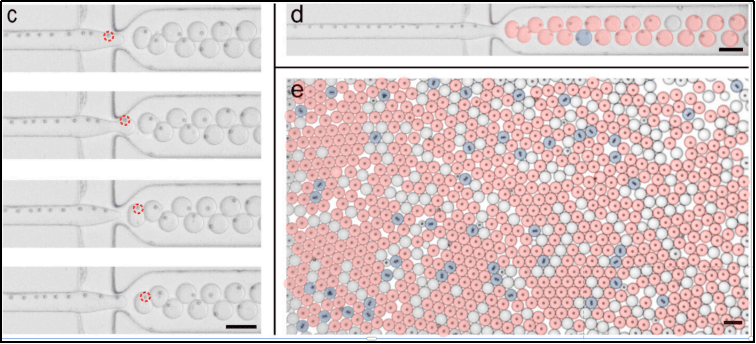
In all applications, droplet-based encapsulation of particles (cells and microspheres) is an ideal platform for single-cell analysis of cellular reprogramming, drug discovery, and secretion detection due to its uniformly small reactor diameters, unique microscale flow phenomena, and unlimited number of isolation units, and also allows for bead-based ultrasensitive digital detection of low-abundance proteins, exosomes, and other biomolecules.
Reference:
[1] Yue, X., Fang, X., Sun, T., Yi, J., Kuang, X., Guo, Q., Wang, Y., Gu, H. and Xu, H. 2022. Breaking through the Poisson Distribution: A compact high-efficiency droplet microfluidic system for single-bead encapsulation and digital immunoassay detection. Biosensors and Bioelectronics. 211, (Sep. 2022), 114384. DOI:https://doi.org/10.1016/j.bios.2022.114384.
[2] Zhou, Y., Ma, Z., Tayebi, M. and Ai, Y. 2019. Submicron Particle Focusing and Exosome Sorting by Wavy Microchannel Structures within Viscoelastic Fluids. Analytical Chemistry. 91, 7 (Apr. 2019), 4577–4584. DOI:https://doi.org/10.1021/acs.analchem.8b05749.
サプライヤー
上海霊軍生物技術有限公司, 株式会社に設立されました 2016 生体磁性材料と核酸抽出試薬の専門メーカーです.
核酸抽出・精製の経験が豊富です。, タンパク質の精製, 細胞分離, 化学発光, その他の技術分野.
当社の製品はさまざまな分野で広く使用されています, 医療検査など, 遺伝子検査, 大学の研究, 遺伝子育種, 等々. 製品のご提供だけでなくOEMも承ります, ODM, その他のニーズ. 関連するニーズがある場合, お気軽にお問い合わせください。sales01@lingjunbio.com.