Professioneller Hersteller biomagnetischer Perlen

Nukleinsäureextraktion durch Magnetkügelchen-Methode:Aufdeckung der Komponenten und Funktionen von Reagenzien
Die Komponenten und Funktionen verschiedener Reagenzien zur DNA-Extraktion mit der Magnetkügelchen-Methode sind wie folgt.
1. Lysepuffer
(1) Sicherheitsdatenblatt(Natriumdodecylsulfat): Ein anionisches Tensid, das Zellmembranstrukturen zerstört, releasing cellular contents. It can break hydrogen bonds between and within molecules, causing molecular unfolding and destroying the secondary and tertiary structures of proteins, leading to protein denaturation. Unter Hochtemperaturbedingungen, it can disrupt the binding between proteins and nucleic acids, promoting the release of nucleic acids.
(2) Triton X-100(Polyethylenglykol-Octylphenylether): A non-ionic surfactant that is stable in water and not easily dissociated, and is not significantly affected by strong electrolyte inorganic salts. Its function is to form soluble complexes with lipids such as phospholipids in biological membranes; its hydrophobic end can also form complexes with the hydrophobic regions of membrane proteins, dissolving in the solution. It is mainly used in biological experiments such as cell lysis and protein extraction.
(3) Proteinase K: A potent protein-dissolving enzyme isolated from Candida albicans, with a high specific activity, it is a key reagent for nucleic acid extraction. Its primary function is to enzymatically hydrolyze histones bound to nucleic acids, allowing nucleic acids to be free in the solution.
(4) Guanidinthiocyanat(GITC): A strong protein denaturant that can rapidly dissolve proteins, disrupt cell structures, separate nucleic acids from proteins, and inhibit the activity of nucleases, protecting nucleic acids from degradation.
(5) EDTA(Ethylenediaminetetraacetic Acid): A chelating agent that can chelate metal ions such as calcium and magnesium in the solution, inhibiting the activity of nucleases that depend on metal ions, and preventing nucleic acids from being degraded.
(6) Tris-HCl: The buffer maintains the pH relative stability of the lysis buffer, providing a suitable acidic or alkaline environment during the nucleic acid extraction process.
2. Binding Buffer
(1) High Concentration Salts(such as NaCl, MgCl2, usw.): Promote the binding of nucleic acids to the surface of magnetic beads. Salt ions can neutralize the negative charges of nucleic acids in a high-salt environment, reducing the electrostatic repulsion between nucleic acids and magnetic beads, making nucleic acids more easily adsorbed onto the surface of magnetic beads.
(2) Magnetische Perlen: Surface-modified with specific active groups, such as silanol or carboxyl groups, which can specifically bind to nucleic acids by hydrogen bonds, electrostatic interactions, usw., achieving the adsorption and enrichment of nucleic acids. Common types include superparamagnetic silica-based magnetic beads and carboxyl magnetic beads.
3. Washing Buffer
(1) Low Concentration Salts(such as NaCl): Maintain a certain ionic environment, which helps to remove impurities without affecting the binding of nucleic acids to magnetic beads.
(2) Ethanol: Commonly used in the washing step, it can remove residual proteins, salts, und andere Verunreinigungen, making nucleic acids purer. Ethanol reduces the polarity of the solution, making impurities more easily separable from nucleic acids, and also helps to stabilize the binding of nucleic acids on the surface of magnetic beads.
(3) Elutionspuffer
(4) Low Salt or Salt-Free Buffer(such as TE Buffer, Tris-HCl Buffer, usw.): Can disrupt the binding force between nucleic acids and magnetic beads, allowing nucleic acids to be eluted from the surface of magnetic beads. These buffers are usually weakly alkaline, which can neutralize the negative charges on the surface of magnetic beads, reducing the electrostatic interaction between nucleic acids and magnetic beads, thereby releasing nucleic acids into the solution, and achieving the elution and purification of nucleic acids.
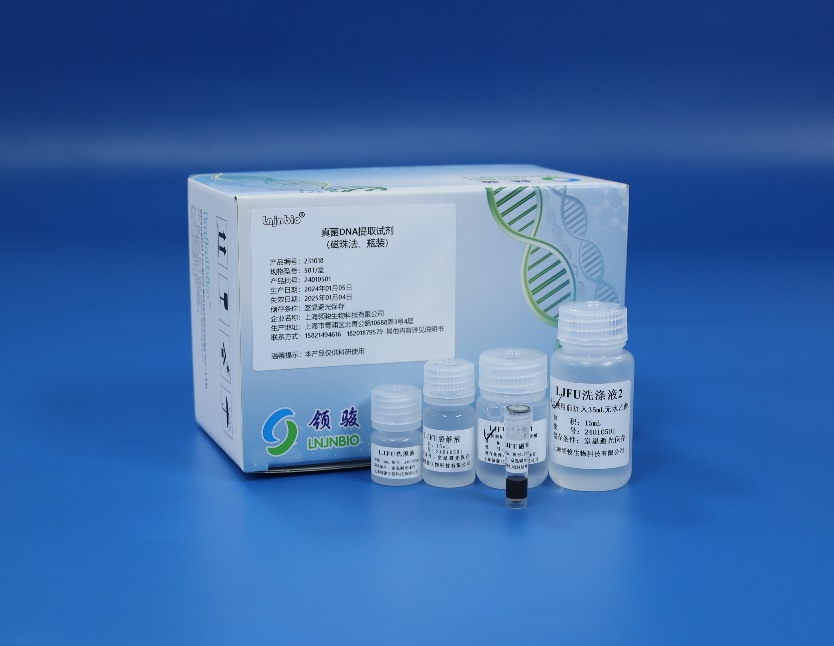
Zusammenfassend, the magnetic bead method for nucleic acid extraction achieves efficient extraction and purification of nucleic acids by carefully designed reagent components and optimized operating procedures. This technology not only improves experimental efficiency but also ensures the quality of nucleic acids, providing a solid foundation for subsequent molecular biology research and clinical diagnosis.
Anbieter
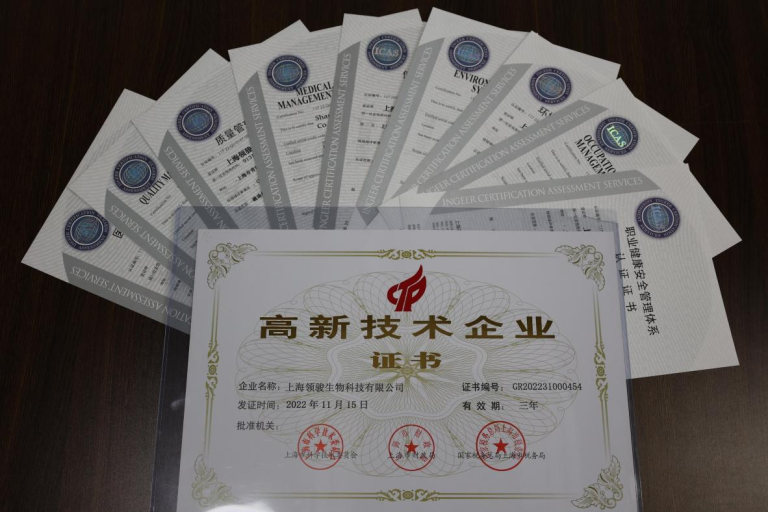
Shanghai Lingjun Biotechnology Co., Ltd.wurde gegründet in 2016 Das ist ein professioneller Hersteller von biomagnetischen Materialien und Nukleinsäure-Extraktionsreagenzien.
Wir verfügen über umfangreiche Erfahrung in der Extraktion und Reinigung von Nukleinsäuren, Proteinreinigung, Zelltrennung, Chemilumineszenz, und anderen technischen Bereichen.
Unsere Produkte werden in vielen Bereichen weit verbreitet eingesetzt, wie zum Beispiel medizinische Tests, Gentests, universitäre Forschung, genetische Zucht, und so weiter. Wir liefern nicht nur Produkte, sondern können auch OEM übernehmen, ODM, und andere Bedürfnisse. Wenn Sie einen entsprechenden Bedarf haben, Bitte kontaktieren Sie uns untersales01@lingjunbio.com.