Fabricante profesional de perlas biomagnéticas

¿Cómo mejorar los resultados de la 260/230 cálculo utilizando el método de perlas magnéticas para extraer reactivos?
Al extraer ácidos nucleicos mediante el método de perlas magnéticas, un bajo 260/230 relación (generalmente < 1.8) indica la presencia de compuestos orgánicos(como las sales de guanidina, fenol, etanol, EDTA) o sales residuales en la muestra., que puede afectar los experimentos posteriores (como la PCR, secuenciación).
Aquí hay un plan de optimización sistemático.:
- Optimización de los pasos de extracción
a. Lisis completa de la muestra
Problema: La lisis incompleta conduce a una liberación incompleta de impurezas..
Mejora: Aumentar el tiempo de lisis. (p.ej., extender a 30 minutos) o temperatura (56℃).
Agregue un paso de molienda o digestión adicional con proteinasa K para muestras complejas (como plantas, heces).
b. Lave bien las cuentas magnéticas.
Paso clave: El lavado incompleto es la principal causa de 260/230 bajo.
Mejora: Aumentar el número de lavados.: 2 veces → 3 veces (especialmente para muestras con altas impurezas).
Fórmula de solución de lavado: Asegúrese de utilizar recién preparado 80% etanol (evitar el contenido excesivo de agua o la contaminación).
Operación de lavado: Agita o agita para mezclar las cuentas magnéticas cada vez., evitando la formación de grumos de perlas.
Aspirar completamente el sobrenadante (Se puede centrifugar brevemente para eliminar el líquido residual.).
do. Secado completo de perlas magnéticas.
Problema: El etanol residual puede reducir significativamente 260/230.
Mejora: Abra la tapa y déjela secar durante 5-10 minutos (a temperatura ambiente o 37°C), hasta que no haya olor a etanol. Evite el secado excesivo (de lo contrario, Reducirá la eficiencia de la elución del ácido nucleico.).
d. Optimizar las condiciones de elución.
Utilice tampón de elución precalentado (como tampón TE a 65 °C o agua esterilizada), y dejarlo reposar 5 minutos antes de la recogida.
Evite utilizar un volumen de elución demasiado pequeño. (recomendar ≥ 50 μL para reducir la concentración de sal).
Ⅱ.Control de calidad de Reactivos y Consumibles
a. Reemplace con reactivos nuevos:
Compruebe si el etanol y la solución de lavado están contaminados. (si se almacena durante mucho tiempo sin sellar).
Evite el uso de reactivos de perlas magnéticas caducados (La degradación de las perlas magnéticas puede absorber impurezas.).
b. Selección de consumibles:
Utilice tubos de centrífuga y pipetas sin nucleasas ni pirógenos. (para evitar interferencias de aditivos plásticos).
Ⅲ.Preprocesamiento de muestras
- Muestras complejas (como el suelo y las plantas):
Incrementar el pretratamiento CTAB o SDS para eliminar polisacáridos y polifenoles..
- Para muestras de sangre:
Primero elimine la hemoglobina usando una solución de lisis de eritrocitos..
- Muestras enriquecidas con inhibidores. (como heces y fluidos corporales):
Diluir las muestras o utilizar tampones de lisis dedicados. (como los que contienen ARN portador).
Ⅳ.Verificación y medidas correctivas
a. Electroforesis o verificación Qubit:
Comprobar si hay degradación (fenómeno de cola) usando electroforesis en gel de agarosa.
Compara los resultados con los de Nanodrop usando un medidor de fluorescencia (qubit) para eliminar la interferencia de la absorbancia de impurezas.
b. Remediación de purificación:
Si la proporción de 260/230 permanece bajo, purificar el ácido nucleico usando una columna de sílice o mediante precipitación con etanol nuevamente.
V. Experimento de control
Para cada extracción, una muestra estándar conocida (como λDNA o células cultivadas) Está configurado para confirmar la estabilidad de los reactivos..
si el 260/230 la proporción de la muestra de control es normal, El problema puede residir en la propia muestra que se está analizando..
Lista de verificación de solución de problemas comunes
| Fenómeno | Posible causa | Solución |
| 260/230 es bajo pero 260/280 es normal | Contaminación por proteínas o fenol. | Fortalecer los pasos de lavado y secado. |
| Ambos 260/230 y 260/280 son bajos | Contaminación por proteínas o fenol. | Optimizar la lisis, reemplazar la solución de lisis |
| Sólo el 230 el pico es alto | Contaminación por disolventes orgánicos | Compruebe la pureza del etanol o del tampón. |
Siguiendo estos pasos, la proporción de 260/230 se puede aumentar significativamente (objetivo > 1.8). Si el problema persiste, no dude en ponerse en contacto con Shanghai Lingjun Biotechnology en 18103799069.
Proveedor
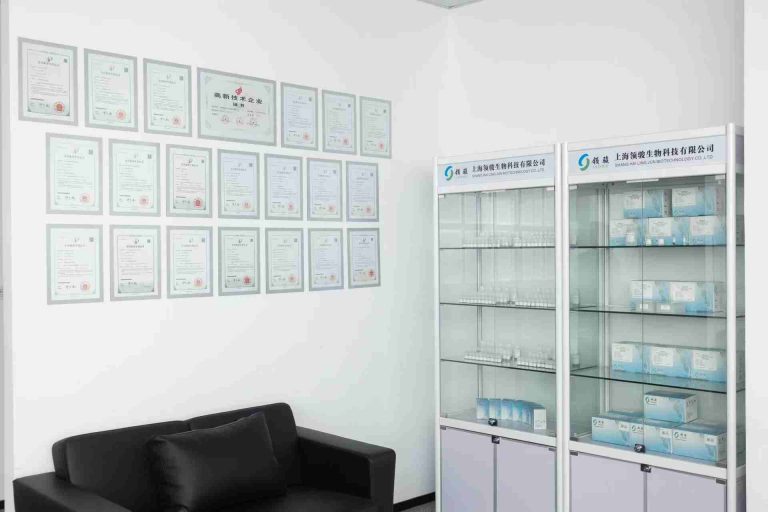
Shanghai Lingjun Biotecnología Co., Limitado.se estableció en 2016 que es un fabricante profesional de materiales biomagnéticos y reactivos de extracción de ácidos nucleicos..
Tenemos una rica experiencia en extracción y purificación de ácidos nucleicos., purificación de proteínas, separación celular, quimioluminiscencia, y otros campos técnicos.
Nuestros productos son ampliamente utilizados en muchos campos., como pruebas médicas, pruebas genéticas, investigación universitaria, mejoramiento genético, etcétera. No solo proporcionamos productos sino que también podemos realizar OEM, ODM, y otras necesidades. Si tienes una necesidad relacionada, no dude en contactarnos .