Fabricante profissional de esferas biomagnéticas


Como selecionar o gene de referência interno do arroz transgênico para identificação por PCR?
1. Estratégia de seleção para genes de referência
A identificação e triagem de genes de referência são fundamentais para garantir a confiabilidade dos resultados experimentais na pesquisa do arroz transgênico.
2.1Princípios Básicos para Seleção
Os genes de referência ideais devem exibir expressão estável em diferentes tecidos, órgãos, estágios de desenvolvimento, e condições experimentais. Um critério amplamente aceito é um valor Cq (Ciclo de Quantificação) faixa de variação inferior a 2.5.
2.2Triagem preliminar usando bancos de dados públicos
Utilize bancos de dados públicos como IC4R (Informações comuns para arroz) e ArrozXRro (Banco de dados de perfil de expressão de arroz) para triagem inicial. A análise bioinformática pode ajudar a identificar genes candidatos com expressão estável sob diversas condições.
2.3Avaliação de genes tradicionais e novos
(1) Genes Tradicionais: Genes de referência comumente usados incluem OsSBE4, RbcS, Ato1, e SPS (Gene da Sacarose Fosfato Sintase).
(2) Novos genes estáveis: Alguns estudos recomendam genes de referência mais recentes com estabilidade demonstrada, como UFC1 (Homólogo da enzima conjugadora de UFM1 1) e FhaB (Homólogo de Adhesin FhaB), que podem superar os tradicionais em contextos específicos.
2. Etapas de validação experimental
Depois de selecionar genes de referência candidatos, validação experimental é necessária, que inclui principalmente as seguintes etapas:
2.1Preparação de Materiais Experimentais
Colete um conjunto diversificado de amostras de arroz, representando diferentes variedades (por exemplo, japonesa e indica), tecidos/órgãos (por exemplo, raízes, caules, folhas, anteras, sementes), estágios de desenvolvimento, e condições de tratamento (por exemplo, estresse biótico/abiótico). Incluir materiais transgênicos específicos, se aplicável.
2.2Extração de RNA e síntese de cDNA
Extraia RNA total de alta qualidade usando kits confiáveis e transcreva reversamente em cDNA. É imperativo verificar a pureza e integridade do RNA.
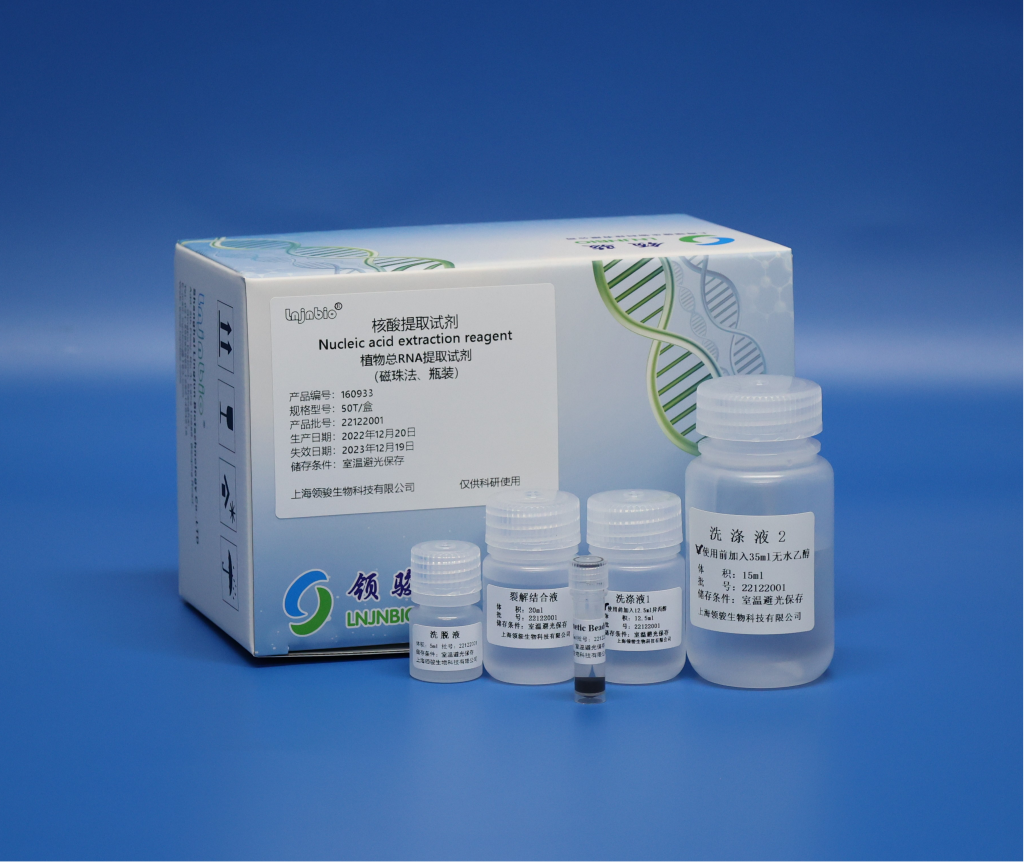
(Método de Conta Magnética)
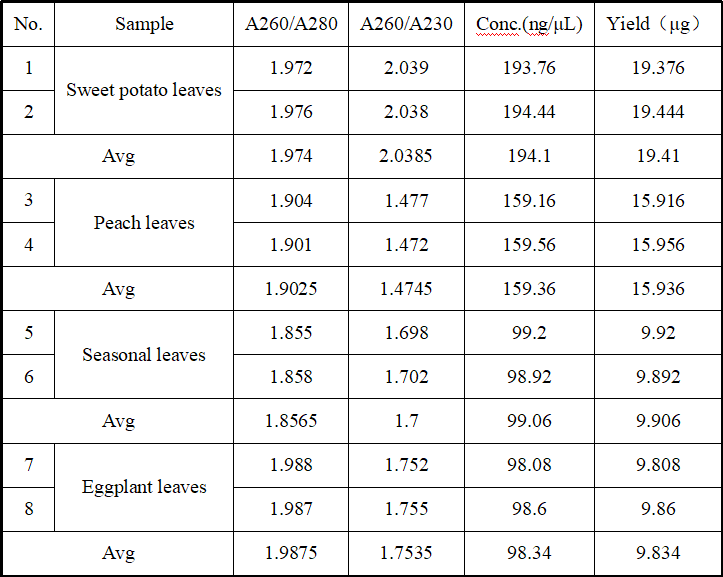
Usando Kit de extração de RNA total da planta Shanghai LNJNBio(Método de Conta Magnética) extrair 20 mg de diferentes tipos de folhas de plantas RNA,resultado como mostrado abaixo:
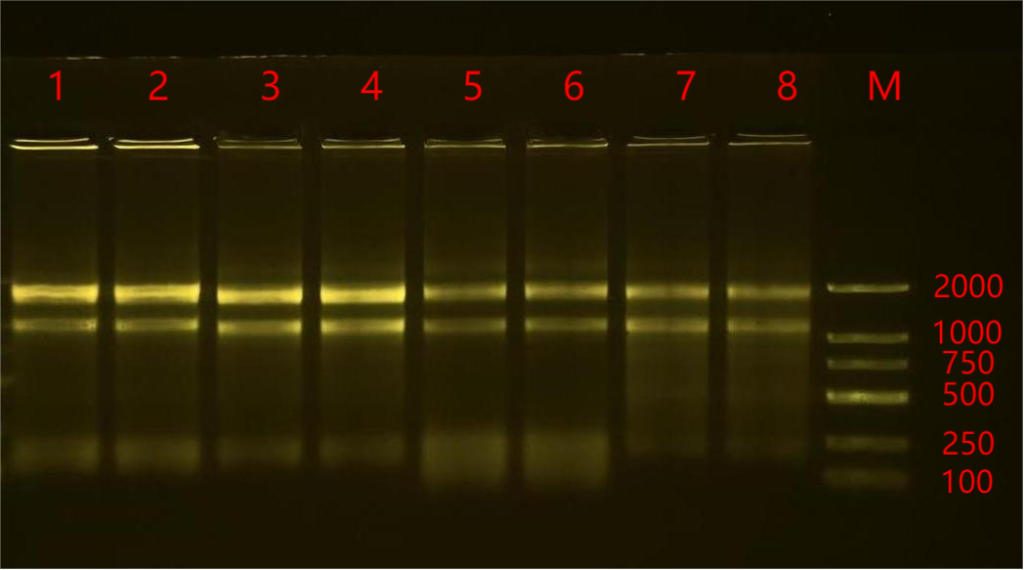
O eletroferograma é mostrado abaixo:
2.3 Projeto de primer e sonda
Projete primers e sondas para PCR quantitativo em tempo real (qPCR) visando os genes de referência candidatos. As principais considerações incluem:
- Os primers devem abranger as junções exon-exon para evitar a amplificação do DNA genômico.
- O comprimento do amplicon deve idealmente estar entre 80-200 bp.
- Empregue o método de sonda TaqMan quando for necessária maior especificidade.
2.4Avaliação de execução e estabilidade de qPCR
- Realize a amplificação qPCR usando a química SYBR Green ou TaqMan.
- Registre e analise os valores Cq para cada gene candidato em todas as amostras.
- Utilize algoritmos especializados (por exemplo, geNorm, NormFinder, MelhorKeeper) para avaliar a estabilidade da expressão e selecionar o gene de referência mais estável(é).
3. Aplicações em Pesquisa Transgênica
Genes de referência validados são cruciais para diversas aplicações em estudos de arroz transgênico:
3.1Determinação do número de cópias do transgene
Use qPCR ou PCR digital (dPCR) com um gene de referência de cópia única como calibrador para determinar quantitativamente o número de cópias do T-DNA integrado no genoma do arroz.
3.2Triagem Rápida de Linhagens Transgênicas Homozigóticas
Empregar análise qPCR comparando sinais de referência e transgene (por exemplo, através do método ΔΔCt) identificar com precisão linhas homozigóticas de inserção única na geração T1, acelerando significativamente o processo de criação.
3.3Análise dos níveis de expressão de transgenes
Em estudos funcionais, usar genes de referência estáveis para normalização para quantificar com precisão os níveis de transcrição de transgenes em diferentes linhas transgênicas.
3.4Detecção de Componentes Transgênicos
Em configurações de diagnóstico, genes de referência servem como controles positivos internos para monitorar a qualidade da extração de DNA e a eficiência da PCR. Métodos multiplex de PCR em tempo real podem ser desenvolvidos para detectar simultaneamente transgenes alvo (por exemplo, promotor, terminador, genes marcadores) e o gene de referência, permitindo análise de alto rendimento.
4. Considerações do Projeto
Para garantir o sucesso do projeto e a confiabilidade dos resultados, siga o seguinte:
4.1 Incluir controles apropriados
Sempre inclua controles positivos (por exemplo, plasmídeos com sequências alvo) e controles negativos (controles sem modelo) em ensaios de PCR para descartar falsos positivos/negativos.
4.2 Otimização Contínua de Genes de Referência
Nenhum gene de referência é universalmente perfeito. Revalidar ou rastrear o gene de referência mais adequado(é) sob condições experimentais específicas.
4.3 Aderência aos Padrões Relevantes
Se a pesquisa envolver a detecção de componentes geneticamente modificados, siga os regulamentos nacionais aplicáveis (por exemplo, Série GB/T) ou internacional (por exemplo, Padrões ISO) diretrizes para garantir o cumprimento dos procedimentos.
5. Resumo do fluxo de trabalho do projeto
Uma abordagem sistemática para um projeto de identificação de genes de referência é a seguinte:
- Definir o escopo da pesquisa: Esclarecer se é necessário um gene de referência universal ou um para condições específicas (por exemplo, tecido específico, estresse).
- Selecione genes candidatos: Escolha um conjunto de genes candidatos com base na literatura e na mineração de banco de dados.
- Validar estabilidade: Avalie experimentalmente e identifique o gene expresso de forma mais estável(é) usando ferramentas qPCR e bioinformática em um conjunto de amostras representativo.
- Aplicar em pesquisa: Implementar o gene de referência validado(é) em aplicações práticas de pesquisa de arroz transgênico.
Fornecedor
Xangai Lingjun Biotecnologia Co., Ltda.foi estabelecido em 2016 que é um fabricante profissional de materiais biomagnéticos e reagentes de extração de ácido nucleico.
Temos vasta experiência em extração e purificação de ácidos nucleicos, purificação de proteínas, separação celular, quimioluminescência, e outras áreas técnicas.
Nossos produtos são amplamente utilizados em muitos campos, como exames médicos, testes genéticos, pesquisa universitária, melhoramento genético, e assim por diante. Nós não apenas fornecemos produtos, mas também podemos realizar OEM, ODM, e outras necessidades. Se você tiver uma necessidade relacionada, não hesite em contactar-nos .