المهنية في صناعة الخرز المغناطيسي الحيوي


كيفية اختيار الجين المرجعي الداخلي للأرز المعدل وراثيا لتحديد هوية PCR?
1. Selection Strategy for Reference Genes
The identification and screening of reference genes are fundamental to ensuring the reliability of experimental results in transgenic rice research.
2.1Basic Principles for Selection
Ideal reference genes should exhibit stable expression across different tissues, organs, developmental stages, والظروف التجريبية. A widely accepted criterion is a Cq value (Quantification Cycle) variation range of less than 2.5.
2.2Preliminary Screening Using Public Databases
Utilize public databases such as IC4R (Information Commons for Rice) and RiceXRro (Rice Expression Profile Database) for initial screening. Bioinformatics analysis can help identify candidate genes with stable expression under various conditions.
2.3Evaluation of Traditional and Novel Genes
(1) Traditional Genes: Commonly used reference genes include OsSBE4, RbcS, Act1, and SPS (Sucrose Phosphate Synthase Gene).
(2) Novel Stable Genes: Some studies recommend newer reference genes with demonstrated stability, such as UFC1 (Homolog of UFM1-Conjugating Enzyme 1) and FhaB (Homolog of Adhesin FhaB), which may outperform traditional ones in specific contexts.
2. Experimental Validation Steps
After selecting candidate reference genes, experimental validation is required, which primarily includes the following steps:
2.1Preparation of Experimental Materials
Collect a diverse set of rice samples, representing different varieties (على سبيل المثال, japonica and indica), tissues/organs (على سبيل المثال, جذور, ينبع, أوراق, anthers, بذور), developmental stages, and treatment conditions (على سبيل المثال, biotic/abiotic stress). Include specific transgenic materials if applicable.
2.2RNA Extraction and cDNA Synthesis
Extract high-quality total RNA using reliable kits and reverse transcribe into cDNA. It is imperative to check RNA purity and integrity.
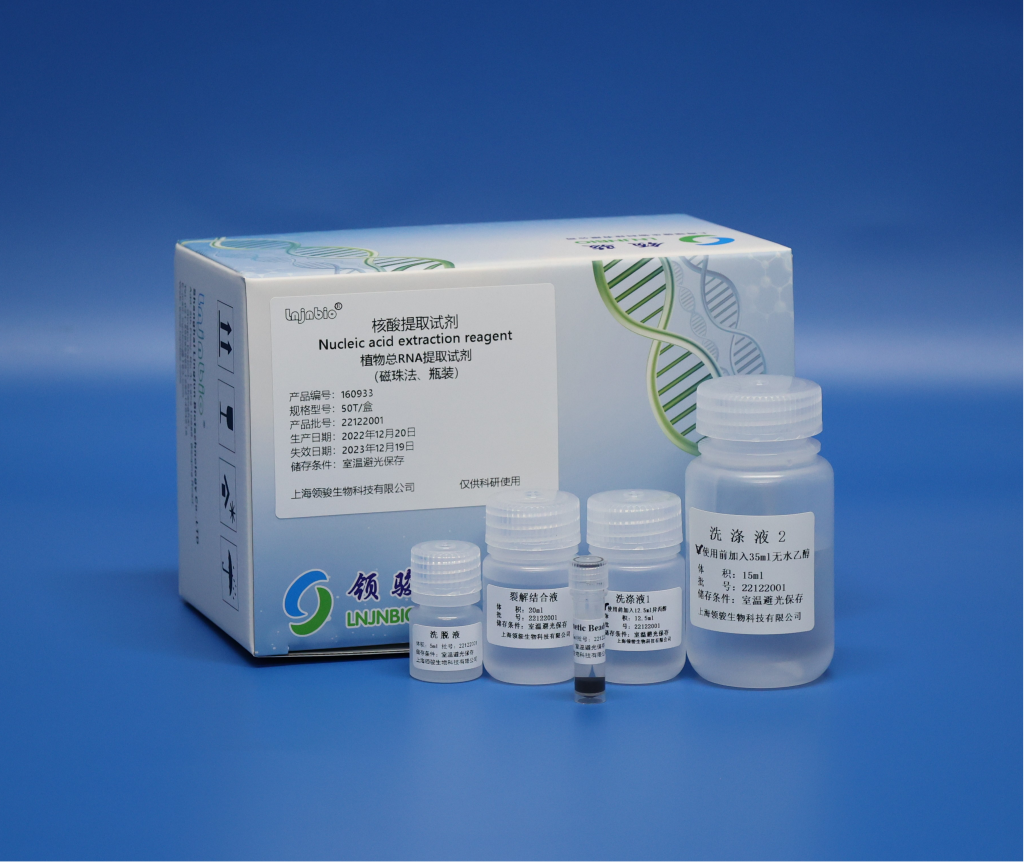
(طريقة الخرزة المغناطيسية)
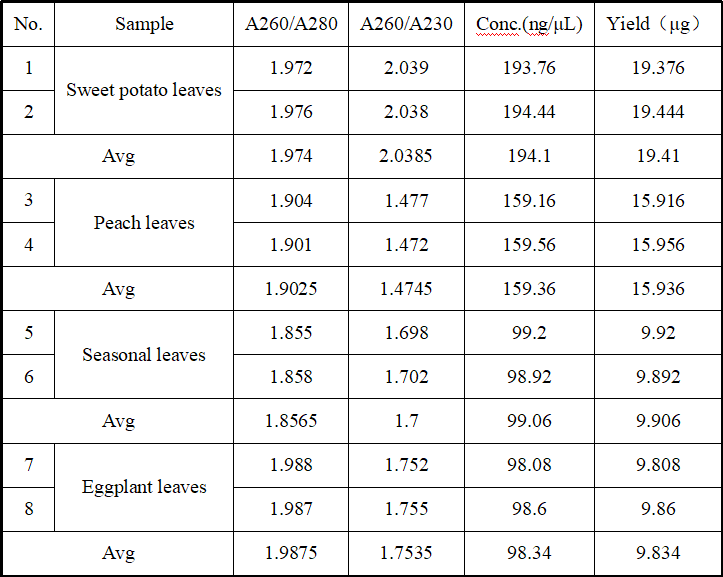
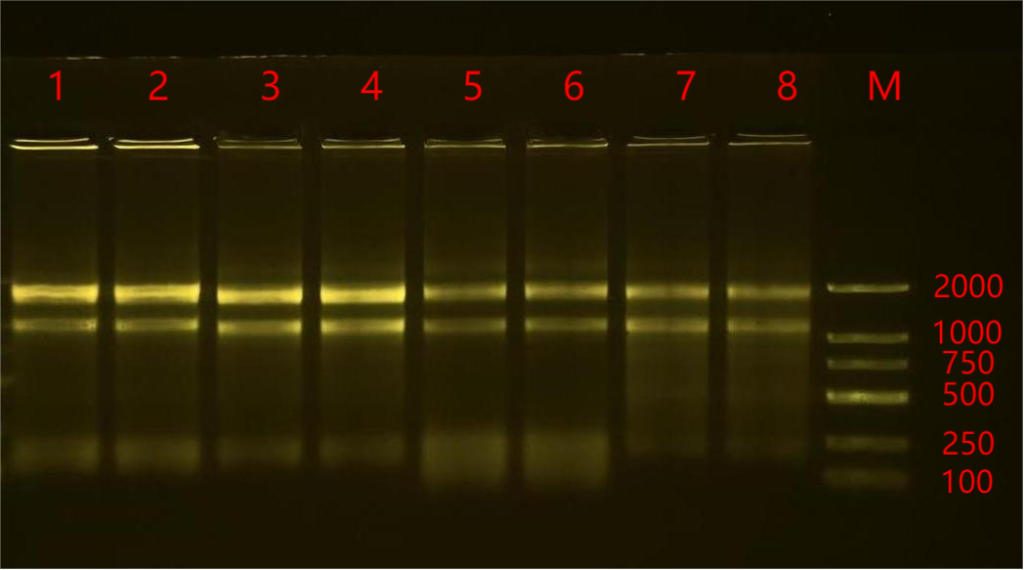
استخدام Shanghai LNJNBio Plant Total RNA Extraction Kit(طريقة الخرزة المغناطيسية) extract 20mg different kinds of plant leaves RNA,result as show below:
يظهر الرسم الكهربائي أدناه:
2.3 Primer and Probe Design
Design primers and probes for quantitative real-time PCR (qPCR) targeting the candidate reference genes. Key considerations include:
- Primers should span exon-exon junctions to prevent genomic DNA amplification.
- Amplicon length should ideally be between 80-200 بي بي.
- Employ the TaqMan probe method when higher specificity is required.
2.4qPCR Execution and Stability Assessment
- Perform qPCR amplification using SYBR Green or TaqMan chemistry.
- Record and analyze the Cq values for each candidate gene across all samples.
- Utilize specialized algorithms (على سبيل المثال, geNorm, NormFinder, BestKeeper) to evaluate expression stability and select the most stable reference gene(ق).
3. Applications in Transgenic Research
Validated reference genes are crucial for various applications in transgenic rice studies:
3.1Determination of Transgene Copy Number
Use qPCR or digital PCR (dPCR) with a single-copy reference gene as a calibrator to quantitatively determine the copy number of integrated T-DNA in the rice genome.
3.2Rapid Screening of Homozygous Transgenic Lines
Employ qPCR analysis comparing reference and transgene signals (على سبيل المثال, via ΔΔCt method) to accurately identify homozygous single-insertion lines in the T1 generation, significantly accelerating the breeding process.
3.3Analysis of Transgene Expression Levels
In functional studies, use stable reference genes for normalization to precisely quantify transgene transcript levels across different transgenic lines.
3.4Detection of Transgenic Components
In diagnostic settings, reference genes serve as internal positive controls to monitor DNA extraction quality and PCR efficiency. Multiplex real-time PCR methods can be developed to simultaneously detect target transgenes (على سبيل المثال, promoter, terminator, marker genes) and the reference gene, enabling high-throughput analysis.
4. Project Considerations
To ensure project success and result reliability, adhere to the following:
4.1 Include Appropriate Controls
Always include positive controls (على سبيل المثال, plasmids with target sequences) and negative controls (no-template controls) in PCR assays to rule out false positives/negatives.
4.2 Continuous Optimization of Reference Genes
No reference gene is universally perfect. Re-validate or screen for the most suitable reference gene(ق) under specific experimental conditions.
4.3 Adherence to Relevant Standards
If the research involves detection of genetically modified components, follow applicable national (على سبيل المثال, GB/T series) or international (على سبيل المثال, ISO standards) guidelines to ensure procedural compliance.
5. Project Workflow Summary
A systematic approach for a reference gene identification project is as follows:
- Define Research Scope: Clarify whether a universal reference gene is needed or one for specific conditions (على سبيل المثال, specific tissue, stress).
- Select Candidate Genes: Choose a set of candidate genes based on literature and database mining.
- Validate Stability: Experimentally assess and identify the most stably expressed gene(ق) using qPCR and bioinformatics tools across a representative sample set.
- Apply in Research: Implement the validated reference gene(ق) in practical transgenic rice research applications.
مزود
شركة شنغهاي لينغجون للتكنولوجيا الحيوية, المحدودة.تأسست في 2016 وهي شركة متخصصة في تصنيع المواد المغناطيسية الحيوية وكواشف استخلاص الحمض النووي.
لدينا خبرة غنية في استخراج وتنقية الحمض النووي, تنقية البروتين, فصل الخلايا, التألق الكيميائي, وغيرها من المجالات التقنية.
منتجاتنا تستخدم على نطاق واسع في العديد من المجالات, مثل الفحوصات الطبية, الاختبارات الجينية, البحوث الجامعية, التكاثر الوراثي, وهكذا. نحن لا نقدم المنتجات فحسب، بل يمكننا أيضًا إجراء تصنيع المعدات الأصلية, أوديإم, وغيرها من الاحتياجات. إذا كان لديك حاجة ذات صلة, لا تتردد في الاتصال بنا .