Monaróir Gairmiúil Coirníní Bithmhaighnéadacha


Cad iad na buntáistí a bhaineann le modh coirníní maighnéadacha le haghaidh eastóscadh RNA i gcomparáid le modh Trizol?
1.Chun na difríochtaí idir an dá mhodh a thuiscint, tá sé riachtanach a gcuid prionsabal a thuiscint ar dtús:
Baineann modh Trizol úsáid as tuaslagóirí orgánacha cosúil le feanól agus clóraform chun cealla a líseadh, ar an gcaoi sin scaradh RNA ó DNA agus próitéiní. Díscaoileann RNA sa chéim uiscí agus íontar é tar éis deascadh le isopropanol. Scaoileann an modh coirnín maighnéadach RNA tríd an réiteach lysis, i gcás ina ndéanann an mhaitrís shilice nó feidhmghrúpaí sonracha ar na coirníní maighnéadacha RNA a ionsú go sonrach i dtimpeallacht ard-salann. Tar éis níocháin, Tá RNA eluted i dtuaslagán íseal-salann.
- Ina theannta sin, tá roinnt difríochtaí i bpróiseas oibríochta an dá cheann:
| Céim | Modh coirníní maighnéadach | Trizol modh |
| Lisis | Lysate tapa de lysate (uathoibrithe) | Meilt láimhe/pulverization + Trizol lysis |
| Scartha | Coirníní maighnéadacha adsorbed RNA agus scaradh fráma maighnéadach | Srathú lártheifeacha (céim uiscí/orgánach) |
| Nigh | Níodh na coirníní maighnéadacha le maolán eatánól/ardsalann | 75% Baineadh úsáid as eatánól chun an deascán a ghlanadh |
| Ghnóthú | Elution maolán salainn íseal | Isopropanol deascadh + aer a thriomú |
| Am | 40-60 nóiméad (go hiomlán uathoibríoch) | 40-60 nóiméad (go hiomlán uathoibríoch) |
- Difríocht cáilíochta RNA a bhaintear as an dá mhodh:
Íonachta:
Modh trizol: OD260/280≈1.8-2.0, a bhfuil tionchar go héasca ag iarmhar feanól nó éillithe próitéine.
Modh coirníní maighnéadach: íonacht níos airde (Is minic a bhíonn OD260/280>1.9), le níos lú iarmhar eisíontas.、
Cás: Bhain custaiméir úsáid as modh Trizol agus modh coirníní maighnéadacha chun RNA cille a bhaint de láimh ó chealla greamaitheacha neuro2A.
Sula bhaintear RNA cille, áiríodh na comhpháirteanna chun earráidí a laghdú, agus is iad seo a leanas na torthaí
| Sampla | Comhaireamh cille |
| 1-1 | 4.11E6 |
| 2-1 | 5.93E6 |
| 3-1 | 6.98E5 |
| 1-2 | 4.35E6 |
| 2-2 | 5.72E6 |
| 3-2 | 6.82E5 |
Ansin baineadh úsáid as modh Trizol agus modh coirníní maighnéadacha chun na samplaí a bhaint de láimh, agus is iad seo a leanas na torthaí
| Sampla | Modh | A260/A280 | A260/A230 | Conc.(de/ul) | EB | Toradh(ug) |
| 1-1 | Mag-coirníní | 2.093 | 2.222 | 2742.5 | 50uL | 137.125 |
| 2-1 | 2.072 | 2.080 | 2835.4 | 141.77 | ||
| 3-1 | 2.038 | 2.001 | 470.08 | 23.504 | ||
| 1-2 | Trizol | 1.792 | 0.587 | 331.68 | 100uL | 33.168 |
| 2-2 | 1.728 | 0.655 | 374.68 | 37.468 | ||
| 3-2 | 1.650 | 0.618 | 107.72 | 10.772 |
I dtéarmaí toraidh, is fearr go mór an modh coirníní maighnéadacha ná modh Trizol i ngach sampla, go háirithe i samplaí 1 agus 2, i gcás inar mó an toradh ná 100ug, i gcomparáid le 30-40ug don mhodh Trizol. Léiríonn sé seo go dtugann an modh bead maighnéadach éifeachtacht eastóscadh níos airde.
I dtéarmaí íonachta, tá luachanna A260/A280 agus A260/A230 an RNA a bhaintear as an modh coirníní maighnéadacha araon thuas 2, freastal ar chaighdeáin RNA ar ardchaighdeán. I gcodarsnacht leis sin, táirgeann modh Trizol RNA le íonacht níos ísle, le luachanna A260/A280 ó 1.6 chuig 1.7, rud a léiríonn baint próitéin neamhiomlán. Ina theannta sin, Tá luachanna A260/A230 thíos 0.7, ag moladh comhdhúile iarmharacha orgánacha nó salainn.
Tríd is tríd, is fearr an modh coirníní maighnéadacha sa turgnamh seo, ag tairiscint toradh ard, íonachta ard, agus éascaíocht oibríochta, rud a fhágann go bhfuil sé níos fearr ná an modh traidisiúnta Trizol agus atá oiriúnach do thurgnaimh iartheachtacha a éilíonn ardchaighdeán. Bainfear úsáid as an RNA asbhainte i dturgnaimh qPCR chun athruithe ar léiriú géine a fhiosrú.
Thairis sin, cuireann an modh coirníní maighnéadach buntáistí breise, amhail uathoibriú do shamplaí ard-thréchuir (cosúil le plátaí 96-tobar), fola, seile, agus samplaí eile a phróiseáiltear go héasca, agus comhoiriúnacht láidir, rud a fhágann go bhfuil sé oiriúnach go háirithe do scagthástáil chliniciúil nó ar scála mór.
Achoimre: Roghnaigh modh Trizol agus tú ag déileáil le samplaí casta (mar fíocháin saibhir i polaisiúicrídí agus polyphenols) agus nuair is ábhar imní iad srianta buiséid. Roghnaigh an modh bead maighnéadach le haghaidh tréchur ard, uathoibrithe, agus eastóscadh tapa, nó nuair a dhírítear ar íonacht agus sábháilteacht (mar shampla i diagnóisic chliniciúil). Treocht: Mar gheall ar a chaighdeánú ard, tá an modh bead maighnéadach ag éirí níos coitianta, go háirithe i leigheas beachtais.
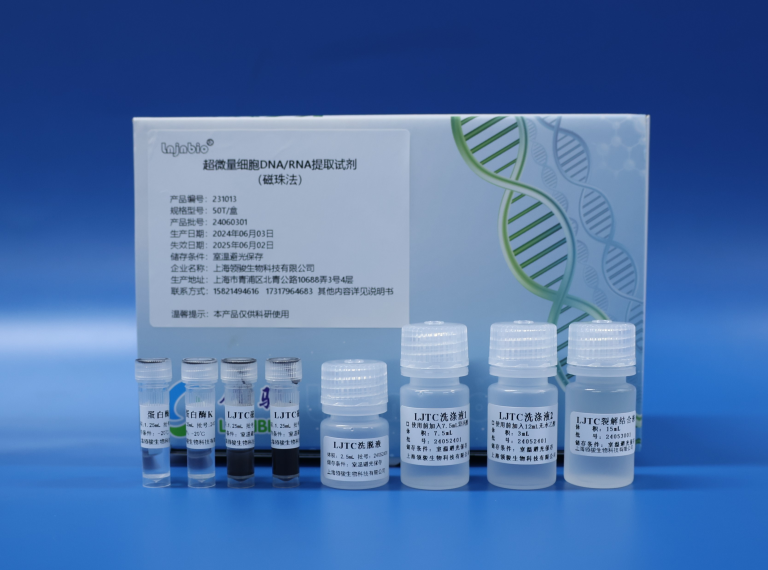
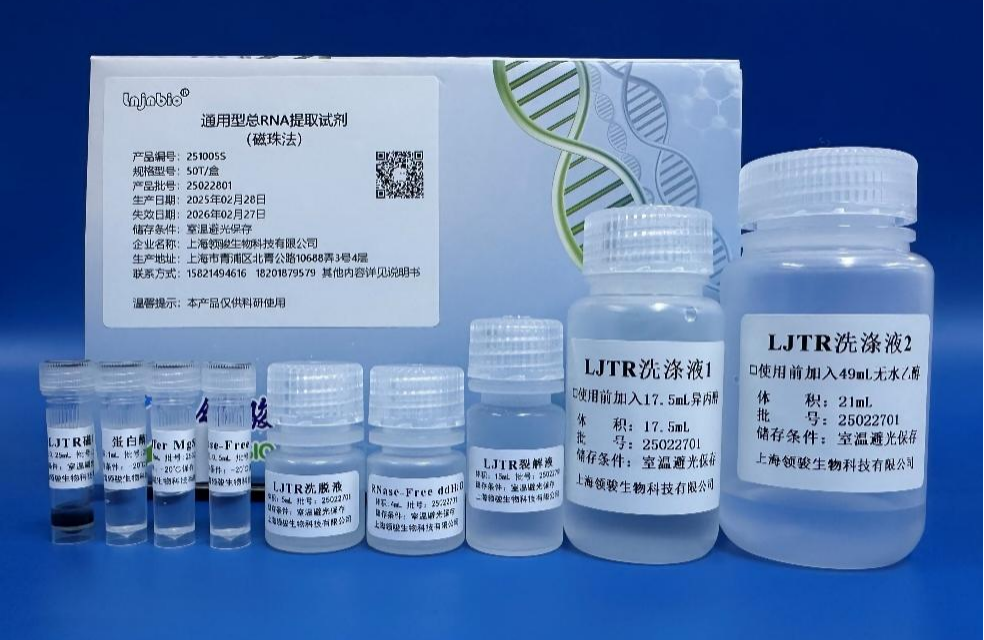
Lnjnbio Imoibrí eastósctha RNA beag Uilíoch (modh coirníní maighnéadach)
Soláthraí
Shanghai Lingjun Biteicneolaíocht Co., Teo.bunaíodh i 2016 atá ina mhonaróir gairmiúil d'ábhair bithmhaighnéadacha agus imoibrithe eastóscadh aigéid núicléacha.
Tá taithí shaibhir againn in eastóscadh agus íonú aigéad núicléasach, íonú próitéine, scaradh cille, ceimileacanacht, agus réimsí teicniúla eile.
Úsáidtear ár gcuid táirgí go forleathan i go leor réimsí, mar thástáil leighis, tástáil ghéiniteach, taighde ollscoile, pórú géiniteach, agus mar sin de. Ní chuirimid ar fáil ach táirgí ach freisin is féidir tabhairt faoi OEM, ODM, agus riachtanais eile. Má tá riachtanas gaolmhar agat, bíodh leisce ort teagmháil a dhéanamh linn .