Produttore professionale di perline biomagnetiche


Perché è necessario l'aggiustamento del pH nell'estrazione del DNA?
Il pH è molto importante nell'estrazione del DNA e le ragioni sono le seguenti:
1. Mantenere la stabilità del DNA
Il DNA rimane relativamente stabile in soluzioni con un pH maggiore di 5 e meno di 9. Quando il pH è eccessivamente alto (per esempio., Sopra 12) o basso (per esempio., sotto 3), i legami idrogeno tra i doppi filamenti del DNA si dissoceranno, portando alla denaturazione del DNA. Ad esempio, Il buffer II contiene 0.2 M NaOH nell'estrazione del DNA plasmidico, risultando in un pH del sistema di 12. 6, che induce la denaturazione del DNA sia cromosomico che plasmidico. Di conseguenza, è necessario riportare il pH alla neutralità nei passaggi successivi. Questo ha due scopi: Primo, consente al DNA plasmidico denaturato di rinaturarsi e rimanere stabile; secondo, sfrutta la differenza nella dimensione del frammento tra DNA genomico e DNA plasmidico (con i plasmidi che sono più piccoli e hanno maggiori probabilità di ricomporsi in dsDNA, mentre il gDNA, essendo troppo lungo, non riesce a ricomporsi completamente e invece rimane impigliato, precipitazione con complessi SDS-proteina sotto l'influenza di elevate concentrazioni saline nel tampone III).
2. Prevenire la degradazione del DNA
L'EDTA può legarsi agli ioni metallici come Mg²⁺ e Ca²⁺ presenti nella soluzione. Questi ioni metallici sono cofattori della DNasi. L'EDTA inibisce l'attività della DNasi, prevenendo così la degradazione del DNA chelando questi ioni metallici.
3. Ottimizzazione dell'efficienza di estrazione
La ricerca ha dimostrato che il pH ottimale per l'estrazione del DNA è 7,4. La resa dell'estrazione del DNA è massimizzata quando si utilizza un tampone a pH 7. 4. Quanto più il pH si discosta da questo valore, minore è la resa dell'estrazione del DNA. Per esempio, la resa dell'estrazione del DNA a pH 7.4 È 1.09, 1.03, 1.06, E 1.11 volte quello a pH 7,2, 7.6, 7.8, E 8.0, rispettivamente.
Facilitare il legame dell'acido nucleico alle sfere magnetiche: Un pH appropriato può favorire il legame degli acidi nucleici alle sfere magnetiche nei metodi di estrazione del DNA basati su sfere magnetiche. Un tampone ad alto contenuto di sale può neutralizzare le cariche negative degli acidi nucleici, riducendo la repulsione elettrostatica tra acidi nucleici e sfere magnetiche, facilitando così l'adsorbimento degli acidi nucleici sulla superficie delle perline.
4. Proteggere l'attività del lisozima
Il lisozima viene utilizzato durante l'estrazione del DNA plasmidico da batteri Gram-positivi. Il lisozima è una glicoside idrolasi che può idrolizzare il β-1, 4 legami glicosidici nel peptidoglicano, il principale componente chimico della parete cellulare di G+ batteri, esercitando così un effetto litico. L'attività del lisozima viene inibita quando il pH del tampone è inferiore a 8. Perciò, è essenziale mantenere un pH adeguato per garantire l'attività del lisozima.
5. Migliorare l'efficienza di eluizione
Il pH del tampone di eluizione influisce in modo significativo sull'efficienza dell'eluizione del DNA. Il pH del tampone di eluizione deve essere mantenuto tra 7.0 E 8.5 per garantire che il DNA sia completamente eluito. Un pH troppo basso ridurrà l'efficienza di eluizione.
In sintesi, la regolazione del pH è cruciale nel processo di estrazione del DNA. Non solo aiuta a mantenere la stabilità del DNA e a prevenirne la degradazione, ma ottimizza anche l’efficienza di estrazione, protegge l'attività degli enzimi rilevanti, e ottimizza le condizioni di eluizione.
Fornitore
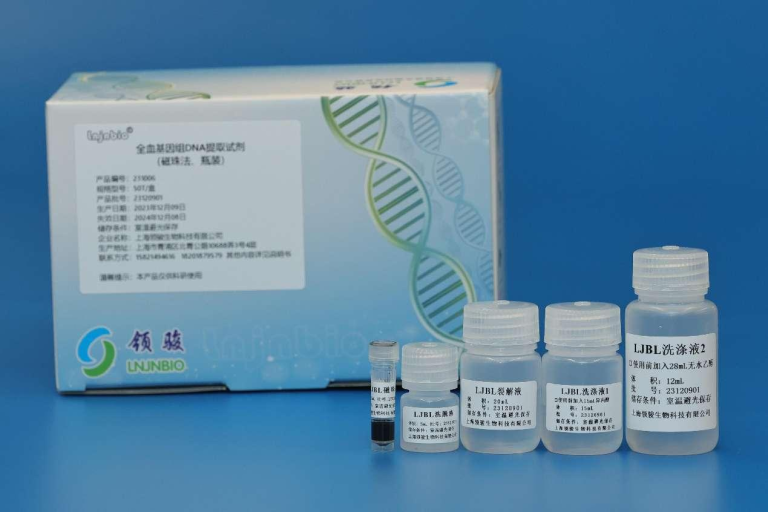
Shanghai Lingjun Biotecnologia Co., Ltd.è stato fondato nel 2016 che è un produttore professionale di materiali biomagnetici e reagenti per l'estrazione degli acidi nucleici.
Abbiamo una ricca esperienza nell'estrazione e purificazione degli acidi nucleici, purificazione delle proteine, separazione cellulare, chemiluminescenza, e altri campi tecnici.
I nostri prodotti sono ampiamente utilizzati in molti campi, come i test medici, test genetici, ricerca universitaria, allevamento genetico, e così via. Non solo forniamo prodotti, ma possiamo anche intraprendere l'OEM, ODM, e altre esigenze. Se hai un'esigenza correlata, non esitate a contattarci asales01@lingjunbio.com.