Professioneller Hersteller biomagnetischer Perlen


Warum ist eine pH-Anpassung bei der DNA-Extraktion notwendig??
Der pH-Wert ist bei der DNA-Extraktion sehr wichtig und hat folgende Gründe:
1. Maintaining DNA Stability
DNA remains relatively stable in solutions with a pH greater than 5 und weniger als 9. When the pH is excessively high (z.B., above 12) or low (z.B., below 3), the hydrogen bonds between the DNA double strands will dissociate, leading to DNA denaturation. Zum Beispiel, Buffer II contains 0.2 M NaOH in plasmid DNA extraction, resulting in a system pH of 12. 6, which induces denaturation of both chromosomal and plasmid DNA. Folglich, it is necessary to adjust the pH back to neutrality in subsequent steps. Dies dient zwei Zwecken: first, it allows the denatured plasmid DNA to renature and remain stable; second, it leverages the difference in fragment size between genomic DNA and plasmid DNA (with plasmids being smaller and more likely to reanneal into dsDNA, while gDNA, being too long, cannot fully reanneal and instead becomes entangled, precipitating with SDS-protein complexes under the influence of high salt concentrations in buffer III).
2. Preventing DNA Degradation
EDTA can bind to metal ions such as Mg²⁺and Ca²⁺present in the solution. These metal ions are cofactors for DNase. EDTA inhibits the activity of DNase, thereby preventing the degradation of DNA by chelating these metal ions.
3. Optimizing Extraction Efficiency
Research has shown that the optimal pH for DNA extraction is 7.4. DNA extraction yield is maximized when buffer with pH 7. 4. The further the pH deviates from this value, the lower the DNA extraction yield. Zum Beispiel, the DNA extraction yield at pH 7.4 Ist 1.09, 1.03, 1.06, Und 1.11 times that at pH 7.2, 7.6, 7.8, Und 8.0, jeweils.
Facilitating Nucleic Acid Binding to Magnetic Beads: An appropriate pH can promote the binding of nucleic acids to magnetic beads in magnetic bead-based DNA extraction methods. A high-salt binding buffer can neutralize the negative charges of nucleic acids, reducing the electrostatic repulsion between nucleic acids and magnetic beads, thereby facilitating the adsorption of nucleic acids onto the surface of the beads.
4. Protecting Lysozyme Activity
Lysozyme is utilized during the extraction of plasmid DNA from Gram-positive bacteria. Lysozyme is a glycoside hydrolase that can hydrolyze the β-1, 4 glycosidic bonds in peptidoglycan, the main chemical component of the cell wall of G+ Bakterien, thereby exerting a lytic effect. The activity of lysozyme is inhibited when the pH of the buffer is less than 8. daher, it is essential to maintain an appropriate pH to ensure the activity of lysozyme.
5. Improving Elution Efficiency
The pH of the elution buffer significantly affects the efficiency of DNA elution. The pH of the elution buffer should be maintained between 7.0 Und 8.5 to ensure that DNA is fully eluted. A pH that is too low will reduce the elution efficiency.
Zusammenfassend, the adjustment of pH is crucial in the DNA extraction process. It not only helps to maintain the stability of DNA and prevent degradation but also optimizes extraction efficiency, protects the activity of relevant enzymes, and optimizes elution conditions.
Anbieter
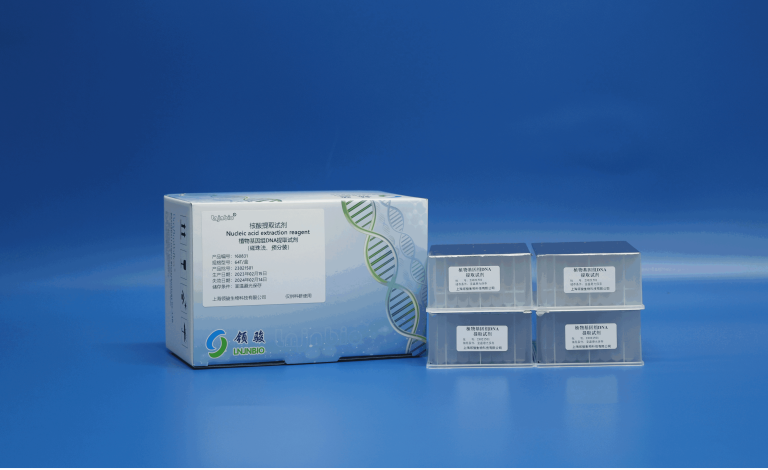
Shanghai Lingjun Biotechnology Co., Ltd.wurde gegründet in 2016 Das ist ein professioneller Hersteller von biomagnetischen Materialien und Nukleinsäure-Extraktionsreagenzien.
Wir verfügen über umfangreiche Erfahrung in der Extraktion und Reinigung von Nukleinsäuren, Proteinreinigung, Zelltrennung, Chemilumineszenz, und anderen technischen Bereichen.
Unsere Produkte werden in vielen Bereichen weit verbreitet eingesetzt, wie zum Beispiel medizinische Tests, Gentests, universitäre Forschung, genetische Zucht, und so weiter. Wir liefern nicht nur Produkte, sondern können auch OEM übernehmen, ODM, und andere Bedürfnisse. Wenn Sie einen entsprechenden Bedarf haben, Bitte kontaktieren Sie uns untersales01@lingjunbio.com.