Professioneller Hersteller biomagnetischer Perlen
Grundlegende Strategien und Methoden zur De-Endotoxinisierung während der Plasmid-DNA-Reinigung
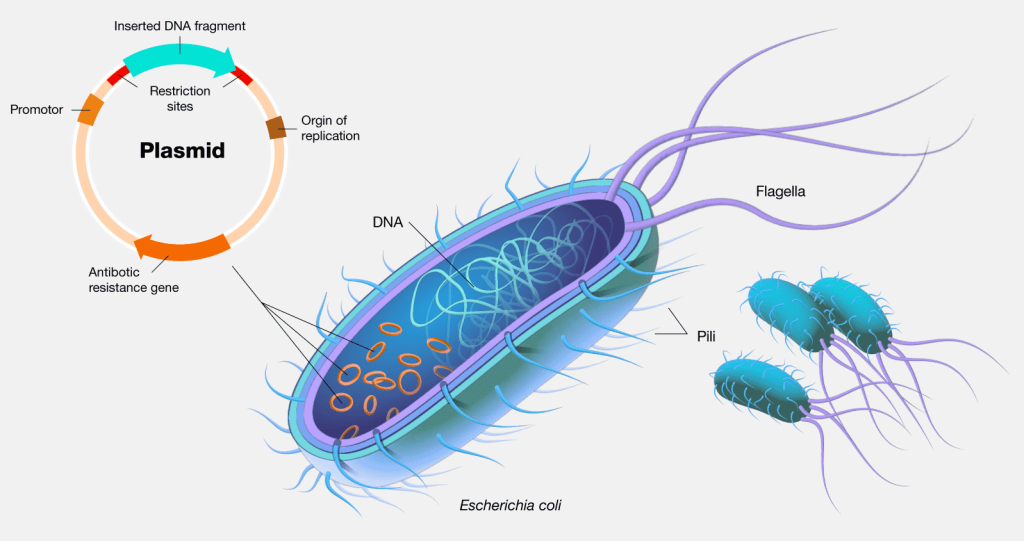
Die Verwendung endotoxinfreier Plasmide sollte in Betracht gezogen werden, wenn die extrahierte Plasmid-DNA für die Transfektion von Primärzellen verwendet wird, Suspension, oder empfindliche Zellen, Studien zur Gen-Stummschaltung, Zellinjektions-Mikromanipulation, Gentherapie oder DNA-Impfstoffe,und andere äußerst anspruchsvolle Experimente.
Unter Plasmid-Deendotoxinisierung versteht man den Schritt der Entfernung von Endotoxin (Lipopolysaccharid, LPS) während der Reinigung von Plasmid-DNA. Endotoxin ist ein Lipopolysaccharid- und Proteinkomplex in der Zellwand gramnegativer Bakterien, der freigesetzt wird, wenn die Bakterien lysieren. Das Vorhandensein von Endotoxin hat großen Einfluss auf die Transfektionseffizienz und kann unspezifische Reaktionen von Immunzellen auslösen, was zu falsch positiven Ergebnissen im Experiment führte. daher, um eine hohe Transfektionsrate und ein hohes Überleben der transfizierten Zellen sicherzustellen, Endotoxin muss aus dem Prozess der Plasmidpräparation entfernt werden.
Die Bedeutung der Endotoxinentfernung ist:
1.Beeinflussen Sie die Transfektionseffizienz: Endotoxin verringert die Transfektionseffizienz von Primärzellen und empfindlichen kultivierten Zellen, und stören die In-vitro-Transfektion von Immunzellen.
2.Aktivieren Sie die Immunantwort: Endotoxin kann auch zu Fieber führen, Hypotonie, Atemnot, intravaskuläre Gerinnung, und endotoxisches Schocksyndrom, Endotoxin kann die Synthese des Entzündungsfaktors IL-1 stimulieren, IL-6, IL-10, und TNF-α durch Aktivierung von TLR4.
3,.Arzneimittelrechtliche Anforderungen: Die staatliche Arzneimittelbehörde schreibt vor, dass der Endotoxingehalt in DNA-Impfstoffprodukten nicht höher sein darf als 0.01 EU/μg, und die Dosis für den persönlichen Gebrauch sollte nicht überschritten werden 20 EU.
Es gibt zwei Strategien zur Endotoxinentfernung:
1. Entfernung in der Bindungsphase: Endotoxin wird im Stadium der Plasmid-DNA-Bindung entfernt.
2. Entfernung nach Elution: remove endotoxin after plasmid DNA elution.
The current endotoxin removal methods mainly include:
1. Non-selective removal: such as adsorption, ultrafiltration, and exclusion chromatography.
2. Selective precipitation: z.B., using polymyxin B, histidines, and poly-L-lysine affinity chromatography.
3. Hydrophobic interaction chromatography and ion exchange chromatography.
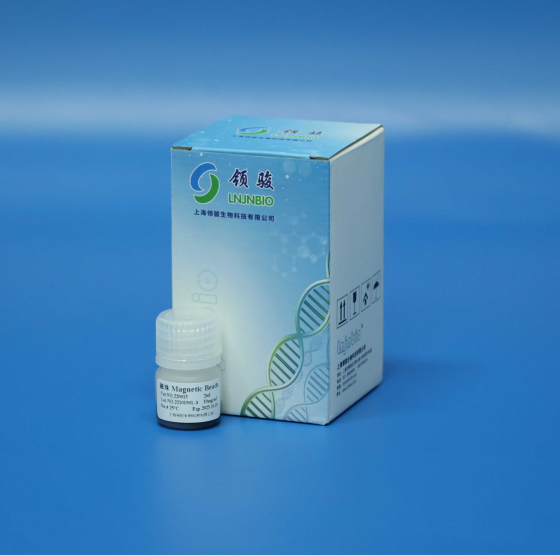
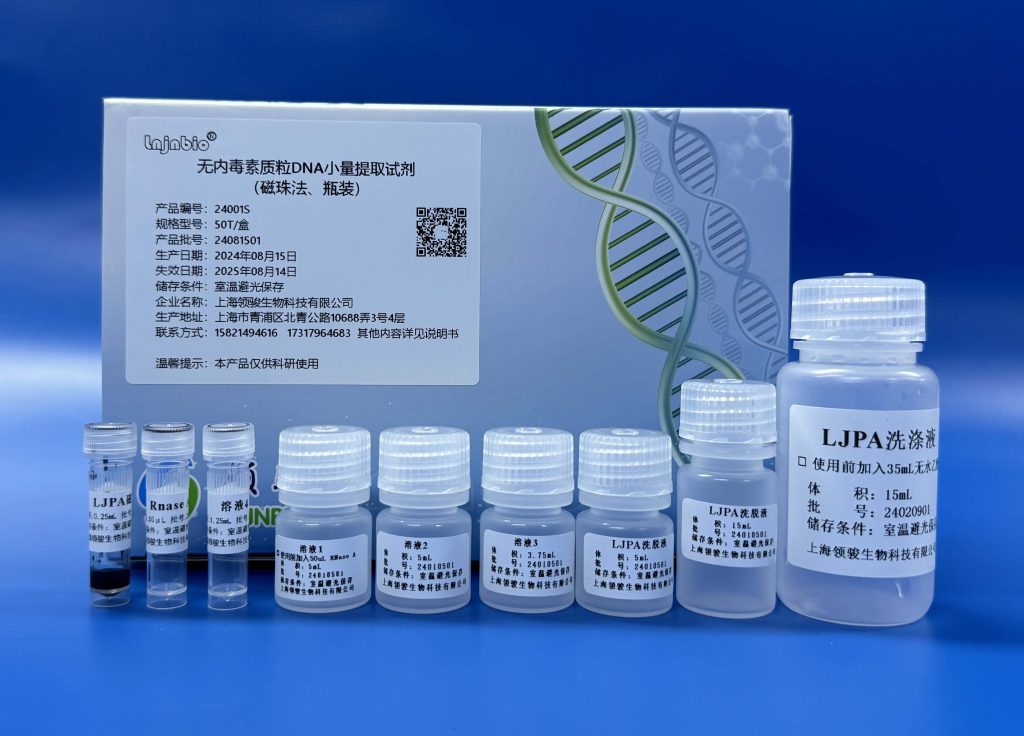
Unser endotoxin-free plasmid DNA extraction kit (Magnetperlenmethode) adopts a unique solution formula that requires only a few simple washes to remove endotoxin, Proteine, Polysaccharide, und andere Verunreinigungen, and then obtains high-quality plasmid DNA. This product extracts and purifies plasmid DNA with little damage to plasmids, high extraction concentration, and a high proportion of super-helix. The extracted plasmid DNA can be used for digestion, PCR, Sequenzierung, Ligation,n and transformation.
Anbieter
Shanghai Lingjun Biotechnology Co., Ltd.wurde gegründet in 2016 Das ist ein professioneller Hersteller von biomagnetischen Materialien und Nukleinsäure-Extraktionsreagenzien.
Wir verfügen über umfangreiche Erfahrung in der Extraktion und Reinigung von Nukleinsäuren, Proteinreinigung, Zelltrennung, Chemilumineszenz und andere technische Bereiche.
Unsere Produkte werden in vielen Bereichen weit verbreitet eingesetzt, wie zum Beispiel medizinische Tests, Gentests, universitäre Forschung, genetische Zucht, und so weiter. Wir liefern nicht nur Produkte, sondern können auch OEM übernehmen, ODM, und andere Bedürfnisse. Wenn Sie einen damit verbundenen Bedarf haben, Bitte kontaktieren Sie uns untersales01@lingjunbio.com.
- Technische Optimierung der Gesamt-RNA-Extraktion aus komplexen tierischen Geweben: Evaluierung eines Mini-Extraktionsprotokolls basierend auf der Magnetkügelchen-Methode
- Manuelle magnetische Perlenextraktion im Winter: Wichtige Vorsichtsmaßnahmen für die Handhabung bei niedrigen Temperaturen
- Magnetische Perlen: Wie man es erreicht “Einstufiges Streben” in der RNA-Extraktion?
- Prävention und Früherkennung des Nipah-Virus mithilfe der Magnetkügelchen-Technologie – Neue Strategien zur Ausbruchskontrolle
- Universelles Gesamt-RNA-Extraktionskit: Der Schlüssel zur Verhinderung des RNA-Abbaus in Routineexperimenten