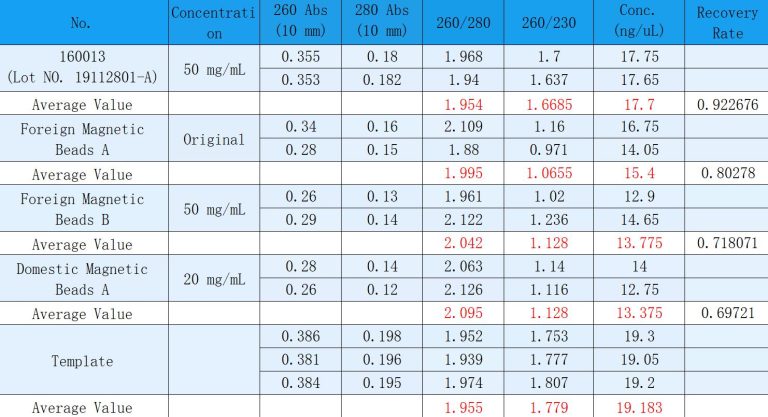
Fabricante profesional de perlas biomagnéticas


Estrategias y métodos básicos para la desendotoxina durante la purificación del ADN plasmídico.
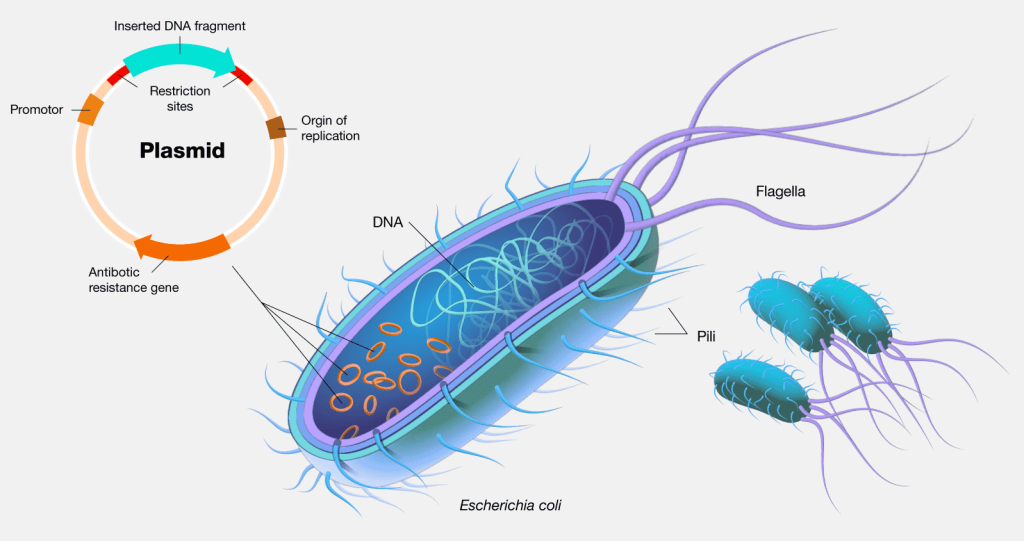
El uso de plásmidos libres de endotoxinas. debe tenerse en cuenta cuando el ADN plasmídico extraído se utiliza para la transfección de, suspensión, o células sensibles, estudios de silenciamiento genético, micromanipulación de inyección celular, terapia génica o vacunas de ADN,y otros experimentos extremadamente exigentes.
La desendotoxina de plásmidos se refiere al paso de eliminar la endotoxina. (lipopolisacárido, lps) durante la purificación del ADN plasmídico. La endotoxina es un complejo de lipopolisacárido y proteína en la pared celular de las bacterias Gram negativas que se libera cuando las bacterias se lisan.. La presencia de endotoxina afecta en gran medida la eficiencia de la transfección y puede activar reacciones no específicas de las células inmunes., resultando en falsos positivos en el experimento. Por lo tanto, para garantizar una alta tasa de transfección y una alta supervivencia de las células transfectadas, La endotoxina debe eliminarse del proceso de preparación del plásmido..
La importancia de la eliminación de endotoxinas es:
1.Afecta la eficiencia de la transfección.: La endotoxina reducirá la eficiencia de la transfección de células primarias y células cultivadas sensibles., e interferir con la transfección in vitro de células inmunes.
2.Activar la respuesta inmune: La endotoxina también puede provocar fiebre., hipotensión, dificultad respiratoria, coagulación intravascular, y síndrome de shock endotóxico, La endotoxina puede estimular la síntesis de factores inflamatorios IL-1., IL-6, IL-10, y TNF-α activando TLR4.
3,.Requisitos reglamentarios de medicamentos: La Administración Estatal de Medicamentos estipula que el contenido de endotoxina en los productos de vacunas de ADN no debe ser superior a 0.01 UE/μg, y la dosis para uso personal no debe exceder 20 UE.
Hay dos estrategias para la eliminación de endotoxinas.:
1. Eliminación en la etapa de encuadernación.: La endotoxina se elimina en la etapa de unión al ADN del plásmido..
2. Eliminación después de la elución: eliminar la endotoxina después de la elución del ADN plásmido.
Los métodos actuales de eliminación de endotoxinas incluyen principalmente:
1. Eliminación no selectiva: como la adsorción, ultrafiltración, y cromatografía de exclusión.
2. Precipitación selectiva: p.ej., usando polimixina B, histidinas, y cromatografía de afinidad con poli-L-lisina.
3. Cromatografía de interacción hidrófoba y cromatografía de intercambio iónico..
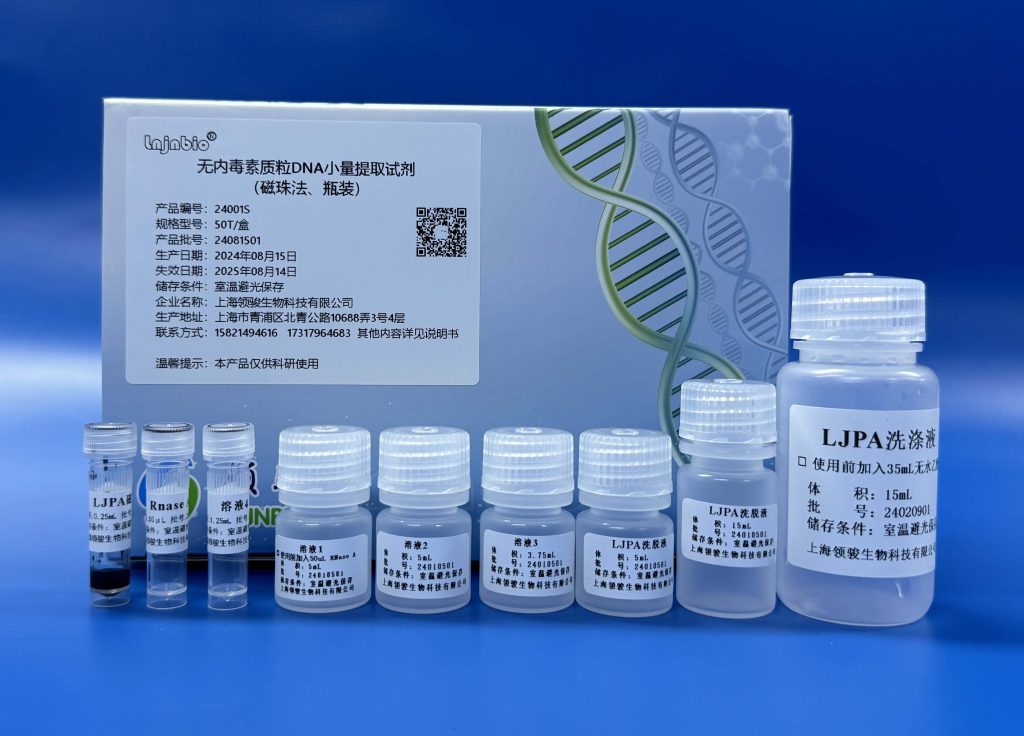
Nuestro kit de extracción de ADN plasmídico sin endotoxinas (método de cuentas magnéticas) adopta una fórmula de solución única que requiere solo unos pocos lavados simples para eliminar la endotoxina, proteínas, polisacáridos, y otras impurezas, y luego obtiene ADN plasmídico de alta calidad. Este producto extrae y purifica el ADN plasmídico con poco daño a los plásmidos., alta concentración de extracción, y una alta proporción de superhélice. El ADN plasmídico extraído se puede utilizar para la digestión., PCR, secuenciación, ligadura,n y transformación.
Proveedor
Shanghai Lingjun Biotecnología Co., Limitado.se estableció en 2016 que es un fabricante profesional de materiales biomagnéticos y reactivos de extracción de ácidos nucleicos..
Tenemos una rica experiencia en extracción y purificación de ácidos nucleicos., purificación de proteínas, separación celular, quimioluminiscencia y otros campos técnicos.
Nuestros productos son ampliamente utilizados en muchos campos., como pruebas médicas, pruebas genéticas, investigación universitaria, mejoramiento genético, etcétera. No solo proporcionamos productos sino que también podemos realizar OEM, ODM, y otras necesidades. Si tiene una necesidad relacionada, no dude en contactarnos enventas01@lingjunbio.com.
- Optimización del tampón de sal/PEG | Maximice la estabilidad de las cuentas magnéticas & Consistencia del ensayo
- Cómo la extracción de ácidos nucleicos con perlas magnéticas acelera los laboratorios?
- Eficiencia de selección de fragmentos de ADN: Optimización de la entrada y las proporciones de las perlas magnéticas de sílice
- Optimización técnica de la extracción de ARN total de tejidos animales complejos: Evaluación de un protocolo de miniextracción basado en el método de perlas magnéticas
- Extracción manual de cuentas magnéticas en invierno: Precauciones clave para el manejo a baja temperatura